


Zygomatic implants bypass bone loss by anchoring directly into the cheekbone.
You may have heard the unpleasant news that a local dentist has told you that you don’t have enough bone for regular dental implants. Actually, hearing such news is almost a disaster.
Unfortunately, the situation was really bad for patients who suffered from severe upper jaw bone loss, as they had extremely limited options. They had to settle for loose dentures, which caused them discomfort, or they would have to go through years of painful and quite unpredictable bone graft surgeries.
However, modern implantology has come a long way. It is hardly an exaggeration to say that the scenario which you might see as unsolvable is quite a typical challenge in anatomy, which simply needs a surgical solution. And this solution is the zygomatic implant.
The Foundation Problem Explained
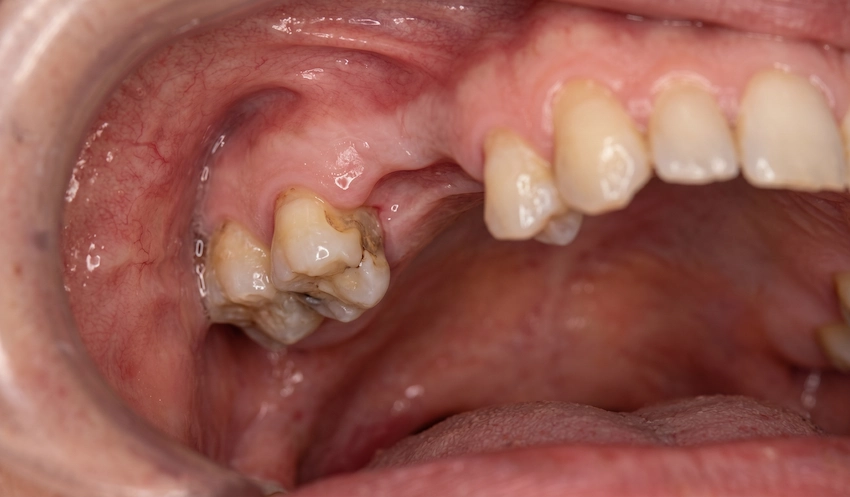
Why do standard implants not work for these cases? To answer that, let us compare the upper jaw to the foundation of a house.
Let us say you want to build a huge house on a marsh that keeps getting eroded. The house will end up sinking. It is the same with a dental implant, which needs strong, deep bone to get properly anchored. However, if the teeth have been missing for a long time, the jawbone is most likely to have disappeared.
“A lot of times, patients who visit our Istanbul clinic say that they have no hope left and do not think that there are other ways left for them. Zygomatic implants totally change the game here. We do not rely on a weak foundation, but instead, we go directly to the solid rocks for our base,” says Professor Doctor Coşkun Yıldız.
Enter Zygomatic Implants: Anchoring in the Cheekbone
So, it is still unclear what happens if the jawbones run out.
First of all, they are almost twice as long as traditional implants with what we call zygomatic implants. We are not dependent on your fragile jawbone, as it is time and again the case with your jawbone. Also, osteointegration of the implants is at the zygoma, your dense cheekbone.
- The cheekbone is very hard.
- It offers great support in a structural sense.
- Unlike the jawbone, its size does not diminish with time.
Why Skip the Traditional Bone Graft?

What normally happens when patients get bone grafts done is this. The surgeon puts the bone graft inside the upper jaw. Usually, this has to be done with the sinus membrane, which is extremely delicate, being so thin and fragile, almost like an eggshell.
The patient is then supposed to wait for 6-12 months for the bones to heal in the grafted place, but that period is not enough for integrating the bones in some cases. Therefore, a whole year’s waiting would be in vain.
There is no need for huge bone grafts when one decides to use zygomatic implants. Since they are fixed to the cheekbones, they offer huge stability at a glance.
Dentist Polen Akkılıç and her team take over the restorative part post-operatively. They make a comeback with the aesthetic side of things. Because the anchorage in the zygoma is of high stability, our team can provide a fixed provisional denture even on the day of surgery.
When you come for treatment in Turkey, you will be carrying a smile that is barely hanging onto your face, and a few days later, you will be smiling through a set of beautiful, permanent teeth.
Comparing Your Clinical Options
| Feature | Traditional Bone Grafting + Implants | Zygomatic Implants |
| Treatment Timeline | 9 to 18 months of waiting | Immediate loading (Teeth in a few days) |
| Number of Surgeries | Often, 2 to 3 separate procedures | 1 single procedure |
| Sinus Lift Needed? | Almost always required | Completely bypasses the sinus cavity |
| Required Bone Density | Needs unpredictable new bone growth | Anchors into naturally dense cheekbone |
| Clinical Predictability | Variable; grafts can shrink or fail | High long-term predictability and success |
The Lema Dental Clinic Experience in Turkey
Having faith in a foreign place for your complicated dental surgery is not easy. Our Turkey clinic is especially designed to handle the most difficult surgical cases.
Besides expertise in maxillofacial surgery, the planning of such a 3D guided surgical field is a major step. Also, an aesthetic team of the highest world-class standards is needed. Zygomatic implant placement is a sophisticated operation.
At Lema Dental Clinic, aside from just implant placement, we also do facial correction; we restore bite mechanics the proper way; we create a natural aesthetic that revives your face, and most importantly.
Frequently Asked Questions
They keep your natural cheekbone shape intact. Your implants will be sitting on the inside of your bone. The only effect you would notice will be a good one. The bone loss has given your lips and cheeks a “sunken” look, and what support you need will be provided by these.
Such surgery is carried out when you are deeply sedated or under general anesthesia. You will be completely unaware of the procedure happening. Some swelling and bruising in the area around the cheeks are to be expected after the surgery and should last for a week or so. This is kept under very close observation with the help of the medication prescribed.
Actually, age is not the major consideration for us. We emphasize your systemic health and your healing capability. Patients in their 70s and 80s have been willing to receive their smile makeover using this technique, which we rely on.
The care is very much like that of natural teeth,h but there are some extras. Dentist Polen Akkıl,ıç together with her team, will guide you step by step on how to use water flossers and to master a specialized interdental brush. These implements help in cleaning the bridges and the implants thoroughly.
If you get your zygomatic implants from highly skilled surgeons such as Professor Doctor Coşkun Yıldız, then you will be one of the very few who can still boast of having implant survival rates well over 95%. They are meant, ideally, as a permanent solution which will be lifelong, i.e., for a lifetime.
- Aparicio, C., Manresa, C., Francisco, K., Claros, P., Alández, J., González-Martín, O., & Albrektsson, T. (2014). Zygomatic implants: indications, techniques, and outcomes, and the zygomatic success code. Periodontology 2000, 66(1), 41-58.
- Bedrossian, E. (2010). Rehabilitation of the edentulous maxilla with the zygoma concept: a 7-year prospective study. The International Journal of Oral & Maxillofacial Implants, 25(6), 1213-1221.
- Brånemark, P. I., Gröndahl, K., & Worthington, P. (2004). Osseointegration and the zygomatic bone: surgical technique and long-term results. Quintessence Publishing.
- Chrcanovic, B. R., Albrektsson, T., & Wennerberg, A. (2016). Survival and complications of zygomatic implants: an updated systematic review. Journal of Oral and Maxillofacial Surgery, 74(10), 1949-1964.
- Malevez, C., Abarca, M., Durdu, F., & Daelemans, P. (2004). Clinical outcome of 103 consecutive zygomatic implants: a 6-48 months follow-up study. Clinical Oral Implants Research, 15(1), 18-22.

