


The procedure clears the infection for instant relief, healing in just a few days.
Of course, nobody can schedule a toothache. But an abscessed tooth? Now that’s another matter. In fact, sometimes we just keep getting that nagging, throbbing pain in our jaw, which somehow never goes away.
Truthfully, you are first and foremost dealing with a trapped bacterial infection. In other words, pus is basically accumulating right at the very end of your root. So instead of just getting stuck on the pain, how about we talk about the actual methods of healing? Our way of thinking here in Turkey is simple: Preserve the natural tooth. According to our clinical experience at Lema Dental Clinic, not only do we regularly treat these huge periapical infections, but we also manage to save patients from their severe distress and reintegrate them into everyday life.
If you compare your tooth to a concrete vault that is sealed shut, it might help in understanding what happens. Firstly, bacteria get through the external walls, either those that have been previously decayed deeply and ignored,d or it could have been a hairline crack, and they then enter the soft nerve chamber. More than likely, they will multiply rapidly, too. The eventual build-up of pressure with no way out causes it to break down into the jawbone. It’s like a pipe bursting and flooding a house’s foundation without anyone hearing it. The foundation eventually deteriorates, and the resulting pain in the form of pressure can be unbearable.
Professor Doctor Coşkun Yıldız states that witnessing a patient’s expression soften, physically, precisely when internal bone pressure is relieved, is by far the most pleasing aspect of endodontics.
What Actually Happens in the Chair?
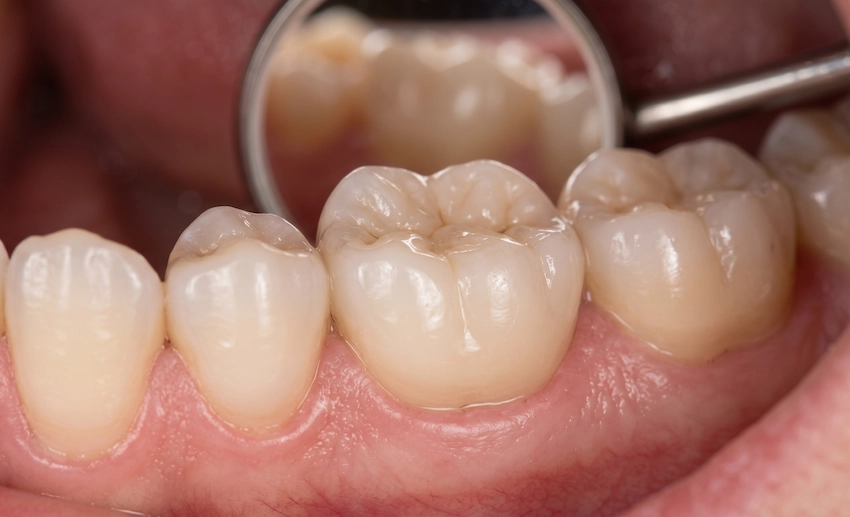
What the clinic would look like to us if a patient with a swollen face suddenly appeared is, in our opinion, this very scene. Two missions are given to us: kill the bacteria and make a secure vault.
1. Mapping and Numbing
If we don’t know where to go, we can’t get there properly. We undertake a 3D scan initially so that we can figure out exactly where the infection is in your bone. Following this, we totally numb the region using the most powerful local anesthesia available to us because we consider your comfort an in-negotiable part of the procedure.
2. Venting the Pressure
As soon as we’re sure your mouth is thoroughly asleep, a small hole is made in the top of the tooth. That opening promptly releases the unbearable pressure that had been building up. At this specific point, pain levels for most patients plummet almost instantly.
3. The Deep Clean
Here is the highlight of the show. Dentist Polen Akkılıç and her team are particularly fastidious when it comes to this phase. By means of the use of microscopic instruments and the strongest antibacterial washes, they remove all the remaining dead nerve tissue and bacteria.
4. Locking the Vault
Leaving a space in the tooth cavity is impossible. When the canals have dried fully, they are tightly filled with gutta-percha – a naturally rubbery material. That is the seal that stops bacteria from entering the house, reaching all the way to the bone.
5. Rebuilding the Tooth
Without a nerve, a tooth typically loses its resilience over time. Our usual practice to prevent it from fracturing during chewing is to crown it with a custom-made crown. Back in perfect condition.
Healing Expectations: When Does It Stop Hurting?
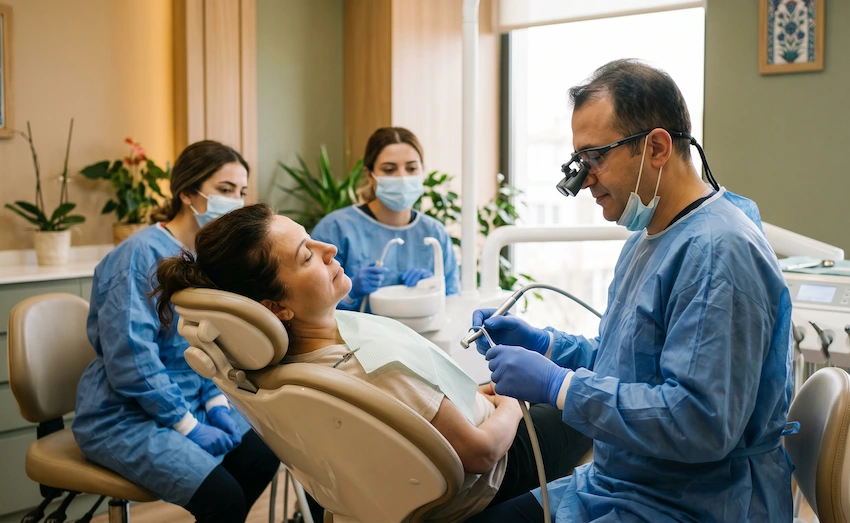
Still, that question lingers: when will I get the chance to savor a great steak?
After the bacteria are wiped out, the body initiates bone healing straightaway. Bone remodeling, however, can take a couple of months at least. And the best part: relief from pain happens a lot sooner than that.
- Days 1 to 3: You may experience your jaw as being bruised, and biting down may cause a little pain. This is the normal inflammation response to the dental instruments and the infection resisting the treatment. A simple painkiller like ibuprofen typically does the job very well.
- Days 4 to 7: That bruised sensation will rapidly disappear. If you had a swollen cheek before coming in, it should be flattening out quite nicely by now.
- Beyond Week 2: You will most probably have completely forgotten about the tooth that was causing the problem.
The Hard Truth: Saving vs. Pulling
While in agony, patients often ask us to “just pull the thing out.” Our natural response would be to dissuade them if the tooth is still savable. The reasons are:
| The Reality Check | Saving It (Root Canal) | Pulling It (Extraction) |
| The Goal | Eliminate the infection and preserve the natural tooth/body part. | Completely remove the source of infection. |
| Your Jawbone | Maintains its density and vitality. | Gradually resorbs and becomes unstable. |
| Chewing | Workable as the restored tooth. | You end up relying on the other side until you get the implant. |
| Upfront Cost | Reasonable. | Low initially. |
| Future Cost | Minimal. | Exorbitant (Implants and bone grafts). |
Frequently Asked Questions
Firstly, I understand that the internet has spread a lot of horror stories. However, a root canal is the remedy, not the punishment. Thanks to our anesthetics being so advanced these days, all you might feel is some vibration and slight pressure. There is no doubt that the era of painful root canals is long behind us.
It’s likely that if you are looking like a chipmunk at the moment, almost all of that will be gone within 48 hours after we have done the root canal. Actually, we may give you a quick and powerful antibiotic treatment to help the immune system clear out the cell debris in your cheek tissues.
That’s absolutely not the case. Antibiotics reach through the bloodstream, but the nerve area of the tooth is dead, so no blood supply exists in there. The medicine simply can’t reach the bacteria that are entrenched inside the tooth. Cleaning it out physically is a must.
Almost impossible. However, if you happen to break the new crown by biting on ice, or if you stop brushing so that a new cavity forms under the gum line, bacteria may get through the seal again. Proper hygiene and regular check-ups are the keys to this one lasting a lifetime.
Price is not the only factor here, although it certainly helps. At Lema Dental Clinic, doctors practice complex, full-mouth restorations every day. While we have the same state-of-the-art microscopic equipment that you would find in London or New York, our team is specialized and focused.
- Hargreaves, K. M., Berman, L. H., & Rotstein, I. (2020). Cohen’s Pathways of the Pulp (12th ed.). Elsevier.
- Siqueira, J. F., Jr., & Rôças, I. N. (2022). Present status and future directions in endodontic microbiology. Endodontic Topics, 30(1), 3-22.
- Estrela, C., Holland, R., Estrela, C. R., Alencar, A. H., Sousa-Neto, M. D., & Pécora, J. D. (2014). Characterization of successful root canal treatment. Brazilian Dental Journal, 25(1), 3-11.
- Nair, P. N. (2006). On the causes of the persistent apical periodontitis: a review. International Endodontic Journal, 39(4), 249-281.
- Ng, Y. L., Mann, V., & Gulabivala, K. (2011). A prospective study of the factors affecting outcomes of nonsurgical root canal treatment: part 1: periapical health. International Endodontic Journal, 44(7), 583-609.

