


Upgrade crowns when marginal integrity fails, or secondary decay develops.
Dental crowns are artificial objects that do not replace original teeth biologically. They can be subject to changes caused by the intraoral chemical environment, such as material fatigue and cement degradation. This is a major reason that you should replace an old crown with a new one to eliminate the risk of caries spreading and protect the integrity of underlying dentin.
Clinical Signs for Tooth Replacement
Crowns and other dental prostheses are unlikely to become dysfunctional in an instant way. Their failures mostly happen as a result of progressive weakening in both tissues and materials. You should definitely change a crown if you notice the following pathological signs:
- Marginal Microleakage: After some time the luting cement, which glues the crown to the tooth gets dissolved. Such a minute gap lets cariogenic micro-organisms get into and lead to secondary decay very rapidly below the seal.
- Biological Width Compromise: Worn out or ill-fitting crowns that have sharp edges, are most of the times contacting the gingival tissue. This breach of anatomical features may lead to localized periodontitis through repeated irritation causing the gums to bleed and stay inflamed.
- Layer Disintegration: Repeated action of the jaw opening and closing (the masticatory forces) leads to a microscopic crack network. In the case of older Porcelain-Fused-to-Metal (PFM) crowns the layer of the decorative ceramic often separates from the metal structure.
- Resorption of the Gingival Tissue and Oxidation: As age progresses, the periodontal tissues recede exposing the oxidized, dark color of the metal part of the traditional PFM crowns. It affects seriously the esthetics of the smile and also causes a local gum discoloration (the amalgam tattoo).
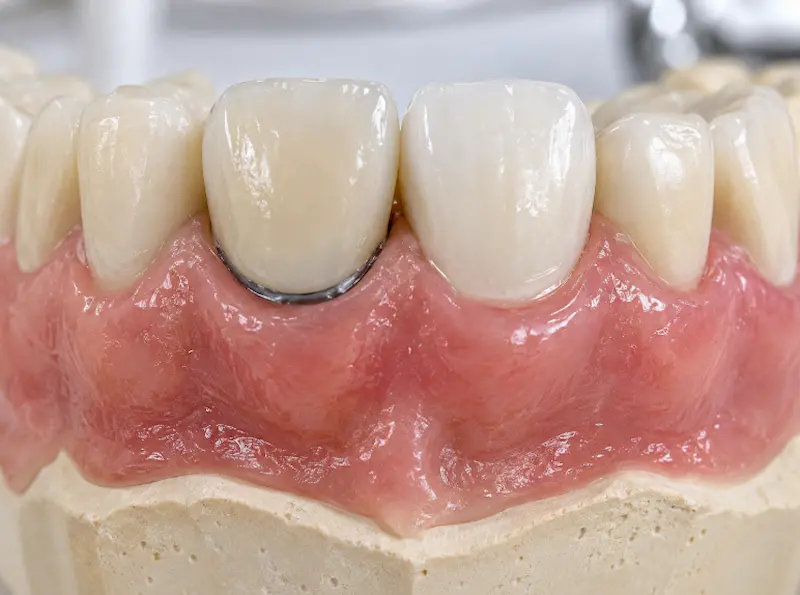
Dentistry Has Evolved Biomechanically with Modern Biomaterials
Dentistry has traditionally been reliant on metal alloys. Contemporary restorative dental procedures are utilizing ceramics which have good biocompatibility properties and are showing better structural and periodontal results.
| Clinical Metric | Outdated PFM Crowns | Modern Zirconia / E-max |
| Gingival Biocompatibility | Low. Metal ions often trigger localized tissue inflammation. | Exceptional. Highly inert ceramics promote healthy soft-tissue adhesion. |
| Marginal Precision | Moderate. Hand-cast metal margins are prone to micro-gaps. | High. CAD/CAM digital milling ensures absolute marginal fidelity. |
| Optical Dynamics | Opaque. The metal core completely blocks natural light transmission. | Biomimetic. Translucency closely replicates natural enamel gradients. |
| Flexural Strength | High, but veneering porcelain is highly susceptible to chipping. | Maximum. Monolithic Zirconia resists extreme occlusal fracture forces. |
The Clinical Upgrade Protocol in Turkey
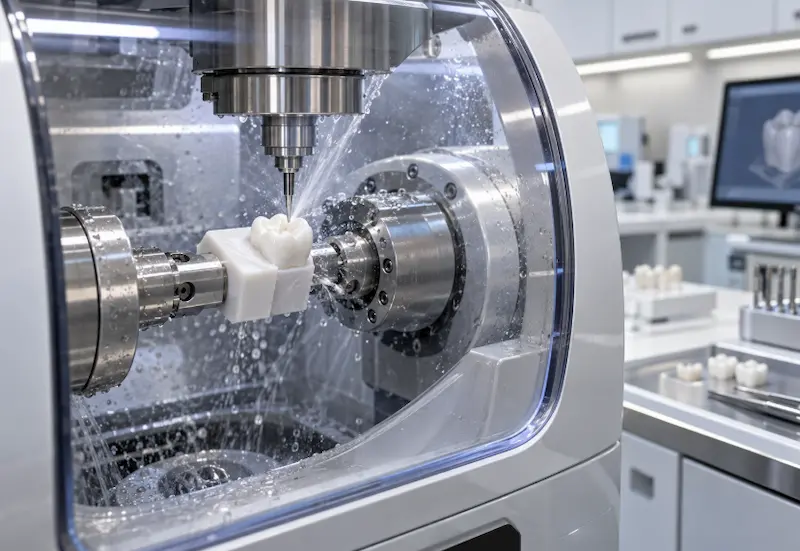
At Lema Dental Clinic, replacing a failing prosthesis is a highly digitized process. Dentist Polen Akkılıç utilizes high-resolution intraoral scanners to evaluate the marginal integrity of your current restorations.
If diagnostic imaging indicates failure, the old crown is atraumatically sectioned and removed. Professor Doctor Coşkun Yıldız advocates replacing these failing metal substructures with CAD/CAM-milled monolithic Zirconia or Lithium Disilicate (E-max). This modern digital workflow eliminates messy physical impressions and ensures that your new restorations distribute occlusal forces perfectly, safeguarding your underlying root structure for decades.
Frequently Asked Questions
1. What is the standard clinical lifespan of a dental crown?
Under normal masticatory conditions and strict oral hygiene, a high-quality crown functions effectively for 10 to 15 years. However, bruxism (chronic teeth grinding) or a highly acidic intraoral environment can significantly accelerate material fatigue and cement dissolution.
2. Is the process of removing an old dental crown painful?
No. The procedure is performed under comprehensive local anesthesia. The clinician uses a specialized rotary instrument to carefully section the old prosthetic material, allowing it to be gently wedged off the abutment tooth without transferring traumatic force to the biological root.
3. Can a failing crown cause chronic halitosis (bad breath)?
Yes. When the marginal seal fails, a microscopic gap forms between the restorative margin and the prepared tooth. Anaerobic bacteria colonize this inaccessible space, fermenting trapped organic debris and releasing volatile sulfur compounds that cause severe halitosis.
4. Why is monolithic Zirconia the preferred replacement material?
Monolithic Zirconia is fabricated from a single, solid block of zirconium dioxide. Unlike older prostheses, it contains no overlapping layers that can delaminate or chip. It offers extreme flexural strength, absolute biocompatibility, and eliminates the risk of galvanic toxicity associated with base metal alloys.
Academic References
- Goodacre, C. J., Bernal, G., Rungcharassaeng, K., & Kan, J. Y. (2003). Clinical complications in fixed prosthodontics. The Journal of Prosthetic Dentistry, 90(1), 31-41.
- Sailer, I., Makarov, N. A., Thoma, D. S., Zwahlen, M., & Pjetursson, B. E. (2015). All-ceramic or metal-ceramic tooth-supported fixed dental prostheses (FDPs)? A systematic review of the survival and complication rates. Part I: Single crowns (SCs). Dental Materials, 31(6), 603-623.
- Rekow, E. D., Silva, N. R., Coelho, P. G., Zhang, Y., Guess, P., & Thompson, V. P. (2011). Performance of dental ceramics: challenges for improvements. Journal of Dental Research, 90(8), 937-952.
- Donovan, T. E. (2004). Longevity of the tooth/restoration complex: a review. Journal of the California Dental Association, 32(1), 16-20.

