


Porcelain is the king of longevity, but composite is the king of speed.
Let’s be real for a second. When you enter Lema Dental Clinic in Istanbul, you’re deciding a lot more than just what material to get for your teeth. You are essentially deciding the lifestyle you will have during the next ten years. Are you going to be troubled about a glass of red wine every time? Or are you going to value the freedom of just being?
It’s almost a dental secret, but I could easily describe the pattern I saw at our Istanbul clinic: patients first choose the cheapest option, but their choice should be dictated by their morning habits. Professor Doctor Coşkun Yıldız says a smile is a tool, not only a reward. If the tool does not fit the craftsman, it will be broken.
Glass or Sponge, The Big Difference
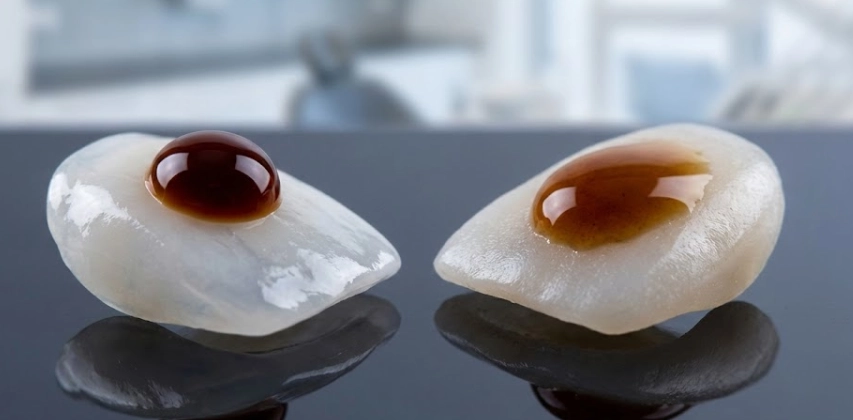
Think about the difference between the two materials through this analogy. Porcelain is like a high-quality glass window. It’s slick, it’s durable, and nothing can stick to it. On the other hand, a composite is more like a firm, technologically advanced sponge.
A composite is made of resin (in simple terms, it is a polymer). It consists of tiny pores. With time, these pores will absorb the coffee, tea, and Malbec that you will have in the evening. Porcelain? It is a non-reactive material. You could even say a porcelain veneer dipped in ink would be cleaned easily. For the socialites and coffee connoisseurs who come to Turkey from abroad, this is more than just an abstract detail—it’s the difference between a glowing and a faded smile after three years.
“The Clinical Hunch”: Repairability Can Sometimes Be A Trap
One thing that always surprises our patients is that Lema Dental Clinic has more experience with emergency composite repairs than porcelain ones. However, the thing is…
When you break a composite veneer on a kebab, Dentist Polen Akkılıç and her team can make a quick fix in about 20 minutes. It’s similar to a tire patch. But if the case is that of porcelain, replacement is the only option in most cases. Porcelain is not only stronger but also less “forgiving” of recipients’ assaults (human factor). Remember, a porcelain crown shattering is a rare event. It usually happens if it has been damaged prior.
Which One Wins? A Reality Check
| The Habit | Porcelain (The Marathon) | Composite (The Sprint) |
| The Caffeine Addict | Winner. Zero staining. | Requires regular professional polishing. |
| The Budget Traveler | Higher initial cost in Turkey. | Very wallet-friendly. |
| The “I Want it Now” Type | Requires 2-3 visits. | Winner. Done in one afternoon. |
| The Teeth Grinder | High risk of fracture without a guard. | Easier to repair if damaged. |
| The Naturalist | Winner. Mimics enamel depth perfectly. | Can look slightly “flat” or opaque. |
Expert Perspectives: Q&A with the Lema Team
Not exactly,” says Professor Doctor Coşkun Yıldız. “But you have to be smarter. With composite, you’re on a ‘probation period’ with staining foods. With porcelain, you can eat normally, provided you aren’t using your teeth as tools to open packages.
The question remains one of ‘time vs. money,'” explains Dentist Polen Akkılıç. “If you live locally, composite is easy to maintain. But if you’re flying into Lema Dental Clinic from abroad, you want something that won’t require a fix every year. That’s where porcelain wins every time.
Let’s be honest: nobody likes the drill,” the team notes. “For porcelain, we usually need to prep the enamel, which requires numbing. For composite, it’s often a ‘no-needle’ experience because we’re just adding material to the surface.
You can go from composite to porcelain easily,” says Professor Doctor Coşkun Yıldız. “But going back is harder. Once we prep a tooth for porcelain, it’s a lifetime commitment to covering that tooth.
The reality is that both can look amazing,” the team says. “But porcelain has that ‘inner glow’ (translucency) that composite just can’t quite replicate under bright lights.
- Alhekeir, D. F., et al. (2014). Porcelain laminate veneers: Clinical survey for evaluation of failure. Saudi Dental Journal.
- Gresnigt, M., et al. (2013). Clinical longevity of ceramic laminate veneers bonded to teeth. Journal of Dentistry.
- Korkut, B. (2018). Smile design with direct composite veneers: A 5-year follow-up. Journal of Esthetic and Restorative Dentistry.
- Magne, P., & Belser, U. (2002). Bonded Porcelain Restorations in the Anterior Dentition. Quintessence Publishing.
- Radz, G. M. (2011). Minimum preparation veneers: A review of the state-of-the-art. Journal of Cosmetic Dentistry.

