


Strongest crowns for teeth grinders.
If you wake up with a dull ache in your jaw or have noticed your natural teeth looking flatter over the years, you are likely part of a large, invisible club: the teeth grinders. In the medical world, we call this bruxism. For most, it is an involuntary nighttime habit that exerts immense pressure on the teeth—often far more force than we use while actually eating.
In our clinical experience at Lema Dental Clinic in Istanbul, we’ve seen how traditional dental work often fails these patients. A beautiful porcelain crown might look perfect on day one, only to chip or shatter months later under the relentless “earthquake” of nighttime grinding.
In fact, there was a long period when those who ground their teeth had to decide between strength (ugly metal crowns) or beauty (fragile porcelain). But let’s examine the material that has revolutionized the situation in Turkey: Monolithic Zirconia.
Why Bruxism Destroys Traditional Crowns
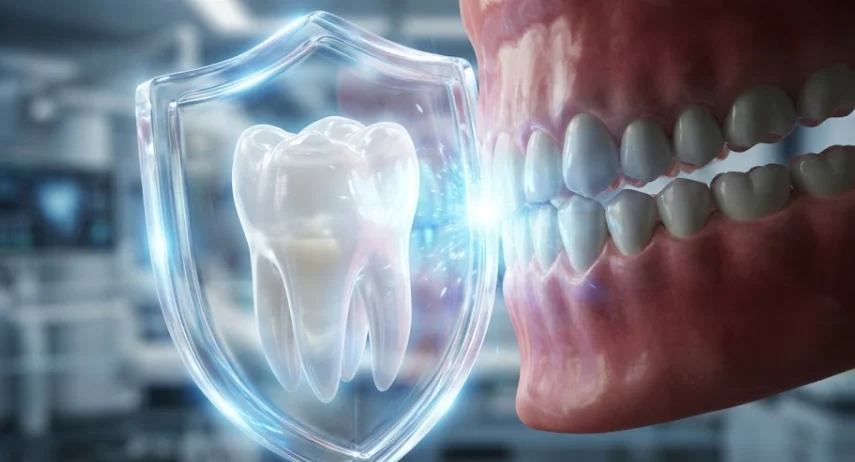
To understand the solution, we have to look at the flaw in old-school technology. Traditional crowns are often “layered.” They have a strong core (either metal or zirconia) with a layer of aesthetic porcelain baked on top.
Professor Doctor Coşkun Yıldız often uses a visual metaphor to explain this to our patients: imagine a high-end sports car with a thin, beautiful coat of paint. The car is fast and strong, but if you pelt it with stones every night, that paint is going to chip. In the mouth of a grinder, the porcelain is that “paint.” It looks natural, but it lacks the structural integrity to survive a “grinding storm.”
The question remains: how do we provide a crown that looks like a tooth but behaves like a diamond?
The “Monolithic” Difference: Carved from a Single Block
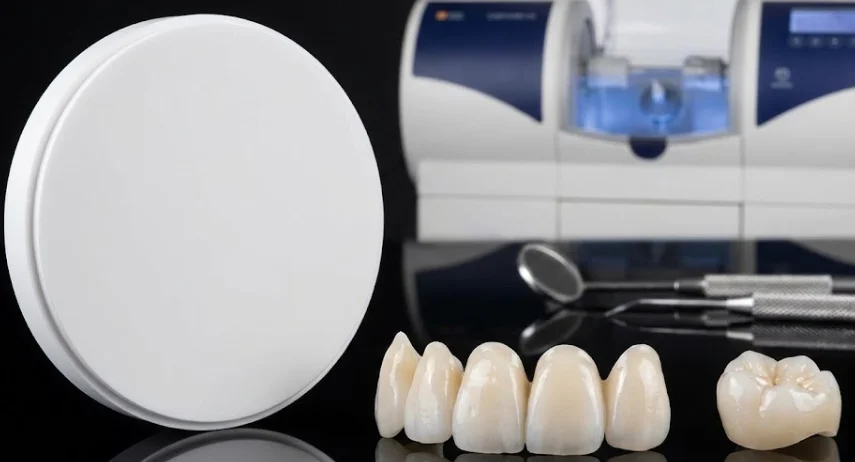
“Monolithic” literally means “single stone”. Layered crowns are one thing, but a monolithic zirconia crown is carved out of one solid, high-density block of zirconium oxide using sophisticated CAD/CAM technology.
Here is what we see in the clinic: because there are no layers, there is nothing to “delaminate” or chip off. It is one solid, incredibly hard structure from the core to the surface. It is the dental equivalent of carving a bunker out of a single mountain of granite rather than building it with bricks and mortar.
Comparing the Strength: Choosing Your Armor
When we help patients in Turkey decide on the right restoration, we look at “Megapascals” (MPa)—the measure of how much pressure a material can take before it breaks.
| Material Type | Flexural Strength (MPa) | Risk for Grinders | Aesthetic Score |
| Standard Porcelain | 100 – 150 MPa | Very High (Frequent chipping) | 10/10 |
| PFM (Metal-Ceramic) | 400 – 500 MPa | Moderate (Porcelain can pop off) | 6/10 |
| Layered Zirconia | 600 – 800 MPa | Low (But edges can chip) | 9/10 |
| Monolithic Zirconia | 1,200+ MPa | Negligible (The “Unbreakable” Choice) | 8.5/10 |
FAQ: Advice for the Modern Grinder
This is a common concern. The reality is that polished zirconia is actually less abrasive than traditional porcelain. As long as the surface is perfectly smooth—which we ensure with high-gloss polishing at Lema Dental Clinic—it is very kind to the teeth it bites against.
Yes. While the crown won’t break, the pressure of grinding can still affect the underlying tooth root or your jaw joints (TMJ). Think of the crown as your shield, but the nightguard is the peace treaty that protects your whole system.
Because monolithic zirconia is so strong, we can actually make the crown slightly thinner than older styles. This means we have to remove less of your natural tooth structure. Most patients find they forget it’s even there within a few hours.
In our clinical experience, with good hygiene, monolithic zirconia is a life-long material. While gums may recede over decades, the crown itself is virtually immune to the wear and tear that destroys other materials.
It’s about the marriage of technology and cost. At Lema Dental Clinic, we have the same milling technology found in the world’s top labs, but we can offer the procedure at a fraction of the price, often completing a full set of crowns in just a few days.
- Beuer, F., et al. (2008). Zirconia in fixed clinical prosthodontics: A systematic review. Journal of Dentistry.
- Guess, P. C., et al. (2010). Monolithic zirconia restorations: A new era in dental technology? International Journal of Prosthodontics.
- Miyazaki, T., et al. (2013). Current status of zirconia restoration. Journal of Prosthodontic Research.
- Sulaiman, T. A., et al. (2015). Fracture rate of monolithic zirconia restorations up to 5 years. The Journal of Prosthetic Dentistry.
- Zhang, Y., & Lawn, B. R. (2018). Novel Zirconia Materials in Dentistry. Journal of Dental Research.

