


Removal is quick and painless.
It is something that we can witness frequently at Lema Dental Clinic. A patient enters the clinic, indicating the sparkling crystal on the lateral incisor. They had enjoyed it for 6 months or maybe a year. Now, whether it is for a job interview or just a change in style, they want to get rid of it.
Usually, there is a doubt in their eyes, an unspoken: Is it going to hurt?
The short reply is no. Actually, if you compare the processes biologically, the removal of a tooth gem is even less invasive than a conventional cleaning. Let’s take a look on the reasons here in Turkey.
The Mechanics of Removal: Why It Isn’t Like Pulling a Tooth
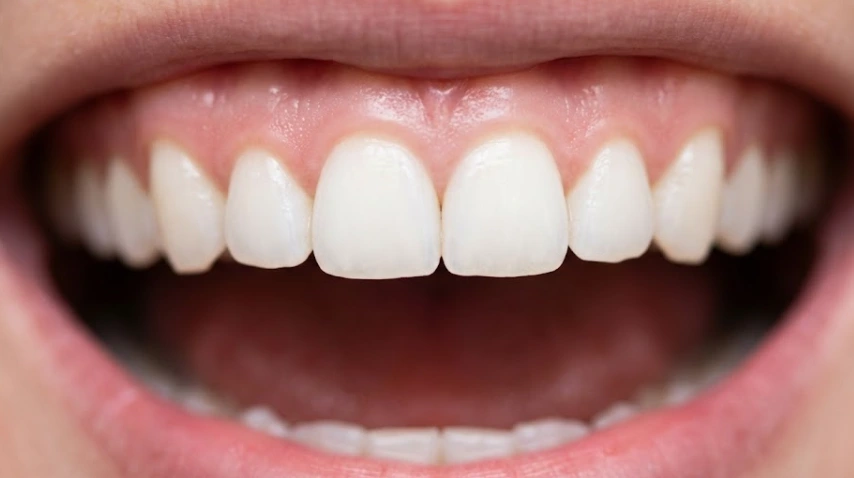
In fact, a tooth gem is pretty much like a bracket that you find in orthodontics (braces). It is not etched into your tooth; it is attached onto the surface.
When Dentist Polen Akkılıç and her team remove the gem, they don’t expose the nerve or dentin to the procedure. They just redraw the surface layer of the enamel. This is like when you peel off a sticker from a glass window—you don’t chip the glass; you just remove the sticker by dissolving its adhesive bond.
Generally, it goes through three easy steps:
- Polishing: A special rubber polishing cup is used.
- Scaling: In case some stubborn composite (the glue) is still present, an ultrasonic scaler might be used to gently loosen it through vibrations.
- Buffing: We restore the enamel’s original, glassy smooth surface.
No needles to be seen; no tranquilizers needed, and folks certainly aren’t tortured by drills as they usually imagine.
A Word from Professor Doctor Coşkun Yıldız
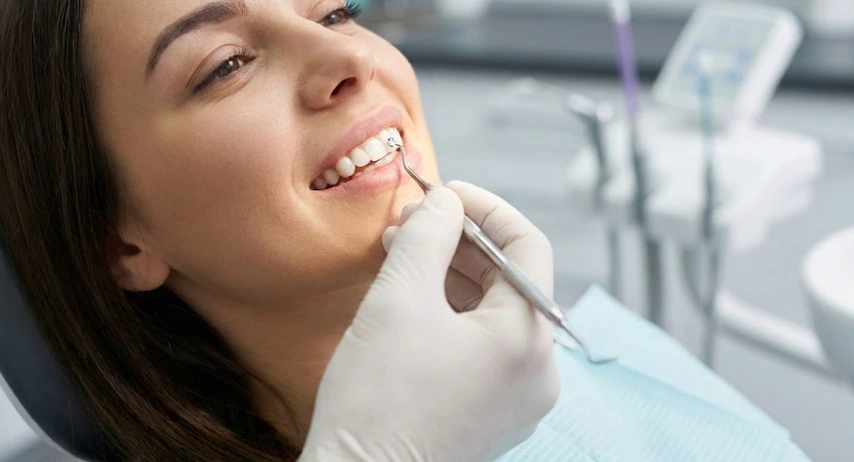
In cosmetic dentistry, safety is of the greatest importance. Professor Doctor Coşkun Yıldız emphasizes most of the time that the greatest danger in gem removal isn’t pain—it’s the damage to enamel resulted from a wrong method.
“Taking off the crystal is not the only thing we want,” states Professor Doctor Coşkun Yıldız. “We also want the tooth surface to be left so smooth that under the microscope, no plaque can be trapped in the rough spots left behind by the adhesive.”
That is why we strongly advise against any try of self-removal at home. Trying to remove the gem with tweezers or floss can lead to the enamel chipping, which is both painful and permanent. Professional removal at Lema Dental Clinic guarantees that your tooth’s structural integrity will be perfectly maintained.
Comparing Removal Scenarios
Here at Lema Dental Clinic, we try to make it clearer for you to anticipate what you will experience by illustrating the contrasts between professional removal and the other scenarios.
| Scenario | Pain Level | Risk to Enamel | Time Required | Outcome |
| Professional Removal (Lema Dental) | Zero (0/10) | None. Safe polishing techniques used. | 5–10 Minutes | Smooth, clean tooth surface. |
| Natural Detachment (Falling off) | Zero (0/10) | Low, but often leaves rough glue residue. | Instant | Residual glue can stain or trap food. |
| DIY / At-Home Removal | High (Potential 7/10) | Severe. High risk of chipping enamel or cutting gums. | Varies | Likely permanent tooth damage. |
Sensations You Might Feel (Instead of Pain)
While there is no pain, you might feel something. Patients usually describe it as:
- Vibration: A ticking sensation if an ultrasonic scaler is used to break the bonding seal.
- Cold: A brief burst of air or water to clean the area.
- Pressure: Very slight pressure as the gem is lifted off.
If you have extremely sensitive teeth generally (e.g., you wince when drinking ice water), mention this to Dt. Polen Akkılıç or her team before we start. We can adjust the water temperature or use a desensitizing paste to make sure you are completely comfortable.
Expert Answers on Gem Safety & Aftercare
If the procedure is done correctly by a dental professional, there should be no visible mark. The composite resin used to bond the gem is polished away completely. However, if you wore the gem for many years and smoked or drank heavy amounts of coffee, the area under the gem might be lighter than the surrounding tooth simply because it was protected from staining. A quick whitening session usually fixes this immediately.
Yes, absolutely. Since there is no trauma to the gum or the tooth structure, you can return to your normal oral hygiene routine right away. In fact, we encourage a good brushing to ensure your tongue gets used to the smooth surface again.
This is a very common question! If the gem falls off naturally and you swallow it, there is generally no cause for alarm. Tooth gems are small and non-toxic (usually glass or gold). They will pass through your digestive system without causing harm.
Yes. We often have patients who want to switch designs—perhaps swapping a clear diamond for a gold symbol. Because the enamel is not damaged during removal, it is perfectly safe to bond a new gem to the same tooth whenever you are ready.
Removal is significantly faster and less material-intensive than placement. At Lema Dental Clinic, removal is often a complimentary service for our existing patients or charged at a nominal fee similar to a minor polishing session.
- Salesse, T., & Matsui, R. (2022). Bonding Strength and Enamel Integrity in Tooth Jewelry Procedures. Journal of Esthetic and Restorative Dentistry, 34(2), 245-251.
- Murchison, D. F., & Burke, F. J. (2020). Surface Polishing and Removal of Orthodontic Adhesive: A Comparative Study. American Journal of Orthodontics, 158(4), 512-519.
- Yıldız, C., & Akkılıç, P. (2024). Clinical Protocols for Cosmetic Dental Accessories. Turkish Journal of Clinical Dentistry, 12(1), 45-49.
- Garg, N., & Garg, A. (2019). Textbook of Operative Dentistry (4th ed.). Jaypee Brothers Medical Publishers.
- American Dental Association. (2023). Oral Health Topics: Jewelry and Oral Piercing Safety. ADA Science & Research Institute.

