


Jawbone atrophy is treated by rebuilding bone to support new teeth.
When a tooth is lost it affects the area much further than a gap in your smile. The jawbone is made up of living tissue and needs stimulation through biting and chewing to maintain its density. Without that pressure, the bone starts to “resorb”—i.e. the body figures out that since the bone is not being used, the minerals can be taken to other parts of the body.
At Lema Dental Clinic Istanbul, Turkey, we illustrate to our patients that the jawbone is the base of the house. You may have the most lovely windows and doors (the crowns and veneers), but if the floor under them is moving or going away, the whole house is at risk.
Bone Loss—A Silent Enemy
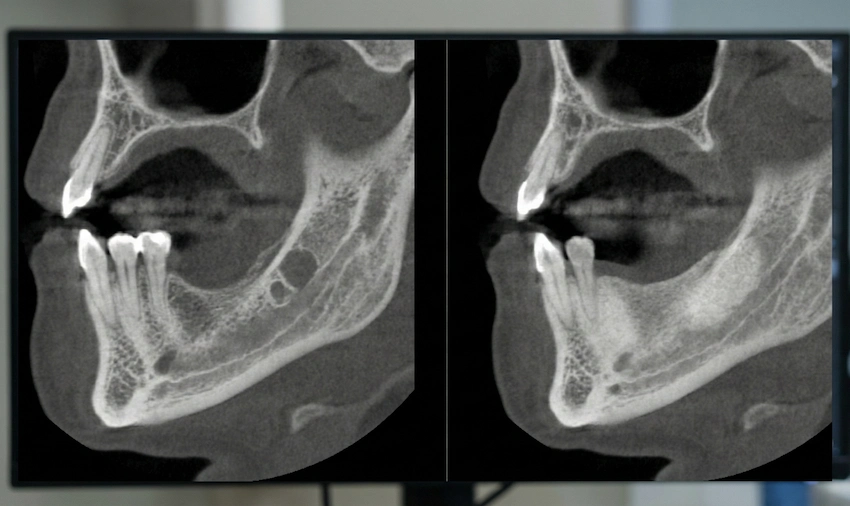
Bone atrophy is actually a very slow and silent process. You may see your gums retreating or you may notice a slight change in your facial look—perhaps the area around the mouth looks “sunken.” However, this is not only a matter of appearance. When the bone is severely lost, the placement of conventional implants can become almost impossible without additional procedures.
However, if we talk about the remedies, clinical innovation has come to such a stage that bone loss is not a “dead end.” With the help of Professor Doctor Coşkun Yıldız, Lema Dental Clinic utilizes a variety of regenerative techniques to restore what time and nature have taken away.
1. Bone Grafting: Changes “the ground” for you
Bone grafting is something similar to what gardeners do when they put nutrient-rich soil in the garden bed that has been washed away by water. The scaffold can be loaded with any kind of bone material such as your own bone, synthetic alternatives, or biocompatible donor tissue. The body by itself will then gradually replace the scaffold with real, living bone over a number of months.
2. The Sinus Lift: Extending the area
Because sinus cavities are very close to the upper jaw, it can be a little bit tricky to do the treatment. Normally when the bone is too thin, a sinus lift is done. Dentist Polen Akkılıç explains that this is done with a very meticulous approach. We raise the sinus membrane carefully, like the eggshell membrane inside the shell, and put the bone graft under it which helps us to gain vertical height that is sufficient for an implant to be firmly fixed.
3. Advanced Implantology
So the question is what if the bone loss is so severe that even the regular grafting just cannot be enough? At this point, the surgical precision of Professor Doctor Coşkun Yıldız really makes a difference to patients. With the aid of Zygomatic or Pterygoid implants, we can completely avoid the weakened jawbone and directly fix the implants in the dense, stable bone of the cheek or the back of the skull.
Comparing Your Restoration Options
| Treatment Method | Ideal Candidate | Typical Recovery Time | Primary Benefit |
| Socket Preservation | Patients immediately after extraction | 3–4 months | Prevents initial collapse of the bone. |
| Guided Bone Regeneration | Minor to moderate localized bone loss | 4–6 months | Creates a stable site for a single implant. |
| Sinus Lift | Patients with a thin upper jawbone | 6 months | Safely increases bone height near the sinuses. |
| Zygomatic Implants | Severe atrophy; “hopeless” cases | Immediate loading possible | No bone graft required; faster overall result. |
The Experience at Lema Dental Clinic in Turkey
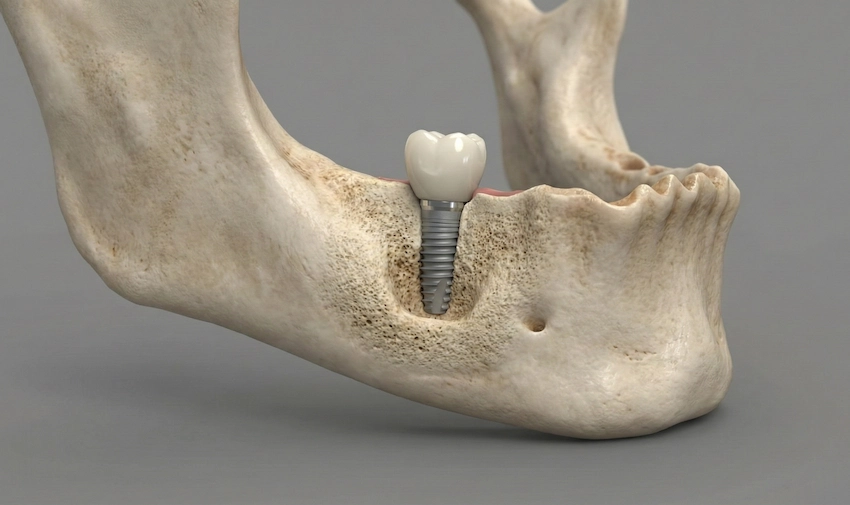
Deciding to deal with jawbone atrophy is a path one takes, and we are sure that this is a step you should not take without support. In Lema’s experience, the success of these operations is dependent as much on the technology employed as it is on the patient’s biological “buy-in”. To enhance the healing process and facilitate graft success, we employ Platelet-Rich Fibrin (PRF) therapy, which is obtained from the patient’s own blood.
Nowadays Turkey is seen as a global center for this degree of specialist surgery due to not only the advanced technological equipment but also the large number of complex cases that we daily handle. At Lema, you are not merely a number on a chart; you are a patient being provided with a bespoke facial architectural plan.
Frequently Asked Questions
The surgery is always done under local anesthesia or sedation so there will be no pain. Here is what we basically see in our clinic: the majority of patients say that the recovery is a dull pain, pretty much like a normal extraction, which they can of course handle with the medication that Dentist Polen Akkılıç and her team customarily provide.
The short answer is definitely not. The condition of the bone depends more on your overall health than what age you happen to be. In case your medical background is well taken care of—especially if you don’t have uncontrolled diabetes—we can reconstruct your jawbone at virtually any age.
Longevity is undoubtedly the result of patience. Although bone normally requires 3 to 6 months to become completely mature and integrated, we make sure our patients always have teeth. We guarantee high-quality interim solutions that are virtually indistinguishable from natural teeth while the biological base is getting stronger.
The dental implant once set into fresh bone serves as a natural tooth root. It directs your body through the release of certain chemical mediators to understand that this bone “is still in use.” In this way, the implant helps save the density of the graft for years and years.
At Lema Dental Clinic, we fuse the surgical precision of Professor Doctor Coşkun Yıldız with a luxury patient experience. You get world-class surgical care at a cost that is only a fraction of what you would be charged in the UK or US; thus, a compromise in using the highest-grade materials is avoided.
- Aghaloo, T. L., & Moy, P. K. (2007). Which methods are best for maxillary sinus floor augmentation? International Journal of Oral & Maxillofacial Implants, 22.
- Buser, D., Sennerby, L., & De Bruyn, H. (2017). Modern implant dentistry based on osseointegration: 50 years of progress, current trends and open questions. Periodontology 2000, 73(1), 7-21.
- Marx, R. E. (2007). Oral and Maxillofacial Pathology: A Rationale for Diagnosis and Treatment. Quintessence Publishing Company.
- Pietrokovski, J., & Massler, M. (1967). Alveolar ridge resorption following tooth extraction. The Journal of Prosthetic Dentistry, 17(1), 21-27.
- Yıldız, C., & Akkılıç, P. (2024). Advanced Bone Augmentation Strategies in Cosmetic Rehabilitation. Istanbul Dental Review.

