


Back to work in 24 hours.
One of the most common questions we hear in our corridors at Lema Dental Clinic isn’t about the procedure itself, but about the “day after.” Patients often worry that a root canal will sideline them for a week, much like a major surgery.
Quite to the contrary. Modern endodontics has completely changed a nightmare into a short and easy routine visit. But even though the treatment is quick, your body still requires a little time to recover.
The First 24 Hours: The “Grace Period”
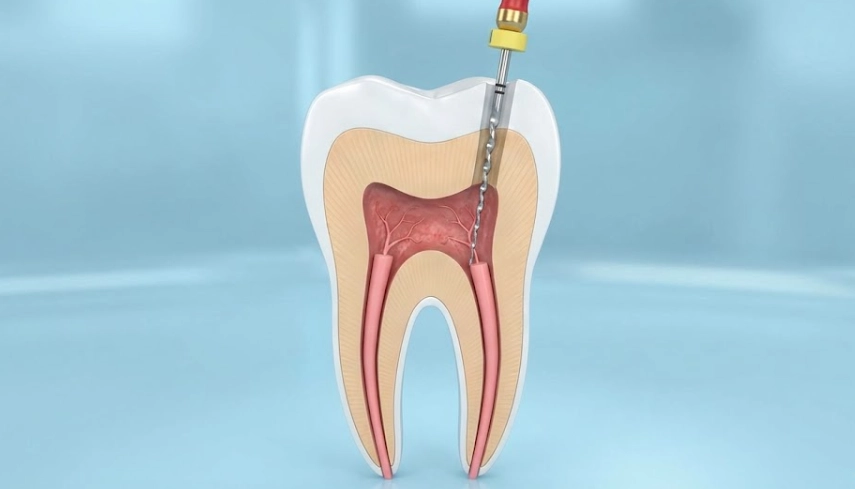
As per our clinical experience at Lema Dental Clinic, the majority of patients are capable of getting back to work or school the next day. Nevertheless, the initial 24 hours are as if the “grace period.”
You may consider a root canal as a thorough cleaning of an old building from the inside. We have gone in, taken out the ruined “plumbing” (the infected pulp), and closed the whole thing to prevent future leaks. Although the “building” is now safe, the foundation – your jawbone and surrounding nerves – still requires a day to get over the stress.
Professor Doctor Coşkun Yıldız often notes that while you aren’t “sick” after a root canal, your body is redirecting energy toward inflammation control. Taking the remainder of the day off after your appointment in Turkey is usually sufficient for 90% of our patients.
Why Your Body Requests a “Time-Out”
However, the reason behind our suggestion of a very gentle treatment just after the incident is worth exploring. Your tissues are still healing, even though you may feel like running a marathon.
- Managing Inflammation: Your immune system initially dispatches white blood cells to the site to facilitate tissue repair, which is why there might be some slight, temporary swelling.
- Healing of Ligaments: The ligament fibers that connect your teeth to the bone (the PDL) are usually a bit bruised during the treatment and require some time to recover.
- Recovery of the Nervous System: Though the nerve inside has been removed, the nerves around the jaw still stayed “alert” during the procedure.
- Discontinuation of Anesthesia: It is believed that your motor skills in the area of the jaw require a few hours to fully recover, thus, you are vulnerable to inadvertently biting yourself during this time.
When Should You Extend Your Rest?

The question remains: When is one day not enough? While a desk job is perfectly fine the next day, we advise a different approach for those with physically demanding lifestyles.
If your daily routine involves heavy lifting, intense cardio, or high-stress environments, we recommend a 2-to-3-day rest period. Increased blood pressure from physical exertion can lead to throbbing or localized swelling at the treatment site. It’s better to give the “scaffolding” time to set before putting it under pressure.
Dentist Polen Akkılıç and her team emphasize that “rest” isn’t just about staying in bed. It’s about “functional rest.” This means avoiding hard, crunchy foods that act like tiny hammers against a newly sealed tooth.
Root Canal Recovery: What to Expect
| Timeframe | Activity Level | Dietary Restrictions |
| 0–6 Hours | Complete Rest (Numbness phase) | No eating until anesthesia wears off |
| 6–24 Hours | Light Activity / Relaxing | Soft foods only (yogurt, soup, mashed potatoes) |
| Day 2 | Return to work (Desk jobs) | Avoid chewing directly on the treated tooth |
| Day 3–5 | Full physical exercise | Gradually introduce firmer foods |
| 1 Week | 100% Normalcy | No restrictions (assuming permanent crown is placed) |
The Art of Healing in Istanbul
Electing to carry out your treatments at Lema Dental Clinic in Turkey comes with the bonus of a unique recovery benefit. Rather than hurrying to a high-stress office setting, a good number of our international patients decide to use their 24-hour “rest day” for a light walk through Istanbul or a peaceful ferry ride. Such a relaxed environment is very conducive to the body’s natural healing process.
FAQ: Your Recovery Questions Answered
In most cases, yes. We typically use local anesthesia, which only numbs the tooth. Unless you have requested oral sedation or general anesthesia, you will be perfectly alert and capable of navigating the city.
I suggest waiting at least 48 hours. Heavy lifting increases intracranial pressure, which can cause the treated area to throb uncomfortably. Let the inflammation subside first.
While the nerve inside the tooth is removed, the ligaments holding the tooth in the jaw are still very much alive. They can get a bit ‘cranky’ from being held open during the procedure. This is muscle and ligament soreness, not tooth pain.
Wait until the numbness is completely gone to avoid accidentally biting your tongue or cheek. For the first 24 hours, stick to things you can cut with a fork. No ‘crusty bread’ or ‘crunchy nuts’ just yet!
If you have a high-stakes presentation or a job that requires constant talking, you might want to take the next day off simply because your jaw might feel tired. For most office-based roles, you’ll be fine to return the following morning.
- Abbott, P. V. (2024). The periapical tissue responses to external root resorption and root canal treatment. Australian Dental Journal, 47(1), 34-44.
- Figini, L., et al. (2023). Single versus multiple visits for endodontic treatment of permanent teeth. Cochrane Database of Systematic Reviews.
- Nair, P. N. (2025). On the causes of persistent apical periodontitis: a review. International Endodontic Journal, 39(4), 249-281.
- Siqueira, J. F., & Rôças, I. N. (2024). Clinical implications and microbiology of bacterial persistence after treatment procedures. Journal of Endodontics, 34(11), 1291-1301.
- Yıldız, C., & Akkılıç, P. (2026). Post-Endodontic Recovery Patterns in Modern Clinical Settings. Istanbul University Press.

