


A Maryland dental bridge is a highly conservative and durable option among the solutions offered to you for tooth replacement; thus, it is especially suitable for the missing front tooth area. This bridge type is widely known for its low tooth preparation and great esthetics, which may, in a good way, be converted to between 8 and 15 years of life, and, on some occasions, even longer if properly maintained.
Although the dental hygiene aspect of the patient is extremely important, dental materials, occlusal alignment, and professional maintenance are among the other factors contributing to this success. In case of perfect oral care, patients consuming soft food only, and dental appointments as recommended, the bridge lifespan will be significantly extended. Having good knowledge of functions, components, and preventive measures of the Maryland bridge, as well as taking appropriate treatment, will let any patient be quite sure and well-informed while deciding.
What Is a Maryland Bridge?
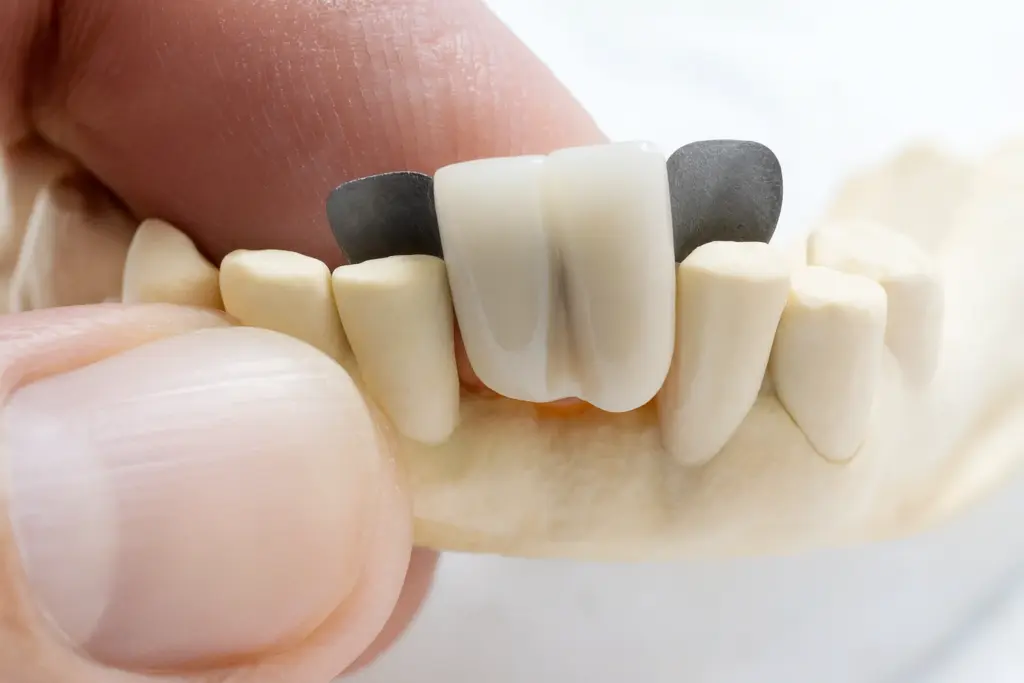
A Maryland bridge/R.B. Bridge is the least harmful fixed dental prosthesis that replaces only one lost natural tooth.
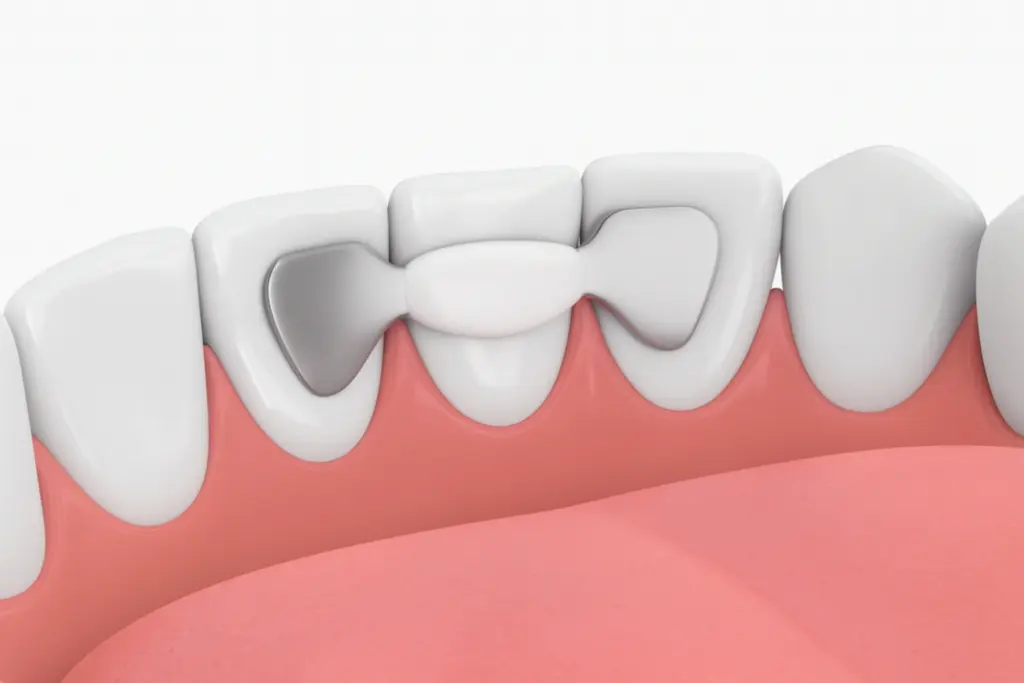
Rather lengthy bridge designs that require thousands of enamel removals, a resin-bonded bridge depends partly on metal or porcelain wings attached to the inner surfaces of the neighboring (healthy) teeth with minimal surgical preparation.
These wings hold a pontic, which is the artificial replacement tooth.
The minimal tooth preparation nature of the Maryland bridge allows the restoration to be very conservative, and at the same time, the patient is less likely to lose or experience a root canal of a natural tooth. In simple terms, dentists etch or sanitize, and the application of resin cement and bonding is performed for the metal or porcelain wings that are seated on the dental surfaces that create mechanical retention, but also of a chemical nature.
The elements of a Maryland bridge are as follows:
- Pontic: The artificial tooth that replaces the void.
- Retainers (Wings): Small lateral parts of metal, zirconia, or porcelain that are stuck on the adjacent teeth with the help of thin layers.
- Resin Cement: A certain kind of glue that helps the wings fit perfectly on enamel or dentin.
The procedure is fast, less invasive, and does not cause discomfort to the patient. Usually, it involves only one or two dental appointments and no surgery is needed.
Maryland Dental Bridge for Front Teeth
Esthetics is the main concern when front teeth are to be replaced. A Maryland bridge for the front teeth is an optimal option as it possesses all the features of a natural tooth, such as strength, translucency, and color blending. Dental professionals mostly use porcelain-fused-to-metal or all-ceramic materials to get a result indistinguishable from the adjacent natural teeth.
The a.k.a. biting force in the anterior region is lighter than that in the molar area; thus, the Maryland bridge stays stable for a great number of years if it is bonded the right way. Patients are very happy with the fact that it does not change their speech, affect the way they pronounce the words, and that it is not necessary to remove a big part of the enamel.
Porcelain or zirconia is used to manufacture the wings for front teeth instead of metal, so that no gray shadow coming from the translucent enamel is visible. Digitally designing and color matching can be done very accurately using modern CAD/CAM technology, which leads to an undetectable smile.
Regular dental care, such as brushing twice daily, flossing with the help of bridge threaders, and professional cleanings twice a year, not only helps the adhesive stay strong but also prevents plaque from forming around the retainers. This is very important since adhesive failure most of the time occurs due to decay or plaque at the wing margins and not the material itself.
Maryland Dental Bridge for Molar
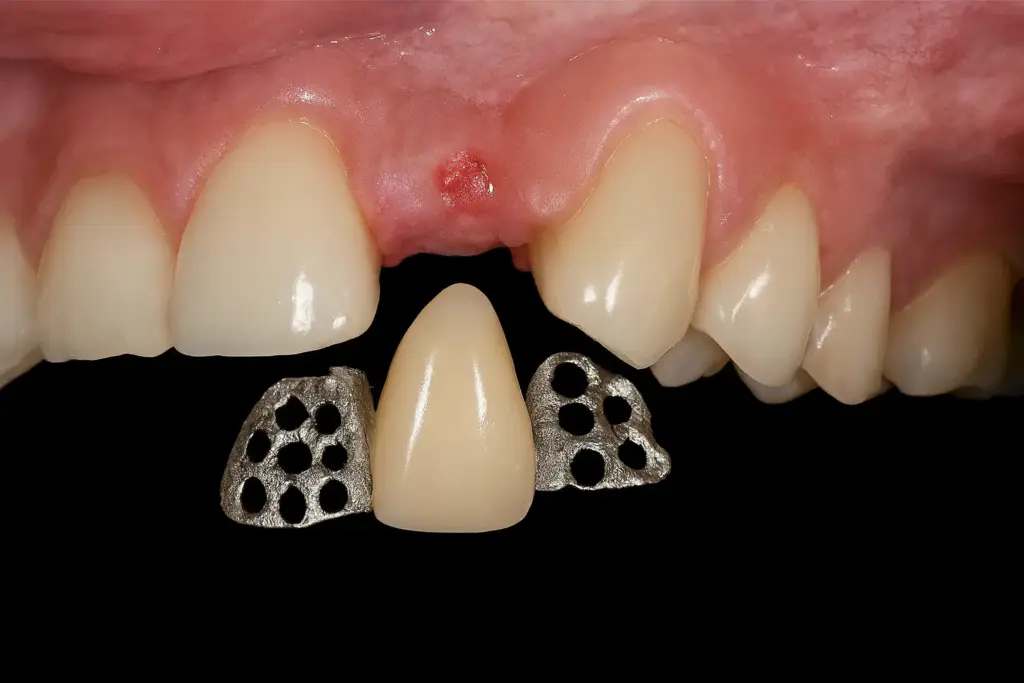
The Maryland bridge for molar teeth is not popular, but it can be the best choice in specific cases. Due to the higher occlusal loads that molars receive during chewing, the bridge needs to be made of reinforced materials and have a precise bond.
Metal-based frameworks, such as cobalt-chromium or nickel-chromium alloys, are the metals that dentists might use for molar replacements. These metals are good at distributing the forces of biting evenly and thus the risk of debonding reduces. However, it is very important that occlusal adjustments are done carefully to avoid the occurrence of stress concentration at the adhesive interface.
For instance, the dentist might come up with the alternative i.e., an implant-supported crown, in case the bite force or size of a gap is not suitable for a Maryland bridge. Anyway, in the right conditions, and with careful planning, a Maryland bridge can still be working in the posterior region for quite a few years without any problem.
The dentist urges patients not to bite on hard foods such as nuts or ice with their teeth directly, and also, if they feel any movement, they should inform the dentist immediately. The dental professional can monitor the adhesive bond and thus, there is a possibility of catching the loosening or fracture at a very early stage during regular recall visits.
Dental Glue for Maryland Bridge
The bonding material or the dental glue is the main reason for the Maryland bridge to last long. The Professional name for this adhesive is resin cement, which comes in different kinds like light-cured, self-cured, and dual-cured composites.
Resin cements create a robust chemical bond to both enamel and dentin, and thus provide longevity retention. The dentist carries out these steps prior to application:
- Etching: Initially, enamel is treated with a mild acid solution, which dissolves the surface and creates microscopic roughness on it.
- Bonding agent application: A thin film of adhesive, among which the composite promotes chemical bonding with the tooth structure.
- Cementation: Resin cement is put on the wings of the bridge, and a light is used for curing to harden and fix it.
This kind of method is the one that gives the bridge the property of resisting the dislodging force, which can be produced under normal oral conditions. Furthermore, these materials used are of a bionic and color-stable nature, hence they do not allow any changes in color or the occurrence of allergic reactions.
The success of an adhesive relies on effective curing, control of dryness, and precision of the fit. The dentists’ instruction to the patient is that the patient should refrain from very hot or sticky foods during the first 24 hours following bonding so that the resin can be fully polymerized. Besides, the patient can extend the period of effectiveness of the cement by keeping the p.H. of the mouth neutral through rinsing with non-acidic solutions.
Dental Code for Maryland Bridge Wing
Each dental operation is given a CDT (Current Dental Terminology) code that is used for documentation and insurance purposes. Maryland bridge comes under the heading of resin-bonded fixed partial dentures.
The most common code is:
- D6545: Retainer – cast metal for resin-bonded fixed prosthesis.
If the bridge is made of materials other than metal, such as ceramic or zirconia, the corresponding codes may vary. The pontic, i.e., the artificial tooth, has its own CDT code depending on what it is made of:
- D6205: Pontic – porcelain fused to metal.
- D6200: Pontic – all ceramic.
The patient can figure out insurance coverage and get the cost by understanding these codes. Most insurance plans partially cover resin-bonded bridges, especially for anterior teeth replacement.
Dental practices are always required to issue a printed treatment plan to the patients, which is more than just a list that includes these codes; it is also a way to maintain billing and documentation transparency.
Removing a Maryland Dental Bridge
However, there are certain situations in which the removal of Maryland bridges is located. The most frequent reasons are substitution after a long time, the failure of the adhesive, or the implant preparation process.
Ultrasonic scalers, rotary instruments, or laser debonding tools are used by dentists to separate the bridge slowly without causing any injuries to the enamel. This method is done with magnification to ensure safety and accuracy. The removal has to be done with great care and precision because the wings are thin and the bond is strong so that there is no damage to the supporting teeth in this way.
The dentist, after removal, inspects the condition of the enamel, dentin, and the gums. If needed, polishing and remineralization of the teeth can be done to restore the smoothness. In some cases, the same bridge can be rebonded with a new adhesive if the pontic and the wings are still there.
Patients who move from a Maryland bridge to a dental implant usually do so to get long-term benefits. In such situations, the implant can take the place of the old bridge, which becomes a temporary restoration during the healing of the implant.
Maryland Bridge vs Dental Implant – Which Is Better?
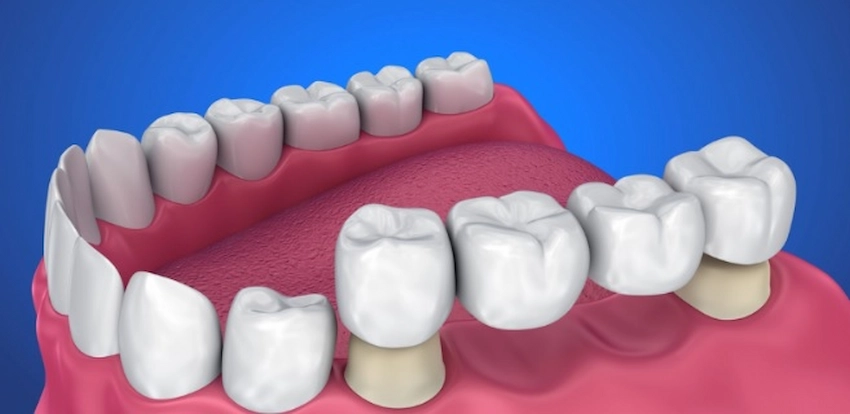
Both a Maryland bridge and a dental implant can lead to the effective removal of a tooth. Nevertheless, these two things differ in a very significant manner with regard to their next operatory principle, price, and durability.
Maryland Bridge Benefits:
- Minimally invasive – no cutting was done, therefore no incision is required.
- Works harmoniously with the enamel of adjacent teeth.
- Instant aesthetic effect in just one or two appointments.
- Inexpensive at the start of the treatment when compared to implants.
Maryland Bridge Disadvantages:
- The framework relies on a resin cement as its key element of support.
- Not appropriate for large spaces, nor the locations where teeth bite strongly.
- Occasionally, the bridge can become unglued and require being bonded again.
Advantages of Dental Implant:
- Replaces the root as well as the metal post of the missing tooth with a dental implant.
- Prevents bone loss by providing nutrition to the mandible.
- It can be kept for a very long time.
- Functions autonomously; therefore, it doesn’t harm the adjacent teeth.
Disadvantages of Dental Implant:
- The process of grafting and recovery time are needed.
- High cost at the beginning.
- Not allowed in patients suffering from an uncontrolled systemic disease.
The Maryland bridge is still a good alternative option for a young patient or one who requires a conservative approach. The long-term dental implant complications are only minimal when taking into account the issue of auxiliary stability, so that implant-supported restoration becomes the most reliable. A specialist who, by looking at bone health, the bite, and aesthetic requirements, he/she decides the most suitable option.
Maryland Bridge for Kids
Children and teenagers with missing front teeth are the most common users of Maryland bridges. In cases where the teeth were knocked out due to injuries or the teeth didn’t grow because of a birth defect, dentists advise that the child wait for the development of the jawbone before dental implants are done. However, a Maryland bridge is still recommended as a temporary, safe, and aesthetic restoration until an implant can be placed.
In the opinion of pediatric dentists, resin wings made of light and flexible materials and pontics that are carefully bonded go a long way in adapting the stress to the developing teeth.
It is worth mentioning that this treatment preserves tooth structure and also helps the development of speech skills, eating skills, and self-esteem of the child during the growing age.
Parents should ensure that their children are thoroughly clean and practice good oral hygiene and instruct them not to bite on hard food or objects. A dental visit every six months for a regular check-up is important to follow up on the development of the jaw, dental alignment and the condition of the adhesive. In case of skeletal growth, a permanent implant or other long-term restoration can be used instead of the bridge.
What Does a Maryland Dental Bridge Look Like?
A Maryland dental bridge carries out its functions discreetly in a compact and natural way. The eye-catching feature is the pontic, which to the normal eye looks like a perfectly shaped tooth that naturally complements the smile.
The artificial tooth does not interfere with the gum line, and its color is matched with the surrounding enamel.
Thoroughly, the bridge has four slender “wings” which are the extension of the pontic and these are bonded to the adjacent teeth. If these wings are made of porcelain or zirconia, the front view makes them look like they are not there, thus keeping the aesthetic goal intact.
It is known that modern dental labs employ three-dimensional digital scanners to come up with a design for Maryland bridges with the accuracy of one micrometer. The end is a restoration that not only precisely fits but also, like natural enamel, is able to reflect light. The clients keep saying that the way they feel is ‘very natural’, and they rarely remember that one of their teeth is artificial
Maryland Bridge Dental Porcelain
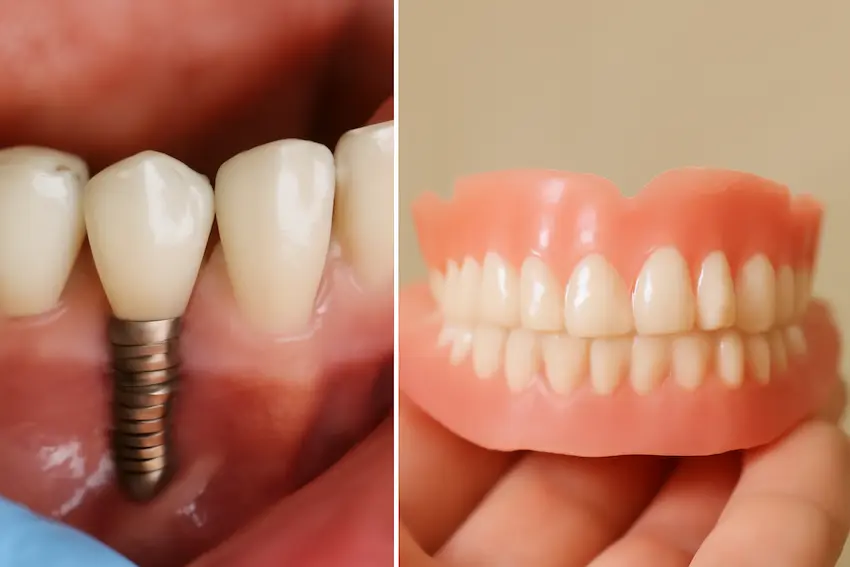
Porcelain is the material that is most used to make Maryland bridges, with the highest rate of success in the front area of the mouth. It is characterized by good biocompatibility and at the same time it amazes by its optical properties, allowing it to overcome enamel’s translucency and brightness.
Instead of lithium disilicate or zirconia, the dentists may select one of the ceramics that are reinforced with the latter to achieve higher tensile strength and resistance against microcracks. The incorporation of lithium disilicate with one of the zirconia-reinforced substrates, which will be used for bonding, offers the best aesthetics and provides enough strength against the patient’s occlusal forces.
Maryland bridges made out of porcelain are very durable as they do not change their color and are also resistant to coloring agents coming from food and drinks. Non-abrasive dentifrice and brushes with soft bristles have to be used by the patients in order to avoid damage to the surface glaze. Periodic professional polishing is essential to maintain the gloss and smoothness of the restoration.
If, in addition to this, the porcelain is properly shaped and the bridge beautifully fits in your oral cavity, then there will be no problem of inflammation or irritation of the gum as the tissues will receive the support they need. This universal standard for the material and the soft tissue after the restoration procedure contributes to the oral aesthetics and comfort lasting over time.
How Long Will a Maryland Dental Bridge Last?
If the patient takes good care of a Maryland dental bridge, it can last anywhere from 8 to 15 years, and in certain instances, up to 20 years as well. Some of the most important determinants for durability are:
- Application of bonding technologies created with top-tier materials.
- Correctly aligned teeth and the patient’s dietary habits.
- The degree of oral health and the control of dental plaque.
- Consistent dental check-ups and dental procedures.
The statement is a bit technical, and the dentists say that the glue, which is called the adhesive layer, might lose its effectiveness over time; however, the teeth that are under the area remain intact because the method is non-invasive. Rebasing without substantial alterations can bring back the lost capacity very fast.
Therefore, in order to extend the lifespan of a Maryland bridge, patients should:
- Brush your teeth twice a day with a fluoridated toothpaste.
- Use floss threaders or small interdental brushes to clean the area under the pontic.
- Do not consume extremely hard foods.
- Have a professional cleaning every six months.
If the restoration is made taking these precautions, it will be stable, it will not lose its brightness, and it will still be functional for years to come.
References
- Rosenstiel SF, Land MF, Fujimoto J. Contemporary Fixed Prosthodontics, 5th ed. St. Louis: Elsevier; 2016.
- Shillingburg HT, Hobo S, Whitsett LD. Fundamentals of Fixed Prosthodontics, 4th ed. Quintessence Publishing; 2012.
- Goodacre CJ, Bernal G, Rungcharassaeng K, Kan JY. Clinical complications in fixed prosthodontics. J Prosthet Dent. 2003;90(1):31–41. doi:10.1016/S0022-3913(03)00212-6
- Givan DA, et al. Resin-bonded fixed partial dentures: review and update. Compend Contin Educ Dent. 2000;21(9):725–732.
- Pjetursson BE, Brägger U, Lang NP, Zwahlen M. Comparison of survival and complication rates of tooth-supported fixed dental prostheses (FPDs) and implant-supported FPDs. Clin Oral Implants Res. 2007;18(Suppl 3):97–113.
- Al Hussaini I, et al. Longevity and performance of resin-bonded bridges. Br Dent J. 2019;226(12):923–930.
- Craig RG, Powers JM. Restorative Dental Materials, 13th ed. St. Louis: Mosby; 2012.
- Heymann HO, Swift EJ, Ritter AV. Sturdevant’s Art and Science of Operative Dentistry, 7th ed. Elsevier; 2019.
- American Dental Association. Current Dental Terminology (CDT) 2025. ADA Publishing; 2025.
- McLean JW. Evolution of dental ceramics in the twentieth century. J Prosthet Dent. 2001;85(1):61–66.
Frequently Asked Questions About Maryland Dental Bridge
In case the Maryland bridge detaches, do not hesitate to put it in a clean container and go to your dentist without delay. Please do not attempt to fix the problem on your own by using household glues. The dentist, after cleaning the areas, checking the bonding site, and using his resin cement to reattach will reattach it. Normally, the dentist can reattach it without causing any damage to the teeth.
The life of a Maryland bridge is 8 to 15 years or more if it is made correctly as well as properly maintained. The patients who generally have good oral hygiene and a dental check-up every 6 months are likely to maintain their bridges for a longer time.
The Maryland bridge for the lateral incisor is a way of having the small front tooth next to the central one. It is the main cause of the use of this type of bridge because it helps to regain the balance and beautify the smile without removing any part of the natural teeth.
Yes, a Maryland bridge is a good alternative to an implant for a child or a teenager who is a surgery not a candidate. It keeps talking, eating, and maintaining self-esteem until the growth is complete.
Definitely. Besides being durable, non-staining, and better-looking, porcelain Maryland bridges if handled properly for a long time they keep their shine and have no color change or even cracks.

