


Laser surgery uses light to remove infected gum tissue and promote healing.
How Laser Surgery is Revolutionizing Gum Disease Treatment
That image of gum surgery from the past—a procedure with scalpels, massive bleeding, and a recovery period of several weeks suffering from pain—is really just a thing of the past now. We, at Lema Dental Clinic, encounter a situation where patients have postponed their treatment for years just because of the fear of the “blade”.
In fact, dental technology has progressed at a much faster pace than people’s awareness. To put it simply, we now have high-precision lasers with which we can pinpoint the infection with a level of accuracy that was previously considered unachievable. Under the supervision of Professor Doctor Coşkun Yıldız, our team in Turkey is changing not only the way we treat dental diseases but also our general mindset: the era of cutting is opening to refreshing and regenerating light therapy.
The Science of the Light: How It Actually Works
When we refer to “Laser Surgery” on gums (commonly called LANAP or laser-assisted therapy), it’s not simply a matter of shining a light on your teeth but rather the use of particular wavelengths of energy that can be “drawn” to specific pigments.
Here, a little analogy might help. Think of it this way: if you wear a black shirt on a sunny day, you will feel the heat more than if you wear white. The laser is basically doing the same thing. It is concentrated on only the dark, inflamed, and infected areas of the gums leaving the healthy pink tissue and the tooth completely untouched.

The “Selective” Advantage
Here at Lema Dental Clinic, we have found that one of the major advantages of the laser in this kind of treatment is that it is so selective. That’s why, in traditional surgery, a dentist is forced to cut away tissue just to be able to access the root of a tooth. In a laser surgery, Dentist Polen Akkılıç along with her team only needs to insert a very thin fiber, which is a little thicker than three human hairs, between a patient’s gum and the tooth. This fiber will direct the energy at the bacteria and will also break down the diseased tissue lining the gum pocket without damaging the healthy parts.
Why Your Gums Need This (The Foundation Metaphor)
Our analogy to help a patient understand this is that if their teeth were a skyscraper then their jawbone and gums would be the foundation. So, if the soil (the gums) gets eroded along with the infestation of “pests” (bacteria), the skyscraper, no matter how strong the windows, will start to get lean and will eventually come down.
Laser treatment has a bactericidal effect with the bonus of clot formation that acts as a biological seal. The body’s own healing process is therefore given the green light and the gum re-attachment to the root is accomplished naturally.
Laser vs. Traditional Surgery: A Clinical Comparison
The question remains: is the laser always better? While every patient is unique, here is how the two methods generally stack up:
| Feature | Traditional Scalpel Surgery | Laser Gum Treatment (Lema Clinic) |
| Incision Method | Steel Scalpel & Sutures | Thermal Light Energy (No Stitches) |
| Pain Level | Moderate to High (Post-op) | Minimal / Discomfort only |
| Bleeding | Significant | Minimal (Laser cauterizes as it works) |
| Recovery Time | 2 to 4 Weeks | 24 to 48 Hours |
| Tissue Loss | Some healthy tissue is removed | Only diseased tissue is targeted |
The Journey at Lema Dental Clinic in Turkey
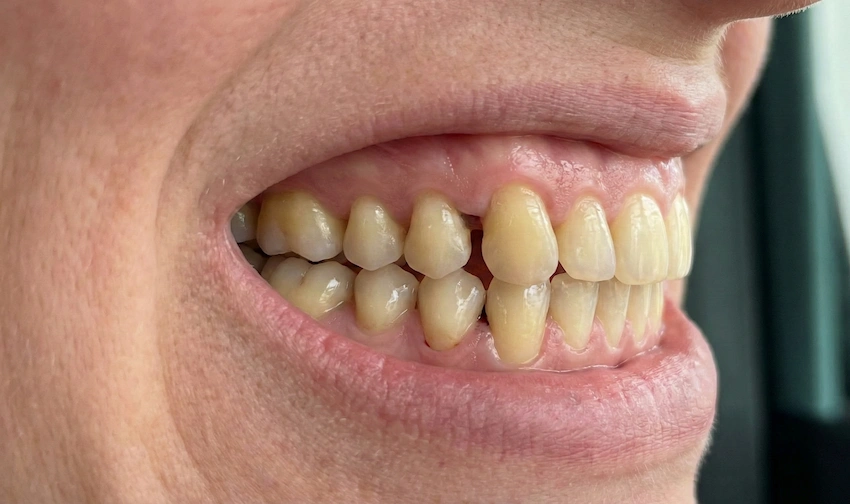
A lot of people who go for dental care to Turkey are not going just because it is cheap. Rather, it is for top-notch doctors like Professor Doctor Coşkun Yıldız. Here is a brief:
- Decontamination: The laser detects and exterminates the harmful bacteria that lurk in the periodontal pockets.
- Calculus Removal: We are following up the bacterial removal by cleaning the root surface with ultrasonic scalers and removing the hardened plaque.
- Healing Seal: We use the laser one more time at a different setting to warm the tissue, forming a stable blood clot that will protect the area while healing.
However, let’s examine the recovery in detail. The majority of our patients state that they can have a light meal and get back to their routine on the following day. There is no need for heavy pain medication or “puffy face”.
Frequently Asked Questions
“It is not something that would hurt you at all. Just like a filling, we use local anesthesia. Most patients tell me they experience a slight warmth or that they feel a ‘tingling’ sensation, but with traditional tools the vibration and pressure are what cause the biggest discomfort, and that is completely absent.”
We really just want to achieve one or two sessions to treat the entire mouth at our clinic. Doing everything at once is our preferred way to prevent bacteria from ‘re-infecting’ areas that have been cleaned recently.”
“Although it is not always possible for us to ‘grow back’ the gums that have been severely receded, the laser is very effective at helping gums ‘reattach’ themselves to the tooth. This way, the recession will be prevented from going further and the foundation will become firmer.”
It is usually very difficult for metal tools to perform such a task, but in fact, lasers are one of the best ways to treat peri-implantitis (infection around an implant). The titanium surface of the implant is effectively cleaned with the laser, and there is no damage to the implant as metal tools do.”
Yes. Since there are no sutures to pull or open wounds to worry about, going home after a day or two of the procedure is perfectly safe. We ensure that you are stable before leaving Lema Dental Clinic.”
- Atsumi, M., et al. (2023). Efficacy of Er:Y AG Laser in Non-Surgical Periodontal Therapy: A Systematic Review. Journal of Periodontology.
- Cobb, C. M. (2017). Lasers and the Treatment of Periodontitis: The Role of Evidence-Based Dentistry. Journal of the American Dental Association.
- Gold, S. I., & Vilardi, M. A. (1994). Pulsed Laser Beam Effects on Gingiva. Journal of Clinical Periodontology.
- Schwarz, F., et al. (2021). Laser Application in Periodontics and Implant Dentistry. Periodontology 2000.
- Yıldız, C. (2022). Advanced Laser Protocols in Modern Turkish Clinics: A Case Study on Recovery Timelines. International Journal of Dental Research.

