


Diabetes is a chronic health problem that affects the body’s mechanism of glucose-processing (sugar), which is the most fundamental source of energy for the cells. However, if high blood sugar levels are kept for a long time, they can lead to a range of severe complications, among which the damage to oral health is included. In cases where blood glucose is not properly regulated, it becomes harder to stop the growth of harmful bacteria in the mouth, which thus, results in an increased occurrence of gum diseases i.e. gingivitis and periodontitis. These diseases have the potential to destroy gums, teeth, and the entire oral health system, therefore, if they are left without any treatment, they can result in the loss of dental pieces.
Besides, diabetic people are more prone to experience dry mouth (xerostomia), which is a situation where the body does not secrete enough saliva to cool down the food particles and bacteria. This state may result in the development of other oral problems, for example, dental caries and gum infections. The conjunction of poor oral hygiene and diabetes that is out of control is a vicious circle in which each condition worsens the other. Visiting the office of Dentist Polen Akkılıç and her team for professional care can help you escape from this circle and keep away from the long-term oral health issues that will allow you to have better control of diabetes and gum disease.
Common Gum Diseases Associated with Diabetes
Diabetics are less likely to have gum disease with the chances being half that of non-diabetics. One of the reasons for this is that bacteria that cause diseases and kill the body eventually require high blood sugar levels to grow and this is exactly what they find in the oral cavity. The most common diabetic gum diseases are those of gingivitis, periodontitis, and, sometimes, gum abscesses and tooth mobility.
Gingivitis is the initial stage of gum disease and commonly presents in the form of reddened, swollen gums that bleed. In this situation, plaque is the source of the inflammation and it has been deposited at the gumline. In case of gingivitis, the condition may progress to periodontitis, a very serious type of gum disease that, in the end, results in the loss of teeth. Diabetics with periodontitis can, in addition to the extreme recession of the gums, experience the roots of their teeth becoming very sensitive, which causes pain and makes it difficult to chew, and their teeth also become loose.
Additionally, dry mouth (xerostomia) is a severe diabetic-related gum issue that results from decreased salivary production of saliva. Saliva is an extremely important element in acid neutralization, where acids are the products of bacteria living in the mouth, and in food washing as well. Insufficient saliva makes a person vulnerable to dental caries, infections, and gum disease. In the case of diabetics who are unaware, it is fighting for survival against dry mouth, which leads to more damage to their gums, that they are most commonly involved in.
If you have diabetes, you can develop gingivitis, periodontitis and abscesses which are common gum diseases in diabetics.
- Gingivitis. The most visible symptoms of this inflammatory condition are the red, swollen gums that bleed upon brushing. If left untreated, it can become a source of more serious problems.
- Periodontitis. It is the final stage of periodontal disease when the infection spreads to the deepest tissues of the gums, resulting in loose teeth, receding gums, and bone loss.
- Abscesses. These are highly painful areas of infection on the gums which may destroy the tooth. In general, they require the intervention of a healthcare professional.
- Dry Mouth (Xerostomia). It is a condition that normally accompanies the elevated sugar levels in the blood which, in the long run, causes damage to saliva production. The mouth, therefore, is more exposed to cavity development and gum infections.
One thing that should definitely be pointed out is the fact that periodontitis is capable of causing insulin resistance in diabetics, which in turn, intensifies their diabetes symptoms and makes it hard for blood sugar levels to be controlled. Consequently, if a person is willing to keep the worsening of these two diseases at bay, he/she has no other option than to take care of diabetes and gum disease simultaneously.
The Bidirectional Relationship Between Gum Health and Diabetes
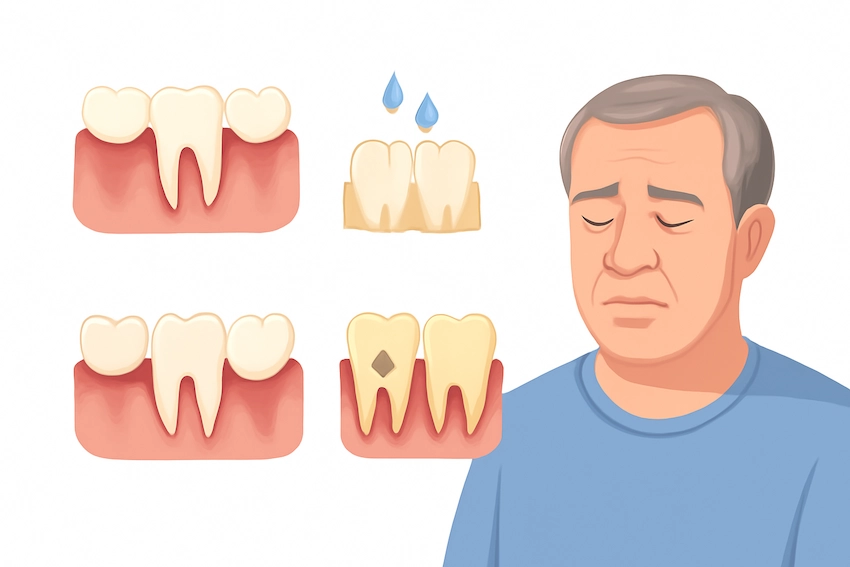
Diabetes and gum disease (periodontitis) affect each other in such a way that the presence of one makes the other worse. The harmful microorganisms in the plaque that cause periodontitis eventually spread all over the body and trigger a chronic inflammatory response, which results in the failure of blood sugar regulation. Specifically, interleukin-1 beta and tumor necrosis factor-alpha, which are the inflammation mediators found in periodontitis, decrease the insulin supply, thus making endogenously glycemic patients have even higher blood sugar levels. As a result, this kind of patients who already have blood sugar management difficulties become caught up in this vicious cycle, making it more difficult for them to manage their condition which will lead to an increase in complications linked to diabetes and gum disease.
On the other hand, diabetics without proper glycemic control are at high risk of developing periodontal diseases. Elevated blood sugar levels are detrimental to the immune system, thus, the body will have difficulty fighting bacteria and viruses, including those in the oral cavity. Furthermore, poorly controlled glucose impairs blood flow in the gums resulting in less oxygen and nutrient supply, thus, slow healing and increased risk of infection. Consequently, the gum tissues become inflamed and are most likely to be infected; therefore, at last, the infected tissues will be at stages such as gingivitis and periodontitis, where the tissues will be further destroyed.
The connection between diabetes and periodontal disease
- Increase inflammation: Both diabetes and periodontal disease are inflammatory sources in the body and this inflammation, if it is not treated, will worsen by the mutual interaction of these diseases.
- Insulin resistance: Periodontal disease might raise insulin resistance level making blood sugar control even more difficult.
- Immune system deficiency: Diabetes causes the immune system to be weaker and thus it becomes more difficult to fight infections in the gums.
- Impaired blood flow: The bad blood circulation which is the result of diabetes makes the gums less able to heal themselves and more susceptible to infection.
Oral hygiene should be properly maintained among diabetic patients as it is very important to prevent the associated complications and also to improve general health. Frequent visits to the dentist and getting regular dental checkups done by experts such as Professor Doctor Coşkun Yıldız are very helpful in keeping a check on the state of the gums and in managing them. This would eventually help in the regulation of blood sugar levels.
Symptoms of Gum Disease in Diabetics
Gum disease symptoms can vary depending on the intensity of the disease and usually become more noticeable as the disease progresses. The very first symptoms of gum disease, such as gingivitis, may be the swelling, redness, and bleeding of the gums, which happen mainly when brushing or flossing. Besides that, an awful and, maybe, even a persistent breath (halitosis) can also be there. It is quite often the result of the bacteria that live both on the teeth and gums. In a situation where gingivitis is left without its own remedy, it may turn into periodontitis, a disease in which gums separate from the teeth, thus, there is the formation of deep pockets of infection.
The signs of gum disease in a diabetic person include:
- Swollen, red gums: The gums become inflamed and, together with bleeding on brushing or flossing, they are the typical signs of gingivitis.
- Poor breath lasting long: It is the result of the bacterial load that develops in the oral cavity.
- Gum loosening: At the final stage of gum disease, the teeth may become loose and changes in position may also occur due to the destruction of the tissues that support the teeth.
- Chewing pain: The infection in the gingival tissue can be the source of pain during chewing especially, when it leads to dental mobility or local infection.
If you have noticed any of these signs, you must see a dentist immediately. Locating the disease and treatment there and then can stop the progression of the disorder and therefore, can both save the gums and the teeth from an irreversible situation.
Managing Gum Health in Diabetes

Keeping gums healthy in diabetes requires the person to follow a very strict oral hygiene routine, change some lifestyle habits, and visit the dentist regularly. Step one and the most important in the prevention of gum diseases is the regulation of blood sugar levels. If diabetes is well controlled, the person is less likely to get gum disease or any other problem in the mouth. The essential thing is to maintain blood sugar levels in the normal range so that the total inflammatory process in the body, including the gums, is at a minimum and therefore, the chances of having gum disease are very low.
How to keep gums healthy with diabetes:
- Monitor blood sugar levels: You must always maintain your blood glucose levels within the advised range so as not to develop gum disease as well as inflammation of the body in general.
- Brush and floss regularly: At least twice a day you should be brushing your teeth and once a day you should be flossing. Only in this manner, are you able to get rid of plaque and bacteria from your teeth and gums.
- Use an antimicrobial mouthwash: With the help of mouthwash the intake of bacteria can be minimized and the deposit of plaque can be controlled, thus, the progression or control of oral infection is facilitated.
- Visit your dentist regularly: It is very necessary and you should make an appointment with a dental care professional twice a year. Through this, gum disease can be detected and treated at the very early stages, thus, the further development of the disease.
In addition to looking after yourself at home, it is very important that you make a timetable with your dentist for professional cleanings and check-ups. Dentist Polen Akkılıç and her team are specialists in the oral care of diabetic patients, so they can give you the best care to keep your gums healthy and prevent the occurrence of any complications.
How Can One Improve Gum Health in Diabetes?
If a diabetic patient wants to free themselves from gingivitis, they should first take care of their hygiene, follow a dietary regimen, and live a healthy life. Certainly, oral hygiene is the weapon with which one has to fight against the accumulation of plaque, which is the main cause of gum disease. The recommendation for diabetic people is that they should brush their teeth with a fluoride toothpaste at least two times a day and, in addition, they should floss daily.
Furthermore, it is also good in the case where a diabetic is using an electric toothbrush, as it assures that plaque is removed to a greater extent. Apart from that, the everyday consumption of a bacteria-fighting mouth rinse is quite effective in reducing the amount of bacteria that dwell in the oral cavity and therefore, it helps in the prevention of infections.
Gum health improvement in diabetes comprises the following measures:
- Regular brushing and flossing: Brush your teeth twice a day with a fluoride toothpaste, and floss daily to remove food particles and plaque from between your teeth.
- Stay hydrated: Drinking water regularly is a necessity of the mouth that is very important in diabetics because xerostomia is a frequent cause that can rapidly lead to gum disease.
- Balanced diet: Eating a balanced diet that includes fruits, vegetables, and lean proteins will provide not only the necessary nutrients for the gums but also for good blood sugar control.
Besides that, the positive impact of quitting smoking and being stress-free will contribute to the wellness of the gums’ lifestyle also.
In short, smoking worsens gum disease and, consequently, healing is slowed; therefore, diabetics should refrain from tobacco products. Being physically active regularly supports blood circulation and overall health which includes a good diet and healthy gums. Alongside these measures, diabetics who attend dental clinics regularly can improve their gums and lower the probability of getting periodontal disease.
The Role of Professional Dental Care in Gum Health

Besides professional dental care and candy floss solution, doctors can also mix essential elements into the treatment of diabetics and advise them, especially a lifestyle doctor like Professor Doctor Coşkun Yıldız. It might be that dental checkups will be used as a means to locate gum infections at a very early stage and, therefore, these infections will be very scarcely found at a later stage. Consequently, they might also consent to the performance of deep cleaning, such as scaling and root planing to get rid of those places under the gums where plaque and tartar have been deposited.
What can professional dental care do for diabetics?
- Early detection of gum disease: Regular checkups make it possible to detect gingivitis or periodontitis at a very early stage nowadays that such conditions can be solved before getting worse.
- Professional cleaning: Through a dentist, it is possible to wash off the layers of plaque and tartar that accumulate on your teeth which normal brushing will not be able to handle, and thus, the risk of gum diseases is decreased.
- Personalized oral care advice: Dentists may provide you with advice on how to take care of your gums with respect to your diabetes condition.
By sustaining their dental visits on a regular basis and complying with their dentist’s instructions, diabetics would be able to keep their gums healthy and lower the chances of the occurrence of both gum diseases and diabetes complications.
References:
- García, R. I., & Becerra, C. A. (2018). Diabetes and periodontal disease: A review of the interrelationship. Journal of Diabetes & Metabolism, 29(6), 1067-1074. https://doi.org/10.1016/j.jdmet.2018.05.003
- National Institute of Diabetes and Digestive and Kidney Diseases. (2021). Diabetes complications. Retrieved from https://www.niddk.nih.gov/health-information/diabetes/overview/managing-diabetes/complications
- Polk, D. B., & Shroder, R. L. (2019). Oral health and diabetes: A review of clinical practices. Journal of Clinical Dentistry, 11(3), 34-38. https://doi.org/10.1016/j.jdent.2019.03.008
- Smith, D. R., & Yildiz, C. (2020). Periodontal health and diabetes: Treatment and prevention strategies. Journal of Periodontology, 91(2), 145-155. https://doi.org/10.1002/jper.19-0338
FAQ: How Does Diabetes Affect Gum Health?
Diabetes increases blood sugar levels, which weakens the body’s ability to fight infections, making gums more susceptible to disease. This leads to swollen, bleeding gums and tooth loss if left untreated.
Elevated blood sugar levels promote bacterial growth in the mouth, leading to plaque buildup. Plaque causes inflammation and infection in the gums, leading to gum disease.
Symptoms include swollen, bleeding gums, bad breath, tooth sensitivity, and loose teeth. These signs indicate gum disease, which requires immediate attention from a dentist.
Dry mouth, fungal infections, and tooth decay are common in diabetics. Elevated blood sugar levels weaken the immune system, making the mouth more vulnerable to infections.
Gum disease, dry mouth, and tooth decay are the most common oral issues. These problems are exacerbated by poorly controlled blood sugar levels.
Regular brushing, flossing, and using an antimicrobial mouthwash will help strengthen your gums. A diet rich in vitamin C also supports gum health.
Gently massaging your gums, maintaining healthy blood sugar levels, and using good oral hygiene practices will stimulate regeneration. Regular dental checkups also help promote gum healing.
Vitamin C is essential for gum health, as it supports the production of collagen, which strengthens gum tissue. Foods rich in vitamin C, such as oranges and strawberries, can help maintain healthy gums.

