


They brush gently with a soft toothbrush and mild toothpaste.
Having a diamond in your smile is more than just a piece of jewelry; it represents your unique personality. Actually, we at Lema Dental Clinic in Istanbul, Turkey, have followed this fad very closely. We have seen it change from some celebrities’ hidden fashion secret to a global fashionable choice for aesthetic purposes. Nonetheless, after the novelty of the sparkle wears off, the question that really counts is: How can you stay clean without dislodging the gem or hurting your enamel?
In fact, “diamond teeth“—whether a single crystal attached to the surface or a crown entirely decorated with gems—are meant to be handled with particular care.Professor Doctor Coşkun Yıldız points out that although diamonds are the hardest material on earth, the medical-grade adhesive that is used to fix them on the tooth cannot be considered immortal.
Caring for Your Teeth Formally with “Jewelry”
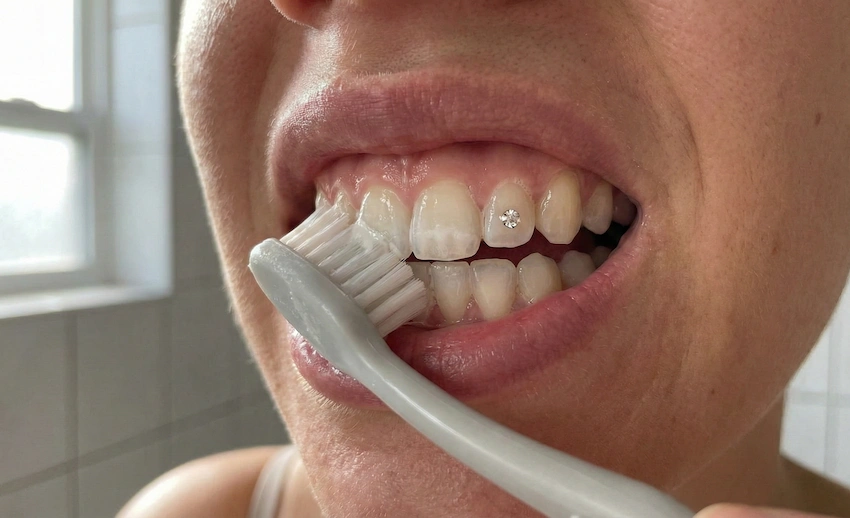
Compare a diamond tooth to a luxury watch that you can wear all day. It is strong enough for everyday use; nevertheless, you would never clean the watch glass face with a steel wool pad. Here, you need to combine the requirements of both thoroughness and caution.
When Dentist Polen Akkılıç and her team do a diamond bonding at our facility they explain that the “margin”—which is the very small area where the gem meets the tooth enamel—is the place plaque is going to be attracted. Not taking care of this will result in the bacteria that can cause tooth decay gathering around the base of the stone. The stone can also lose its brightness.
1. Using Equipment that is Designed
You simply cannot apply a very hard toothbrush to a smile that is decorated with diamonds. The rubbing action may result in the formation of multiple tiny scratches on the surrounding bonding material.
- Soft Bristles: It is recommended to only use soft or extra-soft toothbrushes.
- Non-Abrasive Paste: Stay away from “whitening” toothpastes that are loaded with high silica or baking soda. These ingredients work like sandpaper over time.
2. The Method: Use The “Circle and Sweep.”
This will be the last time using the horizontal sawing motion for brushing. It is very traumatic not only for the gums but also for the gem. We advise you to adopt the circular motion instead. Tilt the brush at 45 degrees towards the gum line. Bending the bristles like this allows them to be able to clean underneath the edge of the diamond as if they were “wiggling”.
Top Quality Requirements: The Lema Clinic Take
It is quite puzzling: why is it so different from brushing a normal tooth? We, at Lema Dental Clinic, noticed that patients would really do anything to make up for past neglect. Such people will either brush aggressively if they think there is “dirt” under the stone, or they will avoid brushing at all for fear that the stone might fall off.
Both ways are extreme and can be harmful to your dental health. Professor Doctor Coşkun Yıldız analogizes the bond between the diamond and the tooth to that of an “eggshell”. It is very resistant to certain forces, but if something really sharp and forceful is directed at it, it will be broken.
| Feature | Standard Tooth Brushing | Diamond/Gem Tooth Brushing |
| Brush Type | Medium or Soft | Strictly Soft or Ultra-Soft |
| Toothpaste | Any Fluoride Paste | Non-abrasive, Non-whitening |
| Electric Brush? | Recommended | Use on “Sensitive” mode only |
| Flossing | Standard | High care near the gem margin |
| Focus Area | Occlusal (chewing) surfaces | The “Bonding Perimeter” |
Expert Maintenance in Turkey
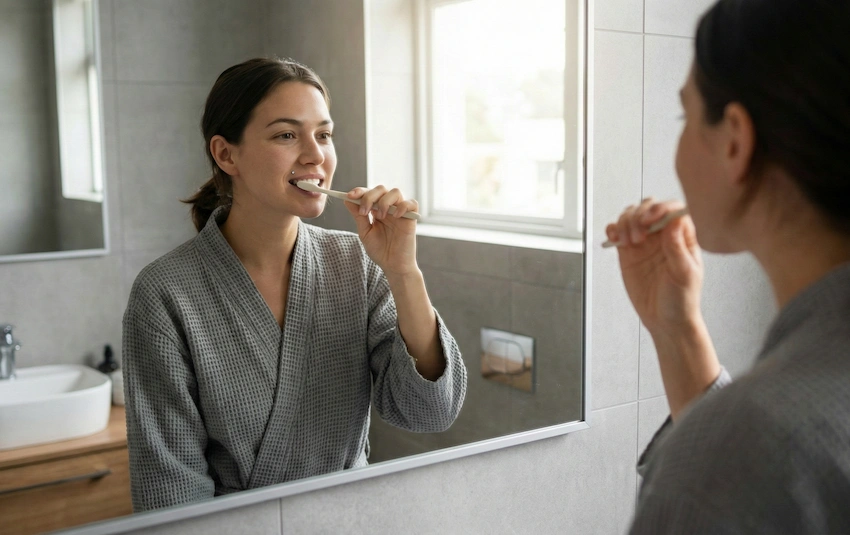
Deciding to have dental jewelry in Turkey is essentially deciding on high-quality aesthetic standards globally. Lema, we do not just “stick” a gem; we make sure the tooth is not weakened. But it is your home care that entirely decides how long that glitter will last.
But first, let’s delve into the “dullness” issue. Soaps, food oils, and minerals in your saliva can gradually cause a layer to form over the diamond. That is why it is vital to have professional cleanings periodically at a dental clinic such as ours. We employ specially designed ultrasonic instruments that dislodge the plaque by vibration without the need to disrupt the adhesive’s integrity.
FAQ: Advice from the Doctor’s Desk
“Yes, you can. Make sure that you don’t push too hard. Most electric toothbrushes these days are equipped with a pressure sensor, so you should pay attention to it. Opting for the ‘sensitive’ or ‘gum care’ mode will help prevent the vibrations from putting too much stress on the bonding agent.” — Dentist Polen Akkılıç
“Relax, don’t be scared. Generally, a stone coming off is a sign that the adhesive was already a bit weak due to plaque presence or some kind of trauma. Please, if the diamond is with you, save it, and give us a call. We will safely do the necessary enamel cleaning and re-bonding.” — Professor Doctor Coşkun Yıldız.
There is no reason why it should make you a tooth rot, as long as the work is done properly. One of the clinics that performs the non-invasive etching method is Lema Dental Clinic. To prevent plaque from accumulating, you just need to clean around the stone; the enamel under will remain perfectly intact.
The only caution would be really to stay away from biting hard things like ice or hard candy directly on that tooth. Think of the diamond as a prosthetic; if you give it a little care, it will last you many years.
At your standard 6-month follow-up in Turkey, checking the ‘seal’ of the diamond is one of the first things that we do. We want to be very sure that not even the tiniest gaps have been formed where bacteria could safely hide.
- Featherstone, J. D. B. (2008). The science and practice of caries prevention. Journal of the American Dental Association, 131(7), 887-899.
- Pini, N. I. P., et al. (2009). Advances in dental materials for aesthetic bonding. Journal of Applied Oral Science, 17(5), 400-405.
- Walsh, L. J. (2009). Lifestyle and oral health: The role of the dental professional in aesthetic jewelry. Australian Dental Journal, 54(1), 2-7.
- Terry, D. A. (2005). Aesthetic & Restorative Dentistry: Material Selection & Technique. Stillwater: Everest Publishing Media.
- Swift, E. J. (2011). Critical appraisal: Adhesion to enamel and dentin. Journal of Esthetic and Restorative Dentistry, 23(4), 275-281.

