


Yes, but healing takes longer.
Maybe you have a throbbing pain that you can feel deep inside and running all around your face and neck, but it is very hard to get relief even after taking over-the-counter meds or you had your tooth removed, and instead of a wound healing, the situation worsened with a dry socket or alveolar osteitis in a clinical term.
The question that usually follows the first wave of discomfort is: Can I just wait for it? Will it heal on its own?
From our clinical experience at Lema Dental Clinic in Turkey, we understand that, for many people, the idea of being treated in a dentist’s chair again is a dreadful one. However, a crucial move to real pain relief is pinpointing the problem(s) under your gums.
The Biological “Thermal Blanket”
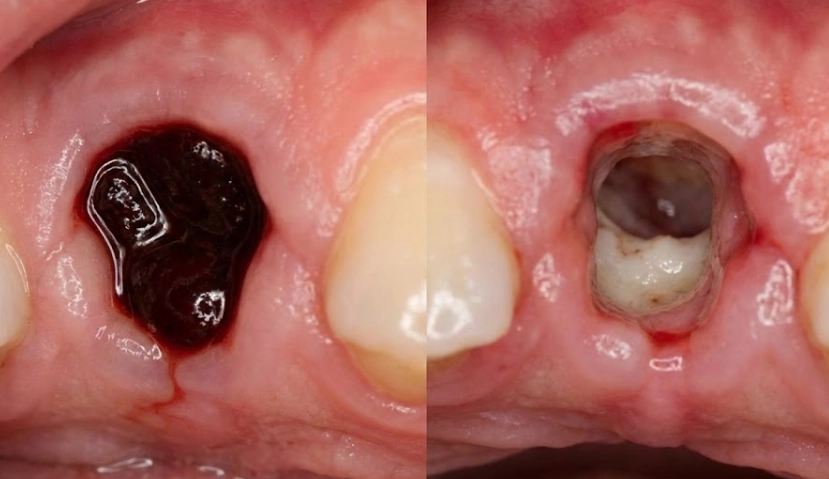
Dry socket is a condition where the bone under the gum is left exposed to the elements. When you have your tooth extracted, your body will form a clot of blood in the hole. The blood clot is like a biological band-aid or a thermal blanket for the bone in the jaw. It covers the bone and nerve endings and keeps them from coming into contact with air, food, and bacteria, which can all cause pain and infection.
When the clot is dislodged or vanishes prematurely, it is similar to going out of your “house” and leaving your “front door” open in cold winter. The bone is basically left “exposed” to the “elements”. Professor Doctor Coşkun Yıldız stresses that the body is very strong but allowing a dry socket to self-heal is like a construction crew being tasked with building a house during a hurricane and with no scaffolding.
The Reality: Can It Heal Without Intervention?
Yes, the bare bone will eventually be covered by the body with new tissue (granulation tissue). However, the process calls for a close look at the “cost” of that self-healing.
You can expect a delayed healing process by very long time if there is no medical intervention. Your painful episodes will extend from a few days to even 7-14 days of severe and spreading pain. Actually, during this time, the risk of getting a secondary infection increases. The dilemma remains: Is the pain during the waiting period really worth risking complications?
What We See in the Clinic
In our Istanbul Clinic, Dr. Polen Akkılıç and her team prioritize quick relief of pain even before they can do anything else. When a patient comes in with a dry socket, we don’t simply say “let it heal.” We work with the body’s natural rhythm.
We typically clean the area and apply a medicated dressing. This dressing acts as a “surrogate clot,” instantly soothing the nerves. Here is what we see in the clinic: patients who receive treatment often feel 90% better within minutes of the dressing being applied, whereas those who wait at home often suffer needlessly for nearly two weeks.
Comparison: Self-Healing vs. Professional Treatment
| Feature | Waiting for Self-Healing | Treatment at Lema Dental Clinic |
| Pain Duration | 7 – 14+ days | Immediate relief (within minutes) |
| Healing Speed | Very slow (delayed granulation) | Accelerated (protected environment) |
| Infection Risk | Moderate to High | Low (controlled and cleaned) |
| Daily Function | Often requires time off work | Rapid return to normal life |
| Medication Needs | High doses of painkillers | Minimal once dressed |
The Role of Advanced Care in Turkey
Turkey has become a global hub for dentistry not just because of technology, but because of the meticulous approach to post-operative care. At Lema Dental Clinic, we don’t view an extraction as “finished” until the site is fully closed.
If you are traveling for dental work, the last thing you want is a complication. Professor Doctor Coşkun Yıldız emphasizes that the jawbone is the foundation of your smile. If that foundation is compromised by a long, inflammatory healing process, it can affect plans for dental implants or bridges.
FAQ: Direct Answers from the Surgeon
If you look in the mirror and see a white or grayish opening instead of a dark blood clot, and you feel pain that radiates toward your ear or eye, it is almost certainly a dry socket. The absence of the clot is the smoking gun.
You can gently rinse with warm salt water to keep bacteria at bay, but please avoid ‘poking’ the area. You cannot recreate the clot yourself; only a professional can provide the medicated barrier needed for pain relief.
No. Eventually, the body will fill the gap from the bottom up. However, the ‘dent’ in the gum tissue may take a bit longer to smooth out compared to a normal healing site.
Dry socket is not primarily an infection; it is a structural failure of the blood clot. While antibiotics may prevent a secondary infection, they will not stop the pain or replace the missing clot.
Yes. The suction from smoking is the number one cause of clot dislodgement. If you are already suffering, smoking will only constrict blood flow and further delay the body’s ability to cover that bone.
- Blum, I. R. (2002). Contemporary views on dry socket (alveolar osteitis): a clinical review of aetiology, management and prevention. British Journal of Oral and Maxillofacial Surgery, 40(6), 491-496.
- Chow, O., Wang, R., & Ku, D. (2020). Alveolar Osteitis: A Review of Current Concepts. Journal of Oral and Maxillofacial Surgery.
- Kolokythas, A., Olech, E., & Miloro, M. (2010). Alveolar osteitis: a comprehensive review of concepts and controversies. International Journal of Dentistry.
- Mamoun, J. (2018). Dry socket: A review of etiology, clinical features, and management strategies. Journal of Stomatology.
- Yıldız, C., & Akkılıç, P. (2025). Clinical Observation on Post-Extraction Complications in Medical Tourism Patients. Journal of Istanbul Dental Sciences.

