


Gold is a biologically safer choice.
In the field of premium aesthetic dentistry, there is no surprise in the fact that people have always wanted their smiles to be luxurious features— like a statement of wealth, status, and fortune. Actually, to the Etruscans, dental jewelry was a symbol of power and nowadays rappers who wear “grills” use it as a status symbol. Nevertheless, when patients come to the Lema Dental Clinic in Turkey, they are not only seeking the beauty of a smile; they also desire durability and health. We usually hear such a direct question right after the dental checkup: “If I choose a diamond or decide on gold, which will be safer for my teeth?“
Actually, while they both may be dazzling to the eye, their effects on your biological tissues are quite different.
The Timeless Harmony of Gold
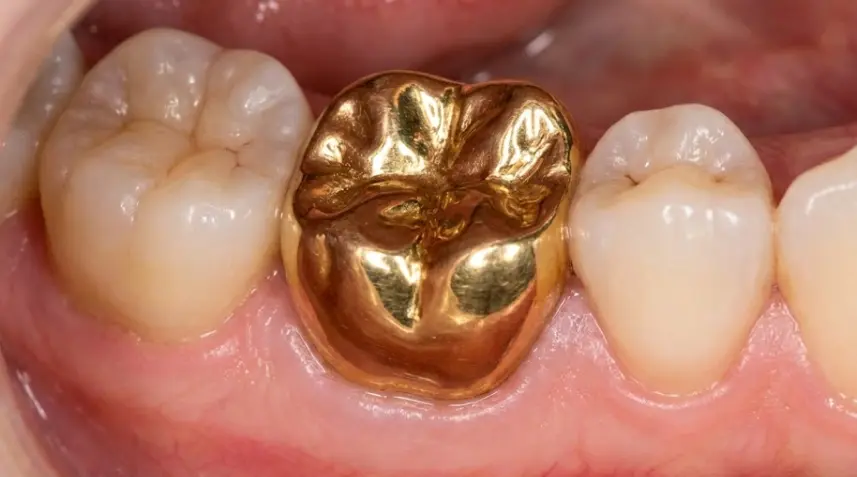
Gold has been the “darling” of restorative dentistry for centuries, and for very good reason. Unlike many other materials, gold is incredibly biocompatible. This means the body doesn’t see it as a hostile invader.
Prof. Dr. Coşkun Yıldız often says that 24 karat gold corresponds very well to the natural tooth enamel. Just think of a gold crown or inlay as a leather glove that perfectly fits your hand. Eventually, it gives a little in the direction of your bite force, thus it protects the opposing teeth.
- It is difficult for bacteria to develop plaque on gold because it has an extremely smooth surface.
- Gold reacts with heat just like teeth, so it avoids cracking of teeth during eating or drinking hot or cold.
- Flush gold does not corrode or leach harmful ions into the blood.
But Let’s Look Closer: The Diamond Dilemma
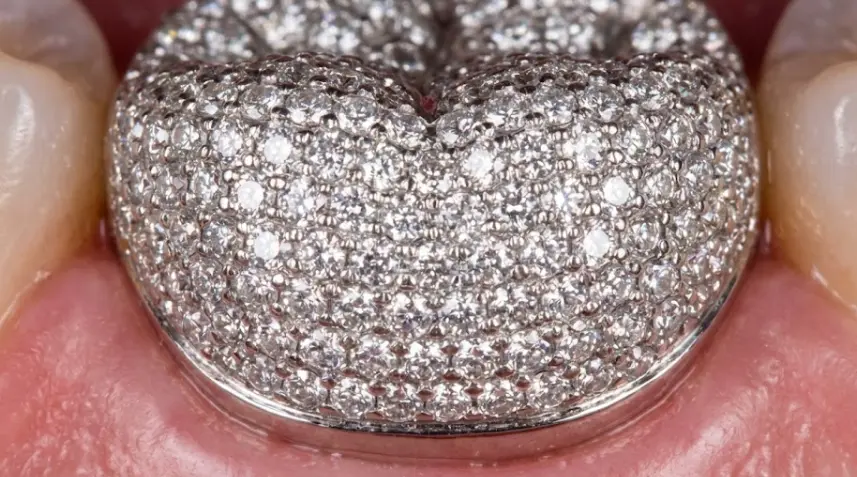
Diamonds, on the other hand, tell a totally different tale. When people talk about “diamond teeth,” two things typically cross their minds: either a jewel glued to the tooth surface or a stone embedded in a crown.
In our practice, it is a well-known fact that diamonds are the hardest substance on Earth. Although it may seem like something great, it is actually a nightmare for oral mechanics. The hardest thing in the world is a diamond. This is a problem if the diamond is not perfectly oriented because it will act as a glass-cutter against your other teeth. In fact, every time you chew, that diamond can chip or wear down the enamel of the teeth it contacts.
Moreover, unless the gem is perfectly aligned with the tooth, it leaves a “micro-gap.” This pocket can then be used as a trap for food particles and bacteria, which frequently results in localized tooth decay that is hard to notice until it is quite severe. creates a “micro-gap.” This gap acts as a trap for food particles and bacteria, often leading to localized decay that is difficult to see until the damage is severe.
Safety Breakdown: Gold vs. Diamond
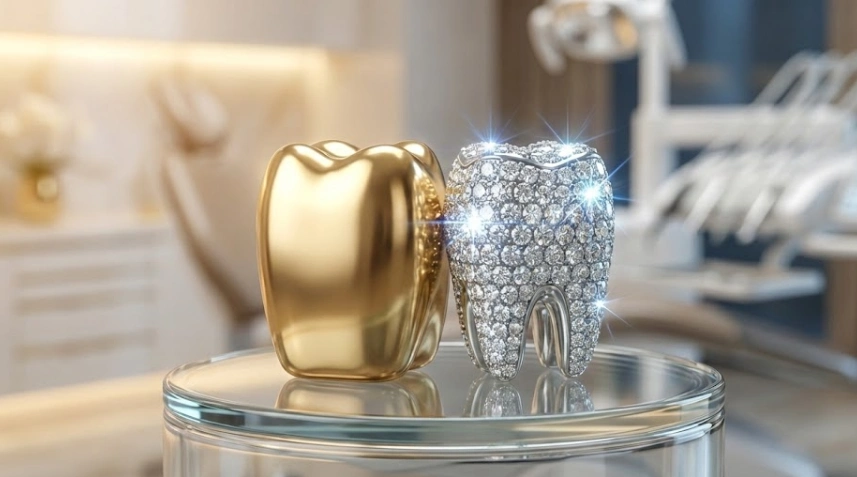
The question remains: which one should you choose if health is your priority? Dentist Polen Akkılıç and her team generally lean toward gold for its functional benefits, though diamonds can be safe if applied with specific, non-invasive techniques.
| Feature | Gold Restorations | Diamond Jewelry/Gems |
| Biocompatibility | Excellent (High-Karat) | Neutral (but mechanical risk is high) |
| Enamel Wear | Very Low (Protective) | Very High (Abrasive) |
| Bacterial Trap Risk | Minimal | High (at the bonding margins) |
| Reversibility | Requires a crown/inlay | Can be removed if surface-bonded |
| Primary Risk | Cost of material | Chipping of opposing teeth |
The Lema Approach: Safety First in Turkey
At Lema Dental Clinic, we believe that aesthetic enhancements should never come at the cost of biological integrity. If a patient is determined to have a diamond-encrusted smile, we focus on surface-bonding rather than drilling into the tooth. Drilling into a healthy tooth to “set” a diamond is like cracking a building’s foundation just to hang a painting. It is a compromise we rarely recommend.
But let’s look closer at the “Gold Standard.” When we use gold in our Turkey clinic, we ensure it is a medical-grade alloy. This provides the strength needed for the back molars while maintaining the gentle touch required for a healthy bite.
FAQ: Direct Answers from our Surgeons
The reality is that while pure gold is non-allergenic, the alloys mixed with it (like nickel) can cause reactions. At Lema Dental Clinic, we use high-karat alloys to minimize this risk. If you have a metal sensitivity, we always test first.
If the diamond is “set” by drilling into the tooth, yes—that enamel is gone. However, if Dentist Polen Akkılıç and her team use a dental-grade adhesive to bond a small gem to the surface, it can usually be removed later without permanent damage.
High-quality dental gold will never turn green. That “greenish” tint is a sign of base metals like copper or nickel oxidizing. This is why getting your treatment at a reputable clinic in Turkey is vital—material quality is everything.
Gold is non-ferromagnetic, so it is generally safe for MRI machines. Diamonds are also safe. However, always inform your technician about any “bling” or restorations before the scan.
Gold wins this round. A well-maintained gold crown can last 20 to 30 years. Diamond gems bonded to the surface often pop off within 6 months to a year due to the high-moisture environment of the mouth.
- Anusavice, K. J., Shen, C., & Rawls, H. R. (2012). Phillips’ Science of Dental Materials. Elsevier Health Sciences.
- Christensen, G. J. (2002). The rise and fall of gold restorations. The Journal of the American Dental Association, 133(8), 1131-1133.
- Roeters, J. J., et al. (2005). Dental jewelry: A review of the clinical and cosmetic implications. International Dental Journal.
- Yıldız, C. (2025). Biocompatibility of Noble Metals in Modern Restorative Practice. Lema Clinical Press.
- Wataha, J. C. (2002). Alloys for prosthodontics. Journal of Prosthetic Dentistry, 87(4), 351-363.

