


Flossing with braces made easy.
First of all, let’s face it: flossing for the first time after getting braces on is very much like trying to thread a needle while wearing boxing gloves. It’s so tedious, slightly aggravating, and it takes you at least three times longer than before. A lot of patients feel like they might skip it completely if they only think that a quick rinsing or a little longer brushing would be enough.
At Lema Dental Clinic in Istanbul, we have seen through our clinical experience that skipping flossing during orthodontic treatment can definitely lead to the formation of “white spots” (decalcification) or even gum inflammation. The truth is, your braces are kind of a sophisticated “scaffolding” in your mouth; while they take care of moving your teeth to the desired position, at the same time, they become a magnet for plaque and food particles.
Anyway, here we are breaking it down so that you can do the flossing without going crazy—or running out of patience.
The Construction Site Analogy: Why Brushing Isn’t Enough
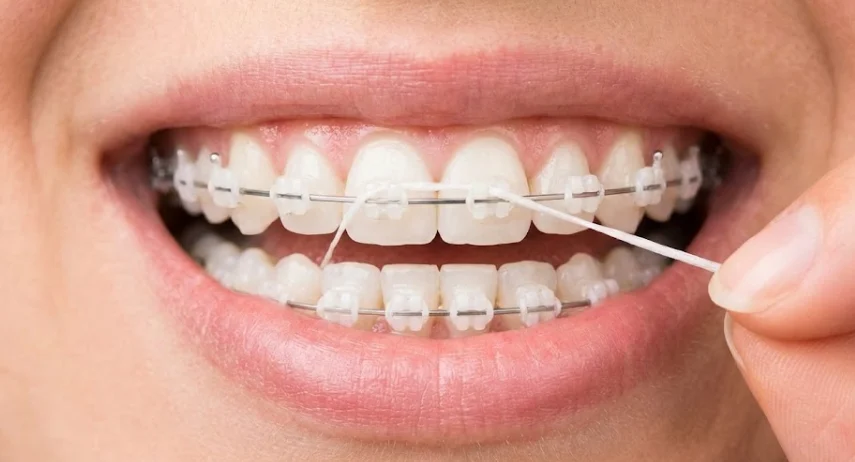
Professor Doctor Coşkun Yıldız often uses a visual metaphor to explain this to our patients in Turkey. Imagine you are painting a picket fence. If you only paint the front (the brushing), the sides and the gaps between the slats remain exposed to the elements. Over time, that’s where the rot begins.
Braces create hundreds of new “nooks and crannies” that a standard toothbrush simply cannot reach. If food sits against the enamel, trapped by a wire or a bracket, it begins to produce acid. The question remains: how do you get underneath that metal archway to clean the “sides of the fence”?
The Toolkit: Choosing Your Weapons
Here is what we see in the clinic: patients who struggle with traditional string floss usually give up within a week. Dentist Polen Akkılıç and her team recommend diversifying your toolkit to find what actually works for your lifestyle.
Comparing Your Flossing Options
| Tool | Effectiveness | Ease of Use | Best For… |
| Floss Threaders | Very High | Low (Requires practice) | Deep cleaning under the gumline |
| Water Flossers | High | Very High | Removing loose debris & massaging gums |
| Interdental Brushes | Moderate | High | Cleaning around brackets and wide gaps |
| Orthodontic Floss | High | Moderate | All-in-one solution (stiff end) |
The “Thread and Slide” Technique
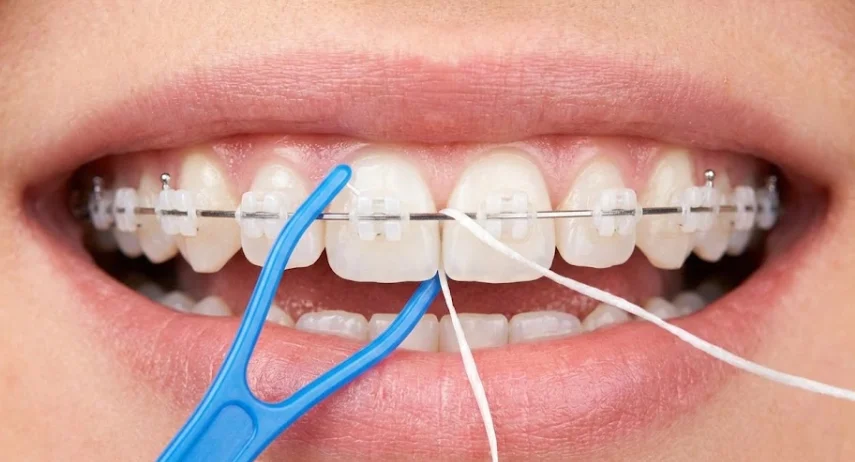
If you are using traditional floss or a threader, the technique is everything. You cannot simply “snap” the floss between the teeth because the archwire is in the way.
The truth is, you have to go under the wire first. Dentist Polen Akkılıç and her team teach patients to thread the floss through the space between the wire and the teeth. Once you are “behind the scenes,” you can perform the C-shape motion against each tooth.
But let’s look closer at the most common mistake: pulling the floss out. Instead of pulling it back out through the wire (which can snag a bracket), simply release one end of the floss and pull it through horizontally. It saves time and prevents unnecessary tension on your hardware.
Here is What We See in the Clinic
At Lema Dental Clinic, we notice a massive difference in the “reveal day” (when the braces come off) between flossers and non-flossers. For those who didn’t maintain their hygiene, the celebration is often dampened by the discovery of “white spot lesions”—permanent marks where the enamel started to dissolve around the bracket.
In Turkey, we prioritize preventive care. We would rather spend an extra thirty minutes teaching you how to floss during your check-up than have to treat five cavities once your smile is straight.
FAQ: Navigating the Braces Journey
The reality is that bleeding is usually a sign you need to floss more, not less. It means your gums are inflamed (gingivitis) because of trapped bacteria. If you floss consistently for 7 to 10 days, the bleeding will almost always stop as the tissue heals.
Water flossers are fantastic for removing the ‘big’ debris and cleaning around brackets. However, in our clinical experience, nothing replaces the mechanical ‘scraping’ action of string floss for removing the sticky film of plaque between the teeth. Use both for the best results.
Once a day is the gold standard, preferably right before bed. During the night, your saliva production drops, which means any food left in your braces has hours to do damage without your body’s natural defenses.
It’s very rare to break a wire with floss, but if a bracket feels loose afterward, don’t panic. Cover any sharp edges with orthodontic wax and call Lema Dental Clinic to schedule a quick repair. We see this often; it’s a quick fix.
They are different tools for different jobs. Interdental brushes are like ‘mini-mops’ for the spaces between your brackets and the wire. They are great for a quick post-lunch clean, but floss is still needed for the actual contact points between your teeth.
- Al-Moghrabi, D., et al. (2018). Effects of different flossing aids on plaque and gingivitis in orthodontic patients. European Journal of Orthodontics.
- Bock, N. C., et al. (2017). White spot lesions during orthodontic treatment: Mechanisms and management. Journal of Orofacial Orthopedics.
- Goyal, C. R., et al. (2013). Comparison of a water flosser and dental floss on plaque and gingivitis in orthodontic patients. The Journal of Clinical Dentistry.
- Lundergan, W. P. (2009). The role of plaque control in the prevention of periodontal disease. World Journal of Orthodontics.
- Sanares, A. M., et al. (2003). Clinical evaluation of the efficacy of interdental cleaning aids. American Journal of Orthodontics and Dentofacial Orthopedics.

