


Bacteria convert sugar into acid
Don’t eat too much candy, or your teeth will rot,” has been the recurring warning we have all heard since our childhood. It is possibly the oldest piece of dental advice ever. It makes sense – sugar is sticky, sweet, and seems quite harsh on the teeth.
What is less known is that sugar per se is not the one that “eats” your teeth. Think of sugar as fuel, not a drill that destroys your teeth. Sugar provides energy for this very destructive machine,which is bacteria in our mouths.
At Lema Dental Clinic, we often see patients who are inexperienced with sweets but still have multiple cavities. Our observation gives us the impression that sugar is a major ingredient in the recipe for cavities but not the only one.
The Chemistry of the “Bacterial Buffet”
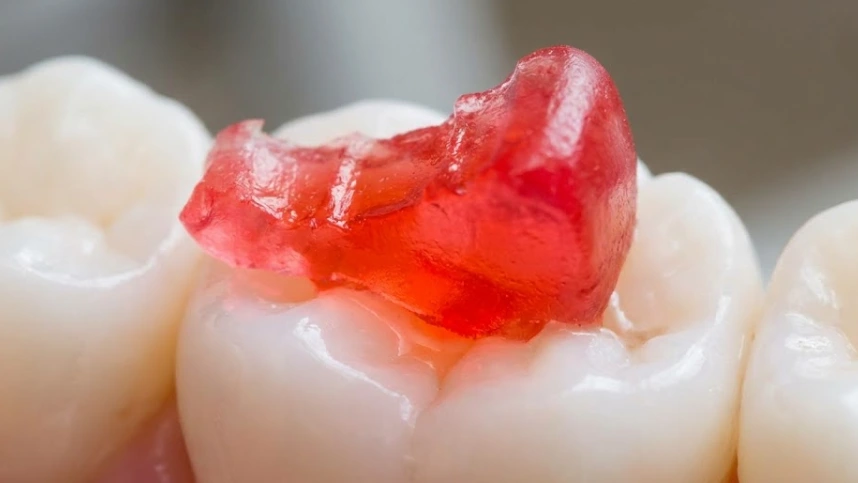
First of all, we have to acknowledge that we carry in our mouths an impressive number of bacteria – billions of them. Most are fine, but a few of them like Streptococcus mutans, really love to feed on the things you eat.
Your mouth is a very diverse environment with different kinds of organisms, and to be more precise, it is a sophisticated living system and that is exactly what Professor Doctor Coşkun Yıldız is referring to when he calls it a small complex ecosystem. It’s not sugar per se that damages your teeth, but rather, you are essentially offering the bacteria a banquet. The bacteria ferment sugar to acid, which is a by-product of the reaction.
You can imagine acids formed by bacteria as a mini acid rain that is constantly falling on the teeth’s surface. The small acid rain droplets gradually dissolve the mineral content of the enamel, which is the hard protective outer layer of the tooth. Eventually, the acid will have formed a hole in the tooth, known as a cavity.
Still, Let’s Look Closer: It’s Not Just About Candy
If I stop eating candy, do I then become invulnerable to caries? This remains the question and, dangerous as it may sound, the answer is NO.
We, at the dental clinic, witness the fact that the most serious decays would sometimes be caused not by lollipops but by starch and fromage, even highly processed ones. For example, crackers, white bread, and potato chips can be more harmful than a chocolate bar. The reason lies in the fact that these foods are extremely “Retention-Friendly.” They produce a sticky glue that sticks to the crevices of your molars, thus occupying your teeth for quite a long time.
A chocolate, which is a piece of candy, might easily be dissolved and removed by saliva, but a cracker would remain stuck there, becoming an uninterrupted nourishment source for the bacterial community that produces acid throughout the afternoon.
Comparing Dietary “Villains” and Their Risks
When patients visit us in Turkey, Dentist Polen Akkılıç and her team often perform dietary counseling to help them understand which habits are the most “cariogenic” (cavity-causing).
| Food Type | Decay Potential | Why? | Best Practice |
| Sticky Candy (Taffy) | Very High | Sticks to surfaces for long periods. | Avoid or brush immediately. |
| Sodas / Juice | High | Constant acid bath for all teeth. | Use a straw and drink quickly. |
| Starchy Carbs (Chips) | High | Lodges in deep grooves of molars. | Floss and rinse after eating. |
| Dark Chocolate | Moderate | Low sugar versions wash away easier. | Enjoy in moderation with meals. |
| Cheese/Nuts | Low | Neutralizes acid and provides calcium. | Great for snacking. |
Frequency Over Quantity: The “Snacking” Trap
At Lema Dental Clinic, we frequently stress to patients that it’s not only the type of food that matters, but also the frequency of consumption.
After you have sugar or starch in your diet, your mouth becomes acidic and stays that way for around 20 to 30 minutes. Let’s say you eat a bowl of candy within five minutes, then your teeth are subjected to “acid attack” only once. But if you nibble on that bowl for five hours, your teeth will be surrounded by acid basically the whole day.
Dentist Polen Akkılıç and her team point out that “grazing” is actually the quickest method to wear down your enamel. Allowing your mouth enough time to neutralize is equally crucial as brushing your teeth.
Modern Solutions in Turkey
Even if you have a perfect diet, your genes and anatomy (such as having deep fissures in your teeth) can predispose you to cavities. We, at our center in Turkey, go beyond just filling the cavities; we identify the “why” behind them. By employing state-of-the-art laser diagnostic techniques and utilizing ultradurable composite resins, we not only repair the tooth’s structure but also recommend bioavailable pastes that help in the remineralizing process of early lesions, thus preventing them from becoming full cavities.
FAQ: Understanding Decay with Lema Clinic
In its very earliest stages—what we call an ‘incipient lesion’—enamel can remineralize if you improve your hygiene and fluoride intake. However, once the decay breaks through the enamel into the dentin, it is like a structural crack in a foundation; it requires professional intervention to stop it from spreading.
The reality is that juice often contains just as much sugar as soda, plus natural citric acid. While it has more vitamins, your teeth don’t know the difference. It’s best to eat the whole fruit instead, as the fiber helps ‘scrub’ the teeth and stimulates saliva.
Actually, as we often discuss in the clinic, you should wait about 30 minutes. Acid softens the enamel, and brushing too soon can actually scrub away the softened mineral layer. Rinse with water first!
The question remains a mix of genetics and biology. Some people have ‘stronger’ enamel or saliva that is more alkaline, which neutralizes acid faster. However, nobody is 100% immune; even ‘strong’ teeth will eventually succumb to poor habits.
Xylitol is actually a hero in the dental world. Bacteria try to eat it but cannot process it, which eventually reduces the bacterial population in your mouth. We often recommend Xylitol gum after meals.
- Featherstone, J. D. (2004). The continuum of dental caries—evidence for a dynamic disease process. Journal of Dental Research.
- Moynihan, P., & Petersen, P. E. (2004). Diet, nutrition and the prevention of dental diseases. Public Health Nutrition.
- Touger-Decker, R., & van Loveren, C. (2003). Sugars and dental caries. The American Journal of Clinical Nutrition.
- Zero, D. T. (2004). Sugars – The arch criminal? Caries Research.
- Yıldız, C. (2025). Ecology of the Oral Microbiome and Restorative Success. Istanbul Medical Academic Press.

