


Yes, by reducing inflammation safely.
You have successfully navigated the surgery. You traveled to Turkey, trusted the skilled hands of Professor Doctor Coşkun Yıldız at Lema Dental Clinic, and now you are recovering. The hard part is finally over. But now, a new phase begins: the healing game.
One of the most frequently asked questions by patients is whether we recommend costly prescription mouthwashes or fancy gels. When we tell them to go to the kitchen cabinet, they are usually pretty surprised! I mean, come on, simple salt water is probably one of the most effective tools for post-operative healing that any one of us can have right at our fingertips.
However, let us examine this more closely. Is it still just an “old wives’ tale” or is there scientific research to support clinical use? Clinically, we find salt water to be a recovery powerhouse, but only if it is used properly. Mistakenly, or too early, it can in fact be counterproductive to your healing process.
The Chemistry of Calm: How Saline Works
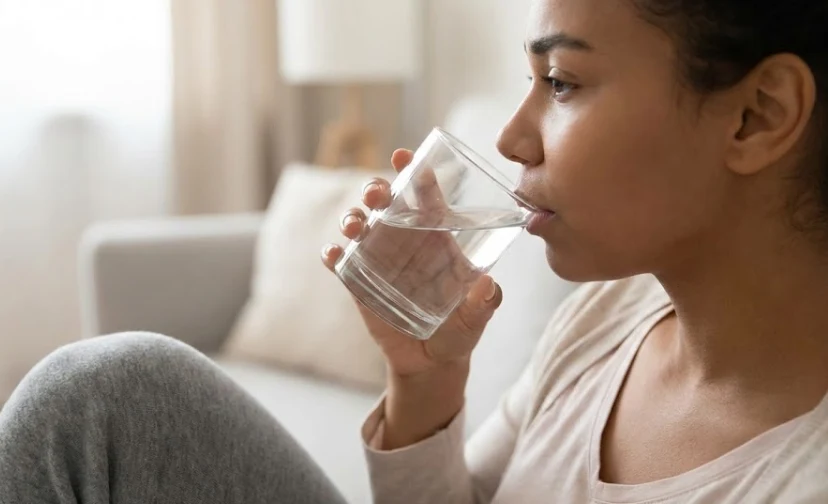
Why do we suggest salt water instead of harsh chemicals? The answer is in a phenomenon known as osmosis.
Think of overly swollen gums like a water balloon so filled that it is ready to burst. Surgical injury attracts a huge quantity of fluid to the spot, hence the painful swelling. Making a saltwater solution is like creating a hypertonic environment. The salt works like a magnet and pulls the excess fluid that is in the swollen tissues out through the cell membranes.
Dentist Polen Akkılıç and her team sometimes tell their patients that this process accomplishes two major purposes:
- Reduction of Edema: Draining the fluid lowers the pressure in the jaw which leads to less pain.
- The mouth becomes more alkaline: The infectious bacteria are thriving in an acidic environment. Saltwater neutralizes the pH of the mouth, therefore the bacteria that cause infections will have a hostile environment.
The “24-Hour Rule”: A Vital Warning
Most patients make the mistake of rinsing too soon.
Your body develops a clot over the wound after your implant placement surgery within a few minutes. This clot acts as a “biological cork” that plugs the bottle. It shields the bone and nerve endings from the outside world, and it is also the template on which the new tissue can be formed.
If you use salt water (or anything else) vigorously for the first 24 hours, you may dislodge this clot. This will not only lead to “dry socket,” which is an extremely painful condition but will also delay healing. Professor Doctor Coşkun Yıldız proposes a very strict “do not disturb” rule on the first day. The clot should be left for a while before any rinsing.
Salt Water vs. Prescription Rinses
Often, we prescribe Chlorhexidine (an antibacterial rinse), but it is not intended for prolonged use. Here is how simple saline compares to the alternatives we see in the clinic:
| Feature | Salt Water (Saline) | Chlorhexidine Gluconate | Alcohol-Based Mouthwash |
| Primary Function | Soothing, anti-inflammatory, pH balance. | Aggressive bacteria killing. | Breath freshening (Not recommended post-op). |
| Best Time to Use | 24 hours post-op until fully healed. | Prescribed period (usually 1-2 weeks). | Avoid for 4-6 weeks post-surgery. |
| Risk Profile | None (if isotonic). Safe to swallow. | Can stain teeth brown if used too long. | Burns tissue; delays healing; dries mouth. |
| Cost | Negligible. | Moderate to High. | Moderate. |
The Perfect “Lema Recipe”
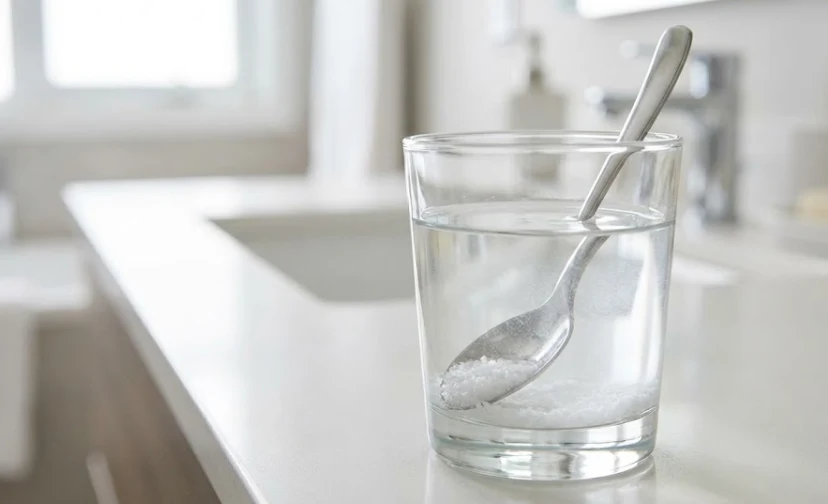
You don’t need ocean water—in fact, seawater is full of living organisms you don’t want in a surgical wound. You need a clean, homemade solution.
- The Ratio: Mix 1/2 teaspoon of table salt into a cup (8 oz) of warm water.
- The Temp: Make sure it is warm, not hot. Hot water increases blood flow too much and can cause throbbing.
- The Method: Do not swish like a washing machine. Gently tilt your head side to side. “Bathe” the implant site, then let the water fall out of your mouth into the sink.
FAQ: Common Questions About Salt Water & Implants
The mineral content doesn’t matter much for healing; we just need the sodium chloride. Standard iodized table salt is actually preferred because the grains are smaller and dissolve faster. The goal is a smooth solution, not a gritty scrub that could irritate the incision.
We recommend gently bathing the site 3 to 4 times a day, especially after meals. This gently flushes away food particles without the need for brushing the sensitive area directly. Think of it as a gentle irrigation system to keep the site clean.
It is bacteriostatic rather than bactericidal. This means it doesn’t instantly ‘nuke’ bacteria like bleach would, but it creates an alkaline environment where bacteria struggle to reproduce and survive. It stops the invasion from growing, allowing your immune system to do the rest.
Salt water is a topical aid—it helps the surface tissue. However, a dental implant is a deep procedure involving the bone. Professor Doctor Coşkun Yıldız prescribes antibiotics to prevent systemic infection deep within the jaw. The salt water handles the outside; the antibiotics handle the inside.
If it stings, your solution might be too salty (hypertonic). Dilute it with more warm water. It should feel soothing, like a warm blanket for your gums, not like a sting. If the stinging persists, stop and contact our clinic to ensure there isn’t an opening in the tissue.
- Huynh, N. C.-N., et al. (2013). Rinsing with Saline Promotes Human Gingival Fibroblast Wound Healing In Vitro. PLoS ONE, 8(7), e69518.
- Abreu, F. A., et al. (2011). Effect of salt water rinse on the reduction of oral bacteria: A randomized clinical trial. Journal of Clinical Dentistry, 22(3), 89-92.
- Chugh, P., et al. (2020). A comparison of the efficacy of warm saline rinse and chlorhexidine mouthwash in the management of alveolar osteitis. Journal of Maxillofacial and Oral Surgery, 19(4), 542-546.
- Tosha, Y., et al. (2018). The impact of saline mouth rinse on periodontal healing after surgery: A systematic review. International Journal of Oral Science, 10, 22.
- Larsen, P. E. (1992). The effect of chlorhexidine and saline rinses on wound healing in the oral cavity. Oral Surgery, Oral Medicine, Oral Pathology, 73(1), 4-8.

