


Mostly oral, rarely in your stomach.
Nothing can destroy personal confidence quite as silently and persistently as bad breath that lasts for a long time or clinically is called halitosis. It is the shadow that seems to stick to you during business meetings and even romantic dinner dates. Naturally, most people grab a piece of mint or a stronger mouthwash, but very often these are just temporary masks for a much deeper biological story.
In our Lema Dental Clinic, Turkey, we see quite a number of patients who, after years of feeling ”dirty”, are baffled when, despite their obsessive brushing, the odor remains. They are quite frustrated. The question is still: does the smell come from the “door”—the mouth—”door” that’s been “shut” with the teeth, or is it coming to the surface of the digestive tract?
The 90% Reality: The Mouth as a Biological Greenhouse
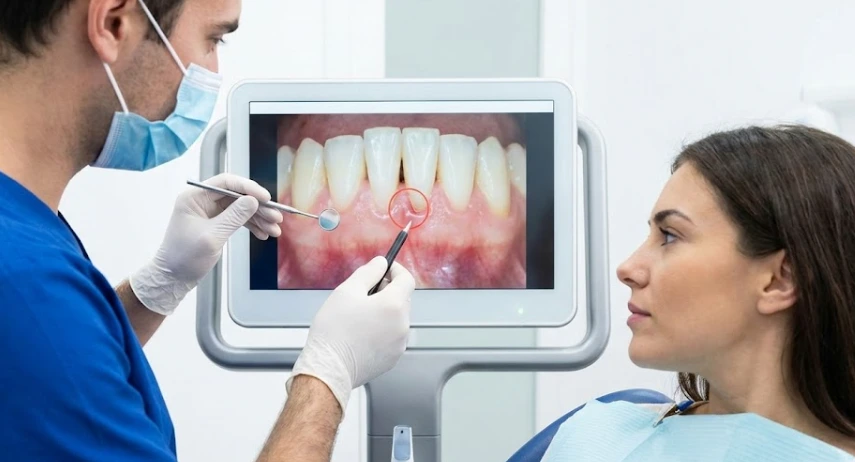
From our clinical experience here at Lema Dental Clinic, we found that the majority of halitosis cases, i.e., around 90%, are directly related to the oral cavity. Your mouth is basically a warm, moist biological greenhouse. When bacteria digest the proteins present in the food particles, saliva, and blood, they release volatile sulfur compounds (VSCs). These are the compounds that cause the “rotten egg” smell.
Professor Doctor Coşkun Yıldız puts it very often says that an impacted wisdom tooth or a poorly fitted crown is like a trapdoor for bacteria. Food pieces are directly embedded under the surface, and because oxygen cannot get to these spaces, anaerobic bacteria begin to grow. These bacteria are not merely inactive; they ferment as well.
Let’s really dissect these common offenders in the mouth:
- Periodontal Pockets: Imagine your gums as a turtleneck sweater. The “collar,” if it becomes loose, dirt falls inside. You cannot clean these deep pockets at home and, therefore, become factories for sulfur.
- The Tongue’s Surface: A microscopic view of the tongue would show a surface like a shaggy carpet. These little bumps (papillae) can trap tiny bits of food and dead cells.
- Failing Restorations: Old fillings that have developed “margins” or gaps function as microscopic apartments for bacteria.
The 10% Exception: When the Stomach Speaks
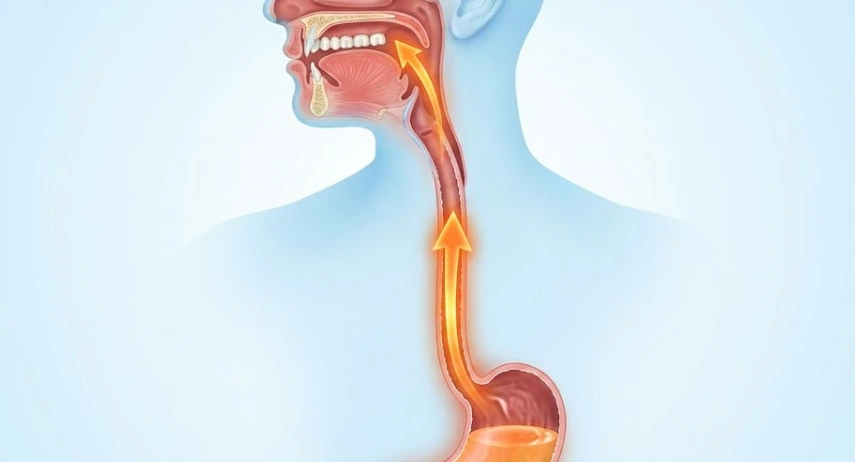
The reality is that sometimes, the mouth is perfectly healthy, yet the odor persists. This is when we look toward the gut. While less common, gastric issues can indeed manifest as breath odor.
Dentist Polen Akkılıç and her team are trained to recognize the “scent profile” of a patient. Anytime the breath smells acidic, sour, or even has a metallic tang, it is usually a sign that the problem lies in the stomach rather than the teeth.
The most frequent gastric culprit is Gastroesophageal Reflux Disease (GERD). In this condition, the valve between the stomach and the esophagus becomes a “leaky faucet,” allowing stomach acid and undigested food particles to creep back up. This doesn’t just taste bad; the gases associated with digestion escape through the mouth.
Distinguishing the Source: A Clinical Comparison
How can you tell where the problem lies? Here is a breakdown of what we observe during consultations in Turkey.
| Feature | Oral-Based Halitosis | Gastric-Based Halitosis |
| Scent Profile | Rotten eggs, sulfur, “fecal” notes. | Acidic, sour, fruity, or metallic. |
| Timing | Constant, but worse in the morning. | Often worse after heavy meals or lying down. |
| Oral Symptoms | Bleeding gums, coated tongue, dry mouth. | Heartburn, bloating, frequent burping. |
| Simple Test | Scraping the back of the tongue usually reveals the scent. | Tongue scraping smells neutral; odor comes from the throat. |
| Primary Treatment | Deep cleaning, laser therapy, or replacing crowns. | Dietary changes, antacids, or H. pylori treatment. |
Why Professional Diagnosis in Turkey is Key
The question remains: why come to Lema Dental Clinic for something as “simple” as bad breath? Because halitosis is rarely simple. It is often a symptom of Periodontitis, which, if left unchecked, eats away at the jawbone like a slow-moving fire.
Professor Doctor Coşkun Yıldız compares the jawbone to the foundation of a skyscraper. You can have the most beautiful windows (veneers), but if the foundation is rotting due to chronic infection and bacteria, the whole structure is at risk. Our diagnostic process in Turkey involves high-resolution digital imaging to find the “hidden” pockets that standard check-ups miss.
FAQ: Addressing Your Concerns About Chronic Breath
A tongue scraper is a great tool, but it’s like mopping the floor while the sink is still overflowing. If the bacteria are deep in your gum pockets or under a failing bridge, scraping your tongue will only provide a few minutes of relief. We need to turn off the ‘source’ of the leak.
A persistently sour or acidic taste is a classic hallmark of reflux. While we will check your enamel for acid erosion—which can be quite damaging—we may also refer you to a specialist to look at your digestive valve health.
At Lema Dental Clinic, we use advanced ultrasonic tools that are incredibly gentle. We prioritize your comfort. Think of it as a ‘spa day’ for your mouth; we remove the irritants so your tissues can finally breathe and heal.
We don’t just give you a prescription mouthwash. We use a combination of deep periodontal therapy, laser sterilization to kill anaerobic bacteria, and a meticulous review of your existing dental work by Dentist Polen Akkılıç and her team.
Not quite. Morning breath is a result of your mouth ‘drying out’ at night, which stops the natural cleaning action of saliva. Chronic halitosis is present even after you brush and floss; it’s a sign that a bacterial colony has moved in permanently.
- Bollen, C. M., & Beikler, T. (2012). Halitosis: the multidisciplinary approach. International Journal of Oral Science, 4(2), 55-63.
- Tangerman, A., & Winkel, E. G. (2010). Intra-oral halitosis: an overview. Journal of Breath Research, 4(1), 017001.
- Scully, C., & Greenman, J. (2012). Halitosis (breath odor). Periodontology 2000, 48(1), 66-75.
- Mori, N., et al. (2021). Relationship between Gastroesophageal Reflux Disease and Oral Health: A Systematic Review. Journal of Clinical Medicine.
- Aydin, M., & Harvey-Woodworth, C. N. (2014). Halitosis: a new definition in an old context. British Dental Journal, 217(1), E1.

