


Yes, depending on stain depth.
Looking at ourselves in the bathroom mirror, we wonder when our smiles gradually lost their shine. Was it after that caffeine-filled morning? The passing years? Or is it something more profound?
In our clinical experience, work at Lema Dental Clinic, we have noticed patients blaming themselves for having yellow teeth, thinking that it’s simply a matter of “brushing harder.” However, brushing harder usually results in more damage.
The question of whether you can reverse discoloration does not simply have a yes or no answer as it depends entirely on the source of the stain. Think of your tooth as a window – if the dirt is on the outside of the glass then a thorough wipe with a squeegee (professional cleaning) will make it like new. But if the glass has got dull or cloudy from the inside, then cleaning the surface will hardly change the appearance.
Types of Stains: The Surface vs. The Structural
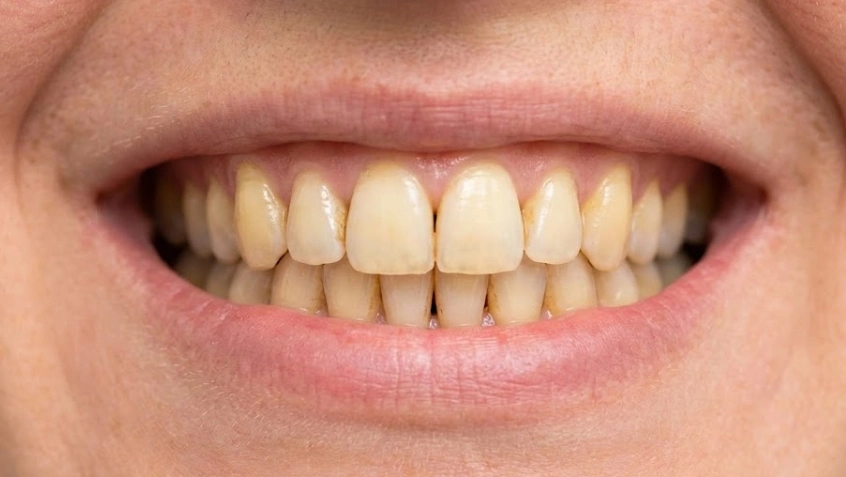
Basically, before we explain what can be done to bring back your smile, we need to identify the stain’s origin first.
1. Extrinsic Discoloration (Surface Stain)
These are the stains that are found in the outermost layer, i.e., enamel, and usually result from lifestyle habits like taking coffee, red wine, smoking, or consuming highly pigmented foods.
- Is the discoloration reversible? Almost completely.
- Remedy: A professional cleaning, including scaling and polishing or laser whitening at a dental clinic.
2. Intrinsic Discoloration (Deep Stain)
Things get complicated here. Such staining occurs within the tooth itself, mostly in the dentin layer (beneath the enamel), and can be due to:
- a blow to the tooth that causes the nerve to die, hence the tooth gets discolored,
- certain types of medication – like tetracycline antibiotics taken during childhood,
- and an overdose of fluoride during the growth period.
- Whitening: More than likely this wouldn’t be possible with just bleaching.
- Solution: Typically, it involves hiding the defect with veneers or crowns.
Clinic-based Methods: How do We handle Discoloration in Turkey?
We don’t just take a chance with “bleaching” at Lema Dental Clinic. The first step is to understand the biology of your tooth.
Pros and Cons of Bleaching (To What Extent)
Laser whitening nowadays could be an unbelievable treatment for extrinsic stains. However, Dentist Polen Akkılıç and her aesthetic department keep telling the patients that: “There are limits to bleaching.” So if the original shade of the tooth is ivory, bleaching will get it back to ivory but chemically forcing it to be ‘paper white’ will lead to the destruction of the enamel structure.
The Plan for “Hollywood Smile”
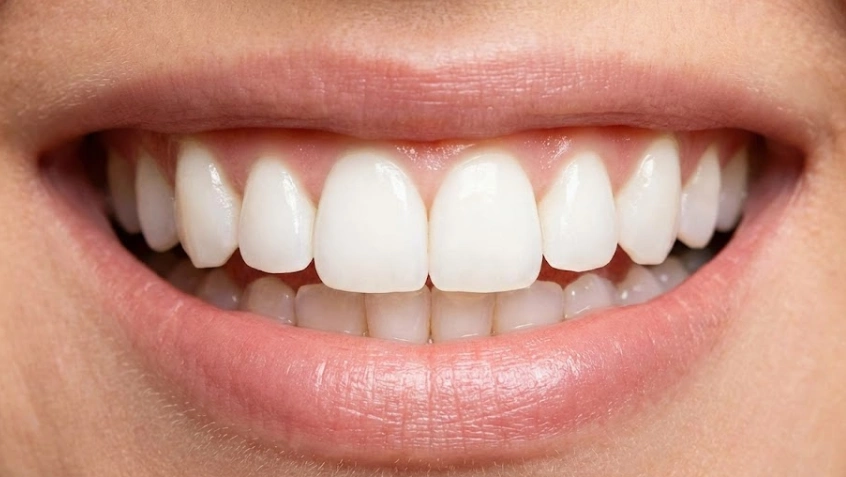
If the discoloration is intrinsic, such as far gray or yellow bands from antibiotics, etc., then reversal of the chemical is not possible. The pigment is in the very structure.
That is why, Professor Doctor Coşkun Yıldız only recommends restoration instead of chemically in such situations. On the other hand, the use of ultra-thin laminate veneers or Zirconia crowns, in principle, changes the tooth surface. It’s similar to renovating a wooden floor that’s been seriously scratched – you can’t simply polish out the deep gouges every time; sometimes, you need to start from a brand-new perfect surface layer.
Comparison: Whitening vs. Restorative Solutions
Here is how we break down the options for our international patients who travel to Turkey for a solution.
| Feature | Professional Laser Whitening | Porcelain Veneers / Crowns |
| Best For | Surface stains (coffee, tea, tobacco) | Deep intrinsic stains, trauma, gray teeth |
| Invasiveness | Non-invasive (Chemical) | Minimally invasive (0.3mm – 0.7mm prep) |
| Longevity | 6 months – 2 years (fades with diet) | 15 – 20+ years (permanent color) |
| Time Required | 1 Hour (Single Session) | 5-7 Days (Design & Placement) |
| Reversibility | Fully reversible | Irreversible (enamel is modified) |
| Cost | Lower | Higher investment |
Why “Natural” Remedies Frequently Don’t Work
It is common to come across things such as charcoal, baking soda, or lemon juice being promoted on social media. These may only remove some surface stains as they work through abrasion. Basically, you are removing the enamel layer of your teeth by sanding. After the enamel is gone, the xanthous dentin underneath will be more visible, hence your teeth will eventually look darker.
The surest way to getting a reversal is always through a professional.
Expert Answers on Brightening Your Smile
This is a sign of nerve trauma, causing the tooth to “bruise” from the inside. Surface whitening won’t help here. The standard fix is a root canal combined with internal bleaching or a Zirconia crown for a perfect match.
Not when supervised. The temporary sensitivity some feel is just tooth dehydration. At Lema Dental Clinic, we use buffering agents to protect your enamel’s structure while effectively lifting stains.
No. Porcelain and Zirconia are bleach-resistant. If they look discolored, the surface glaze might be worn or the natural tooth underneath is showing through. To “whiten” a veneer, it must be replaced.
Absolutely not. While “Hollywood White” (BL1) is popular, we also specialize in natural aesthetics. We can design subtle, age-appropriate shades that look like your natural teeth, only better.
It’s likely thinning enamel, not a stain. As enamel thins, the naturally yellow dentin underneath shows through. Since this is a structural issue, whitening won’t work—veneers are the best way to restore a youthful, white opacity.
- Joiner, A. (2006). The bleaching of teeth: A review of the literature. Journal of Dentistry, 34(7), 412-419.
- Watts, A., & Addy, M. (2001). Tooth discolouration and staining: A review of the literature. British Dental Journal, 190(6), 309-316.
- Carey, C. M. (2014). Tooth whitening: What we now know. Journal of Evidence-Based Dental Practice, 14, 70-76.
- Plotino, G., Buono, L., Grande, N. M., Pameijer, C. H., & Somma, F. (2008). Nonvital tooth bleaching: A review of the literature and clinical procedures. Journal of Endodontics, 34(4), 394-407.
- Attin, T., & Hannig, C. (2014). Tooth discoloration: Causes and management. Clinical Oral Investigations, 18(9), 2131-2139.

