


Yes, denture adhesive can be used on partials, but a proper fit is always more important.
This sort of question almost invariably arises in a dental office. You have a removable partial denture, but it keeps coming out when you talk or eat. And now you are staring at a denture adhesive tube at the drugstore thinking, “Is this a safe way to solve the problem?”
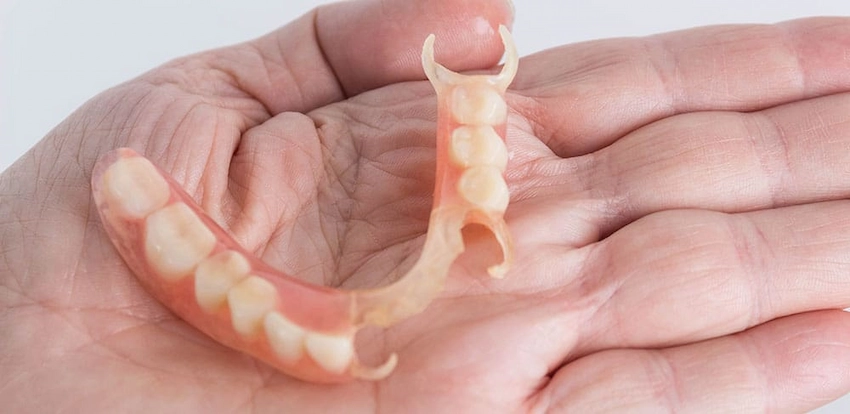
You may technically use denture adhesive for partial dentures. However, it’s more like using a bandage to cover up a really big underlying problem. Metal or acrylic clasps should be the main support of a well-fitting partial denture by attaching to your existing natural teeth. A chemical paste should not be necessary for it.
Still, let us ponder a little bit more about why your partial denture is slipping, what to do if you want to use adhesive safely, even though it is not the right long-term solution, and what the actual prospects of your smile are.
Reasons for Your Partial Denture Slipping
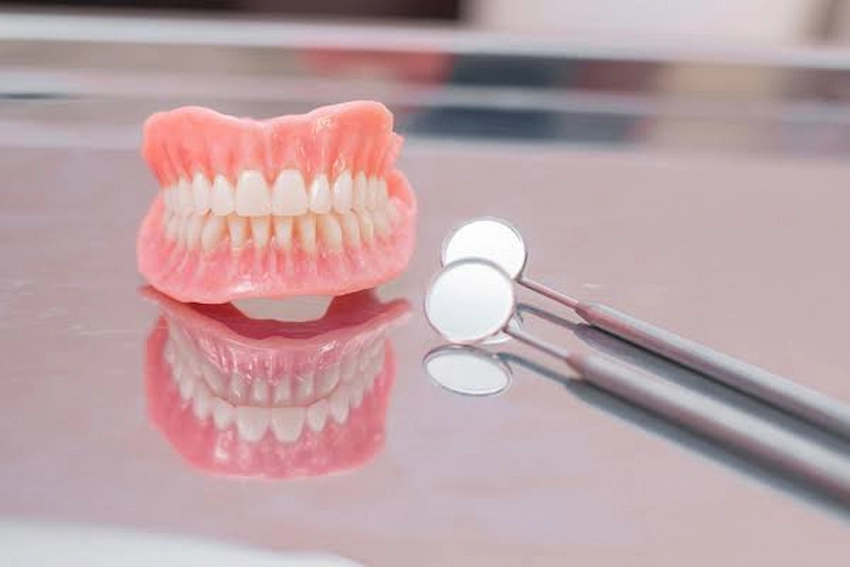
Imagine your jawbone as a house’s foundation. When some teeth are lost, the foundation is deprived of the daily chewing stimulation. In the absence of that pressure, the bone will undergo a gradual melting process—the medical term for which is resorption.
As the bone diminishes, the shape of the gum tissue lying over it alters. Meanwhile, your partial denture is fabricated from inflexible acrylic and metal. It cannot adjust its shape. Sooner or later, your foundation will be gone, and you will notice a space beneath your appliance. That is the moment when it starts to move, slip, and make noise.
What Role Do Adhesives Play (And The Hidden Dangers)
If you are still waiting on a new fit or are considering more permanent options, you might need a temporary solution to hold your dentures in place. Putting a tiny amount of adhesive on the pink part of the denture that goes against your gums is completely safe.
Nonetheless, it is not unusual for us to find patients who use a great deal of the paste. Some put it on the clasps, the teeth, and even the insides of the mouth. This kind of behavior leads to a very disorganized environment for bacteria to multiply. Besides that, it also poses a very serious health risk.
Almost all the denture adhesives that you find in stores by yourself contain zinc to make their hold better. When you use a lot of paste only to keep the dentures you use still, you might be swallowing harmful doses of zinc. In the long run, a lot of zinc may cause very serious nerve disorders, numbness, and a very dangerous copper deficiency.
The Paradigm Shift: Moving Beyond the Paste
It is unacceptable that someone would be left to depend on a tube of glue. Quite often, Professor Dr. Coşkun Yıldız of Lema Dental Clinic in Istanbul, Turkey, tells his patients: “A removable appliance is simply a replacement for having no teeth at all, whereas an implant is a genuine replacement of a tooth.”
When some patients are done with the ordeal of partial dentures, Dentist Polen Akkılıç and her team come up with a forever solution. Your healthy adjacent teeth are forced to bear a heavy load by the traditional partials, which over time results in their weakening. We, on the other hand, use strong materials like titanium and zirconium to structurally restore your smile.
Regardless of whether you require a single implant or a full arch restoration such as the All-on-4 or All-on-6 system, these implants are able to connect directly to your jawbone. They resemble natural tooth roots in function. This not only halts bone loss right away but also keeps your facial structure from shrinking. In the end, you obtain a robust, permanently fixed bite—without having to use a single drop of adhesive.
Weighing the Alternatives: Adhesive vs. Implants
So, the final question is: is that constant struggle really worth it? Let’s talk about relying on adhesive versus upgrading to an implant-supported solution.
| Feature | Partial Denture + Adhesive | Implant-Supported Zirconium Bridge |
| Bite Force | ~20-30% of natural strength | ~90-100% of natural strength |
| Bone Health | Accelerates bone loss | Stimulates and preserves the jawbone |
| Daily Routine | Requires removal, cleaning, and re-gluing | Brush and floss like natural teeth |
| Health Risks | Potential zinc toxicity, gum irritation | Safe, biocompatible titanium |
| Longevity | Needs replacing/relining every 3-5 years | Designed to last a lifetime |
Frequently Asked Questions
Where exactly do I put the adhesive on a partial?
You should apply it only to the pink acrylic base that rests directly on your gums, and these should be three small, pea-sized dots. You must never put adhesive on the metal clasps because, first, this would stop them from properly holding your natural teeth and, second, it would make the denture very difficult to clean.
How do I get the sticky residue off my gums and natural teeth?
Be sure to brush gently with a soft-bristled toothbrush and warm water. If the sticky residue is very difficult to get off, a warm saltwater rinse will also help loosen the adhesive bonds. Under no condition should you try to use sharp tools for scraping your gums, as these will cause very small, invisible cuts and eventually infections.
Is it normal for my partial to suddenly feel loose after years of fitting perfectly?
Yes, this can be considered normal to some degree, but also it is a very clear warning that your jawbone has shrunk beneath the denture. Anything that will be applied here,e such as adhesives, is only going to camouflage the symptoms, and the real problem of bone loss will remain. You should talk to a professional for a reline or even implantation alternatives.
Can zinc-free adhesives solve the toxicity problem?
Using zinc-free products is a remarkable step towards avoiding heavy metal toxicity; however, it does not really address the underlying problem. You see, a partial denture that does not fit properly and keeps rubbing against the gum tissue is still going to result in bone loss,s and the remaining anchor teeth can also be damaged.
I want to transition to implants in Turkey. How long does the process take?
Right from the beginning at Lema Dental Clinic, we keep the surgical part as simple and unproblematic as possible. Based on your bone structure alone, it is likely that we will not only surgically place the implants but also provisionally fix the prosthesis within a few days. Adhesive dentures will stay on the shelf for you from that moment.
References
- Carlsson, G. E. (2014). Responses of the jawbone to changing functional forces. Clinical Implant Dentistry and Related Research, 16(4), 481-490.
- Felton, D. A. (2016). Edentulism and comorbid factors. Journal of Prosthodontics, 25(S1), 4-13.
- Misch, C. E. (2014). Dental Implant Prosthetics (2nd ed.). Elsevier Mosby.
- Nogueira, T. E., et al. (2019). Zinc in denture adhesives and the risk of neurological disease: A systematic review. The Journal of Prosthetic Dentistry, 121(4), 565-572.
- Zarb, G. A., & Hobkirk, J. A. (2012). Prosthodontic Treatment for Edentulous Patients: Complete Dentures and Implant-Supported Prostheses (13th ed.). C.V. Mosby Co.

