

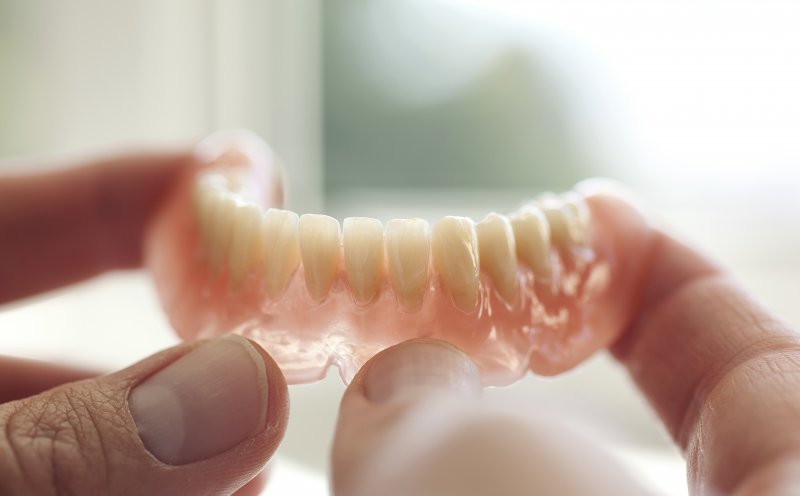
¿Adhesivo para parciales? La verdad clínica.
Sí, el adhesivo para prótesis dentales se puede usar en prótesis parciales, pero un ajuste adecuado siempre es más importante.
Este tipo de pregunta surge casi invariablemente en una consulta dental. Usted tiene una dentadura parcial removible, pero se le sigue saliendo al hablar o comer. Y ahora está mirando un tubo de adhesivo para prótesis dentales en la farmacia pensando: "¿Es esta una forma segura de resolver el problema?" Técnicamente, puede usar adhesivo para prótesis dentales para prótesis parciales. Sin embargo, es más como usar una venda para cubrir un problema subyacente realmente grande. Los ganchos metálicos o acrílicos deberían ser el soporte principal de una prótesis parcial bien ajustada al unirse a sus dientes naturales existentes. Una pasta química no debería ser necesaria para ello. Aun así, reflexionemos un poco más sobre por qué su prótesis parcial se desliza, qué hacer si quiere usar adhesivo de forma segura, aunque no sea la solución a largo plazo adecuada, y cuáles son las perspectivas reales de su sonrisa.Razones por las que su prótesis parcial se desliza
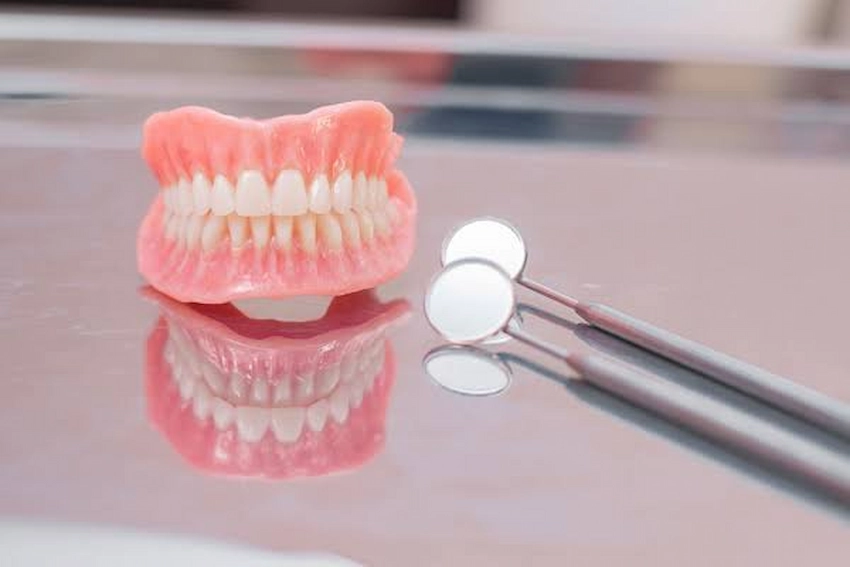
¿Qué papel juegan los adhesivos (y los peligros ocultos)?
Si aún está esperando un nuevo ajuste o está considerando opciones más permanentes, podría necesitar una solución temporal para sujetar sus prótesis dentales en su lugar. Poner una pequeña cantidad de adhesivo en la parte rosa de la prótesis dental que va contra sus encías es completamente seguro. No obstante, no es inusual que encontremos pacientes que usan una gran cantidad de la pasta. Algunos la ponen en los ganchos, los dientes e incluso en el interior de la boca. Este tipo de comportamiento crea un ambiente muy desorganizado para que las bacterias se multipliquen. Además de eso, también representa un riesgo muy grave para la salud. Casi todos los adhesivos para prótesis dentales que encuentra en las tiendas por su cuenta contienen zinc para mejorar su sujeción. Cuando usa mucha pasta solo para mantener quietas las prótesis que usa, podría estar ingiriendo dosis dañinas de zinc. A largo plazo, mucho zinc puede causar trastornos nerviosos muy graves, entumecimiento y una deficiencia de cobre muy peligrosa.El cambio de paradigma: más allá de la pasta
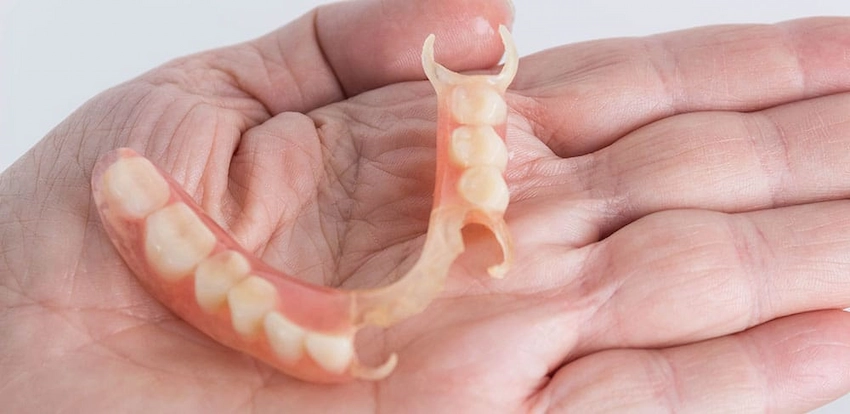
Sopesando las alternativas: Adhesivo vs. Implantes
Entonces, la pregunta final es: ¿realmente vale la pena esa lucha constante? Hablemos de depender del adhesivo frente a la mejora a una solución soportada por implantes.| Característica | Prótesis Parcial + Adhesivo | Puente de Zirconio Soportado por Implantes |
| Fuerza de Mordida | ~20-30% de la fuerza natural | ~90-100% de la fuerza natural |
| Salud Ósea | Acelera la pérdida ósea | Estimula y preserva el hueso maxilar |
| Rutina Diaria | Requiere extracción, limpieza y volver a pegar | Cepillar y usar hilo dental como dientes naturales |
| Riesgos para la Salud | Posible toxicidad por zinc, irritación de las encías | Titanio seguro y biocompatible |
| Longevidad | Necesita reemplazo/rebase cada 3-5 años | Diseñado para durar toda la vida |
Preguntas Frecuentes
Referencias
- Carlsson, G. E. (2014). Responses of the jawbone to changing functional forces. Clinical Implant Dentistry and Related Research, 16(4), 481-490.
- Felton, D. A. (2016). Edentulism and comorbid factors. Journal of Prosthodontics, 25(S1), 4-13.
- Misch, C. E. (2014). Dental Implant Prosthetics (2nd ed.). Elsevier Mosby.
- Nogueira, T. E., et al. (2019). Zinc in denture adhesives and the risk of neurological disease: A systematic review. The Journal of Prosthetic Dentistry, 121(4), 565-572.
- Zarb, G. A., & Hobkirk, J. A. (2012). Prosthodontic Treatment for Edentulous Patients: Complete Dentures and Implant-Supported Prostheses (13th ed.). C.V. Mosby Co.
Preguntas frecuentes
Where exactly do I put the adhesive on a partial?
You should apply it only to the pink acrylic base that rests directly on your gums, and these should be three small, pea-sized dots. You must never put adhesive on the metal clasps because, first, this would stop them from properly holding your natural teeth and, second, it would make the denture very difficult to clean.
How do I get the sticky residue off my gums and natural teeth?
Be sure to brush gently with a soft-bristled toothbrush and warm water. If the sticky residue is very difficult to get off, a warm saltwater rinse will also help loosen the adhesive bonds. Under no condition should you try to use sharp tools for scraping your gums, as these will cause very small, invisible cuts and eventually infections.
Is it normal for my partial to suddenly feel loose after years of fitting perfectly?
Yes, this can be considered normal to some degree, but also it is a very clear warning that your jawbone has shrunk beneath the denture. Anything that will be applied here,e such as adhesives, is only going to camouflage the symptoms, and the real problem of bone loss will remain. You should talk to a professional for a reline or even implantation alternatives.
Can zinc-free adhesives solve the toxicity problem?
Using zinc-free products is a remarkable step towards avoiding heavy metal toxicity; however, it does not really address the underlying problem. You see, a partial denture that does not fit properly and keeps rubbing against the gum tissue is still going to result in bone loss,s and the remaining anchor teeth can also be damaged.
I want to transition to implants in Turkey. How long does the process take?
Right from the beginning at Lema Dental Clinic, we keep the surgical part as simple and unproblematic as possible. Based on your bone structure alone, it is likely that we will not only surgically place the implants but also provisionally fix the prosthesis within a few days. Adhesive dentures will stay on the shelf for you from that moment.