


Yes, but reversibility has limits.
Quite a unique feeling of heaviness is a consequence of dental neglect. Toothache isn’t the only thing that contributes to it; it is also the feeling of guilt. At Lema Dental Clinic in Turkey, we observe this in the faces of patients daily. They come in, sit in the chair, look hesitant, and barely whisper, “Is it too late for me? Will I ever have a nice smile?”
The quick answer is: Generally, it’s not too late to fix your smile, but changing biology is quite another thing.
Our clinic frequently witnesses patients who have misunderstood the concept of ‘reversal’ in a very literal sense. You simply cannot regenerate the enamel that has been rubbed off, nor do you regrow the bone that has vanished in your jaw. However, you can certainly halt the infection, fortify the underlying structure, and restore the lost portions.
Think of your mouth as an old house that has been severely damaged by a storm. We may not be able to extract the rotting wood, but we can put in new beams and the house will be even stronger than before.
The Borderline Between Gingivitis and Periodontitis
What is reversible can only be understood after you realize the location of the harm. Professor Doctor Coşkun Yıldız is a great source to refer to when you are confused as a patient about the difference between a soft-tissue problem and bone loss.
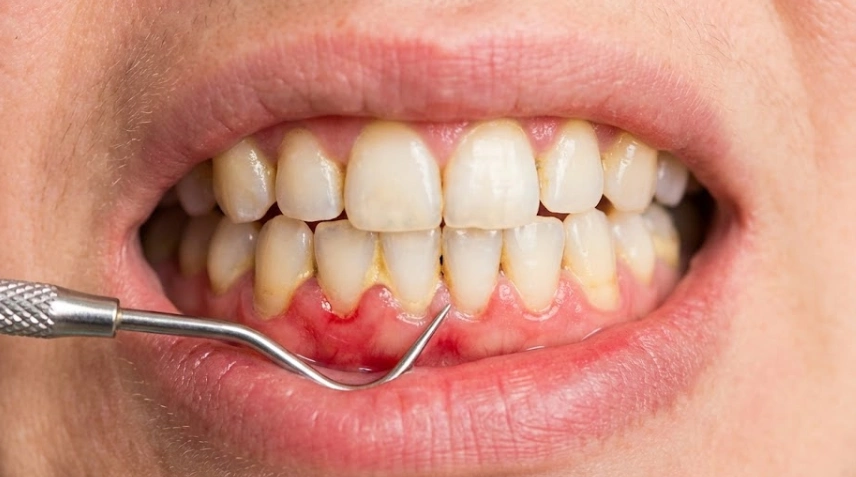
Gingivitis (Early Stage): Being familiar with gum disease is always helpful. To move from early-stage gingivitis to periodontitis, the stage is that only after the lining of the gum tissue is broken down, the infection has gained access to the bone. Bleeding and redness of your gums are signs of bacteria that irritate the soft tissue. If from the healing the professional cleaning and strict hygiene the re-education can be restarted, the gums will heal completely without leaving any scar tissue. The body resets.
Periodontitis (Advanced Stage): Now, this is the stage when the infection has gone to a great length and the tissue surrounding the teeth being damaged. The alveolar bone supporting the teeth is being resorbed as the infection penetrates deep into the gum pockets. The natural growth of the bone is not possible. We cannot biologically “reverse” the loss of the bone after you have lost that foundation. We will have to do either surgical management or surgical rebuilding.
When “Repair” Replaces “Reverse”
You can not simply brush your teeth and cavities will disappear. The enamel is not able to regenerate. However, what we see happening in the clinic is that patients generally mistake “permanent damage” for “no hope” and get quite discouraged.
Dentist Polen Akkılıç and her aesthetic team are very experienced in guiding patients through such a transformation. The patient who comes to Istanbul with teeth worn down from long-term grinding or erosion caused by acid, we do not attempt to “heal” the tooth. We restore it.
- For decay: We excavate the affected/caries part and do fillings or inlays.
- For discoloration: Even if deeply stained tobacco or coffee has colored the dentin, instead of simply bleaching we also resurface the tooth with ultra-thin veneers.
- For missing teeth: We substitute the root completely with titanium implants.
The damage is not reversed; it is covered over by the use of prime quality materials.
Assessing the Damage: A Reversibility Roadmap
It can be a bit confusing not to know what your condition actually is with teeth and gums. We work with a schema that looks like this at Lema Dental Clinic to help patients adjust their perspectives appropriately.
| Condition | Is It Reversible? | The Clinical Solution |
| Bleeding Gums (Gingivitis) | Yes (100%) | Professional scaling, daily flossing, antiseptic mouthwash. |
| Tooth Decay (Cavities) | No | Fillings, Root Canals, or Crowns to seal and protect. |
| Receding Gums | No | Gum grafting surgery or Pinhole technique to cover exposure. |
| Bone Loss (Periodontitis) | No | Deep cleaning to stop progress; Bone grafting for implants. |
| Stained Enamel (Surface) | Yes | Professional laser whitening or airflow polishing. |
| Eroded Enamel (Acid Wear) | No | Bonding or Veneers to rebuild the tooth shape. |
The Turkey Advantage: High-Tech Intervention
The reality is that “reversing” neglect in a local clinic in the UK or the USA can be financially crippling. If you need extensive root canals, deep periodontal scaling, and crowns, the bill can run into the tens of thousands.
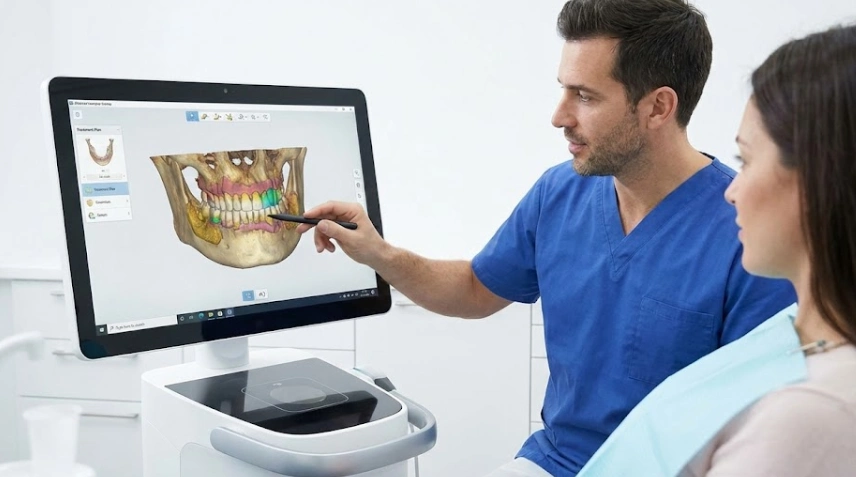
This is why patients fly to us. At Lema Dental Clinic, we utilize technologies like 3D Tomography to see exactly how much bone remains. If you are past the point of simple hygiene reversal, we move straight to rehabilitation. We don’t judge the years of neglect; we simply engineer a solution that makes it look like it never happened.
Top Queries on Recovering a Neglected Smile
Sometimes. If the looseness is caused by inflammation (swelling pushing the tooth out of place), treating the infection can help the gums tighten around the tooth. However, if the looseness is due to significant bone loss, the tooth will likely not firm up on its own and may require splinting or replacement with an implant.
Not immediately. Actually, when you first start flossing correctly after years of neglect, your gums might bleed more for a few days. This is “exiting the war zone.” It’s a sign the body is flushing out bacteria. Usually, after 7–10 days of consistent care, the bleeding stops completely.
Saltwater is soothing and mildy antiseptic, but it is not a cure. It can help reduce inflammation, but it cannot remove the hardened tartar (calculus) cementing bacteria to your teeth. Only a professional hygienist can chip that away.
Rarely. Even if you have lost significant jawbone from years of missing teeth, Professor Doctor Coşkun Yıldız can often perform bone grafting or sinus lifting procedures to create a new foundation. We build the ground before we build the house.
Biologically, gums heal in about two weeks. But structurally, if you need a full mouth restoration at Lema, the process is surprisingly fast. We can often treat severe decay and place implants/veneers in a single trip of 5–7 days, essentially pressing “fast forward” on your recovery.
- Chapple, I. L., et al. (2015). Primary prevention of periodontitis: managing gingivitis. Journal of Clinical Periodontology, 42, S71-S76.
- Fejerskov, O., & Kidd, E. (2009). Dental Caries: The Disease and its Clinical Management. Blackwell Munksgaard.
- Kinane, D. F., Stathopoulou, P. G., & Papapanou, P. N. (2017). Periodontal diseases. Nature Reviews Disease Primers, 3(1), 1-14.
- Marsh, P. D. (2003). Are dental diseases examples of ecological catastrophes? Microbiology, 149(2), 279-294.
- Pihlstrom, B. L., Michalowicz, B. S., & Johnson, N. W. (2005). Periodontal diseases. The Lancet, 366(9499), 1809-1820.

