


Gold teeth can be replaced.
At one point, a gold tooth was the perfect sign of dental work that would last forever and, in some cultures, it was even considered a symbol of a person’s social status. But now, with the progress in aesthetic dentistry, that gold tooth “vintage” has been replaced by something that harmonizes perfectly with the natural smile for many of our patients.
So is it just a simple exchange, or do the two cases have their own secrets?
Here at Lema Dental Clinic in Turkey, our clinical practice tells us that the given procedure, though routine, requires very gentle handling. Changing a gold crown is not merely a matter of color substitution. It is necessary to reconsider the condition of the stump underneath and to make sure that the new porcelain can really stand to such a load as the metal one did.
The Reality of Modern Aesthetics
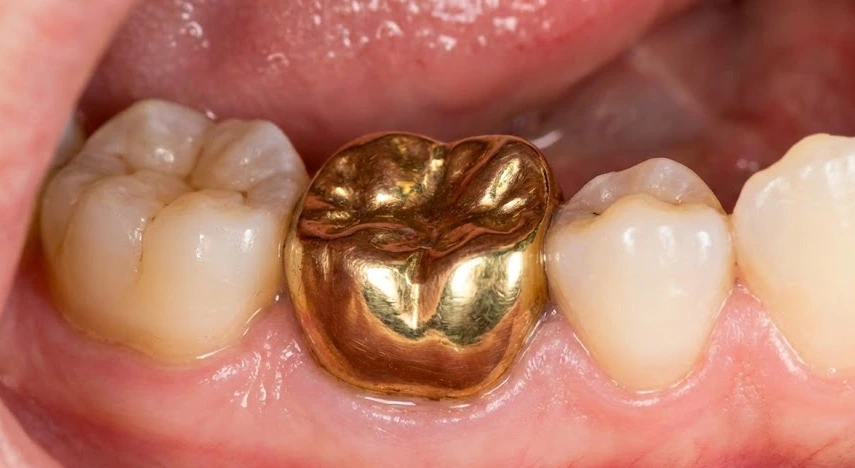
We all have to acknowledge the fact that gold is a marvelous material. It is one of the most trusted and reliable materials in dentistry. But a patient of the 21st century doesn’t want a smile that will be the first thing that people notice when the mouth is opened.
Professor Doctor Coşkun Yıldız is always quite receptive to the idea that the change to porcelain is not merely for the outward appearance but it is also about the patient’s wish to feel that their dental work is a natural and invisible part of their body. The latest porcelain to a great extent, specifically E-Max or Zirconia–based ceramics, is so similar to natural enamel in terms of its translucency that even in bright light it is impossible to tell the difference.
The Technical Transition: What Happens in the Chair?
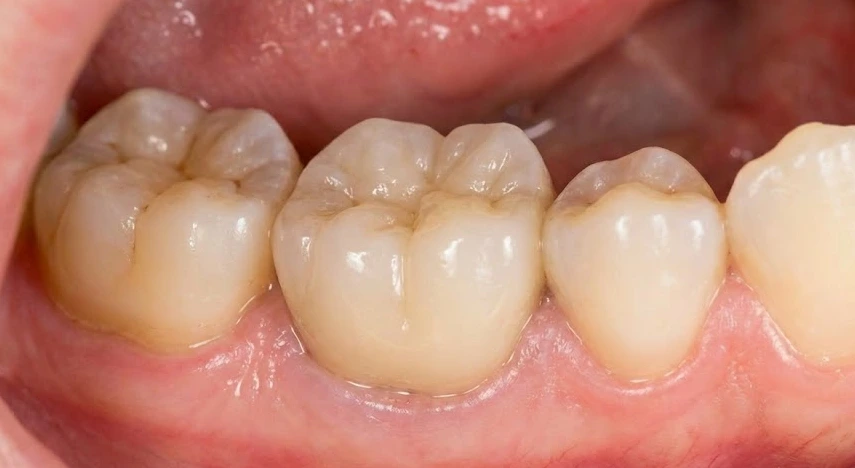
First of all, the present gold is meticulously taken off. Imagine that it is as if a very fine vintage wall paper is being removed in order to uncover the wall underneath. The underlying tooth structure, the very basis of your “building,” should at all costs not be harmed.
In the golden off phase, the Dentist Polen Akkılıç and the members of her team carry out a detailed examination. We identify the following:
- Is there any sign of decay underneath the existing amalgam?
- Is the stump strong enough for the new crown?
- Have there been any metal-induced changes in the color or health of the gum tissue?
Comparing the “Old Guard” to the “New Era”
The question isn’t just if you can replace it, but what you gain by doing so. Here is a breakdown of how these materials stack up during a transition at our clinic:
| Feature | Vintage Gold Crown | Modern Porcelain / Zirconia |
| Aesthetic Appeal | High-contrast, metallic. | Seamless, natural translucency. |
| Biocompatibility | High (if high-noble alloy). | Excellent (no metal allergies). |
| Wear on Opposing Teeth | Very low; gold is “kind” to teeth. | Low to moderate (modern ceramics are highly polished). |
| Procedure Time | 2-3 visits. | 3-5 days at Lema Dental Clinic. |
| Longevity | 20+ years. | 15-20+ years with proper care. |
Why Choose Turkey for Your Smile Transformation?
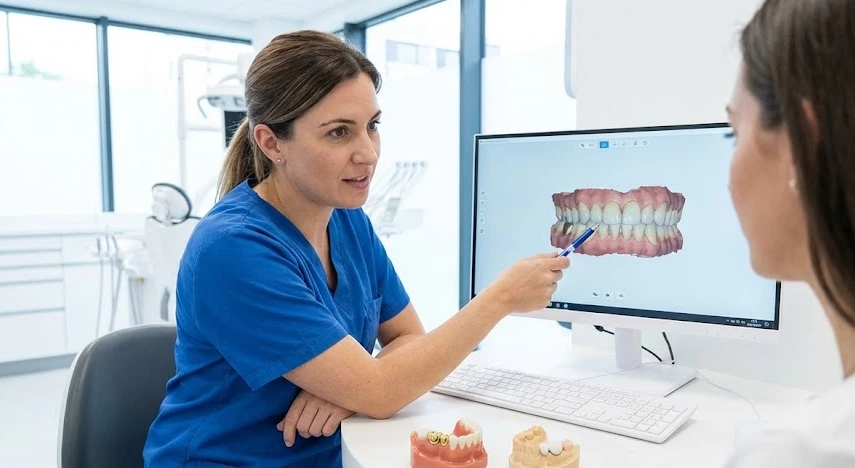
The reality is that high-end porcelain work is an art form. At Lema Dental Clinic, we don’t just order a crown from a distant factory. Our in-house technicians work alongside the doctors to custom-stain your new porcelain crown so it matches the unique “character” of your surrounding teeth—the subtle spots, the slight variations in white, the way the light hits the edges.
From a surgical perspective, performing this transition in Turkey allows patients access to some of the most advanced CAD/CAM technology in the world. We don’t just aim for a fit; we aim for a microscopic seal.
But Let’s Look Closer at the Foundation
If the tooth underneath the gold has been compromised by time, we might compare the repair to reinforcing a building’s joists before putting on a new roof. In some cases, a “core buildup” is necessary to give the porcelain crown a sturdy post to sit on. This ensures that your new natural-looking tooth doesn’t just look good—it functions under the heavy pressure of chewing for decades to come.
Golden Smile Insights: Common Questions Answered
Not at all. We use local anesthesia to ensure the area is completely numb. You might feel some vibration as we section the gold to “peel” it away, but the experience is generally no different than getting a standard filling.
Well, it is yours! Many patients choose to take their old gold crown home. Since it’s a precious metal alloy, it does have a small intrinsic value, but most keep it as a “souvenir” of their dental history.
While gold is legendary for its “unbreakability,” modern Zirconia-reinforced porcelain is incredibly tough. It won’t chip or crack under normal circumstances. It’s like moving from a heavy iron shield to a high-tech carbon-fiber one; it’s lighter and more beautiful, but still exceptionally strong.
Because many of our patients travel to Turkey specifically for this, we have streamlined the process. Usually, from the removal of the gold to the final “bond” of the porcelain, the process takes about 3 to 5 days.
Only if it’s done poorly. Dentist Polen Akkılıç and her team specialize in natural aesthetics. We use a wide palette of shades to ensure the crown looks like a tooth, not a piece of bathroom tile. We match the translucency to your natural smile.
- Kelly, J. R., & Nishimura, I. (2008). Science-based guidelines for maximizing the clinical success of all-ceramic restorations. The Journal of the American Dental Association, 139, 38S-46S.
- Beuer, F., Schweiger, J., & Edelhoff, D. (2008). Digital dentistry: an overview of recent developments for CAD/CAM generated restorations. British Dental Journal, 204(9), 505-511.
- Wataha, J. C. (2002). Alloys for prosthodontics: restorations and frameworks. Dental Clinics of North America, 46(3), 433-460. (Discussion on gold vs. ceramic biocompatibility).
- Pjetursson, B. E., Sailer, I., Zwahlen, M., & Hämmerle, C. H. (2007). A systematic review of the survival and complication rates of all-ceramic and metal-ceramic reconstructions after a five-year observation period. Journal of Clinical Periodontology, 34, 27-39.
- Donovan, T. E. (2008). Factors essential for successful all-ceramic restorations. Journal of the American Dental Association, 139, 14S-18S.

