


Heart patients can get dental implants if their condition is stable and their cardiologist approves treatment.
The truth is, finding out you have a heart issue can be scary. Patients frequently believe they can forget about getting a new smile after a heart condition diagnosis. They get worried that having a heart disease or taking blood thinners will rule out the possibility of getting a dental implant.
However, taking a closer look reveals that dentistry has advanced vastly and that a heart condition today no longer means that one has to bear the missing teeth forever. Through appropriate planning, professional care, and the collaboration of your medical team, the majority of patients having cardiac problems can be treated with dental implants at a relatively low risk level.
This shows how we help your smile to be beautiful again without taking the risk to your health from the initial examination through your first visit with the implant.
Your Heart and Jawbone Connection
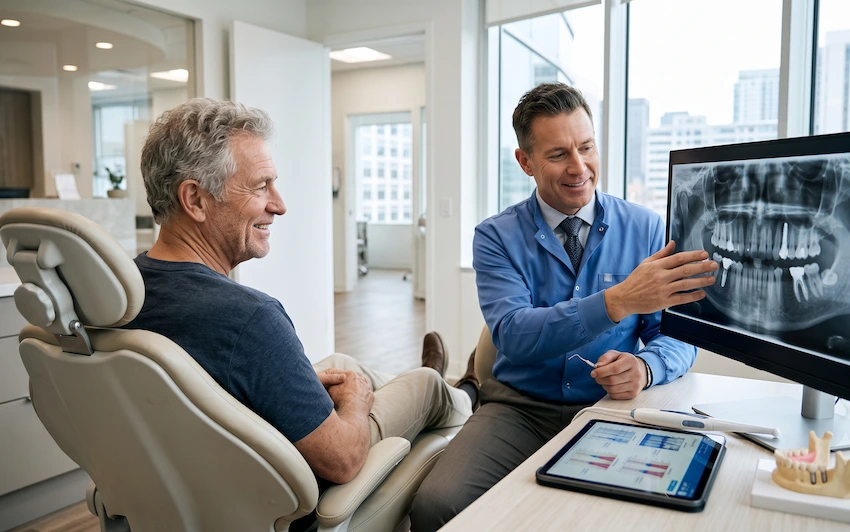
It may sound funny, but just as your house is connected by water pipes and the main pump serves as the heart that pushes the water around, the jawbone is also part of the same water network of your body. Therefore, we must be prudent and work in a planned way if the main pump in charge of your blood circulation is not in good condition before doing any work just on one particular part.
At Lema Dental Clinic, we practice a method of working in a team and not in isolation. One of our heart patients is not just one of our dental patients. He or she is also one of your cardiologist’s patients.
Professor Doctor Coşkun Yıldız has often stressed the point that “The key to a safe implant procedure is a thorough consultation at the clinic, way before any operation.” In other words, we look very closely at your general condition, your daily medications, and your pulse before we take any further actions.
Blood Thinners and Numbing Shots
Still, this is one major concern of the heart patient: Do I really have to discontinue my heart medication?
Certainly, the majority of heart patients get blood thinners on a daily basis in order to avoid clots. Before this time, doctors were telling patients that they should discontinue these pills altogether for a few days before surgery. It so happens that we have learned a whole lot more now. Managing such drugs is not much unlike controlling the speed of a car. You should not turn the vehicle off simply because it is moving fast.
Dentist Polen Akkılıç, along with her team, goes through every prescribed medication. We usually make a call or even see your heart specialist to discuss the matter. In almost all situations, it is possible to go on with the medicine while surgery is done at our place, and we just utilize our special instruments that prevent the bleeding most effectively.
Additionally, we have special types of numbing medicines only for you. A typical shot has some medication which can cause a sudden heart flutter. However, we are absolutely not going to do that on purpose to your heart.
Expectations in Line with the Status of Your Cardiac Functions
In the following section, we are going to describe typical cases which we encounter at clinics.
| Heart Condition | Can Surgery Be Done? | How We Will Approach the Surgery |
| High Blood Pressure | Very Soon | We monitor your pressure during surgery and take measures to ensure that you don’t have stress. |
| Past Heart Attack | We Take the Time | The usual advice is to wait for at least 6 months. Also, we have to consult with your heart doctor and confirm whether this applies to you. |
| Heart Valve Surgery | Very soon after | Antibiotics will be given to you before surgery to help in prevention of bacteria related infections. |
| Irregular Heartbeat (A-Fib) | Not long afterwards | We keep a close eye on the thickness of your blood and make sure that you do not bleed much. |
Healing After Surgery
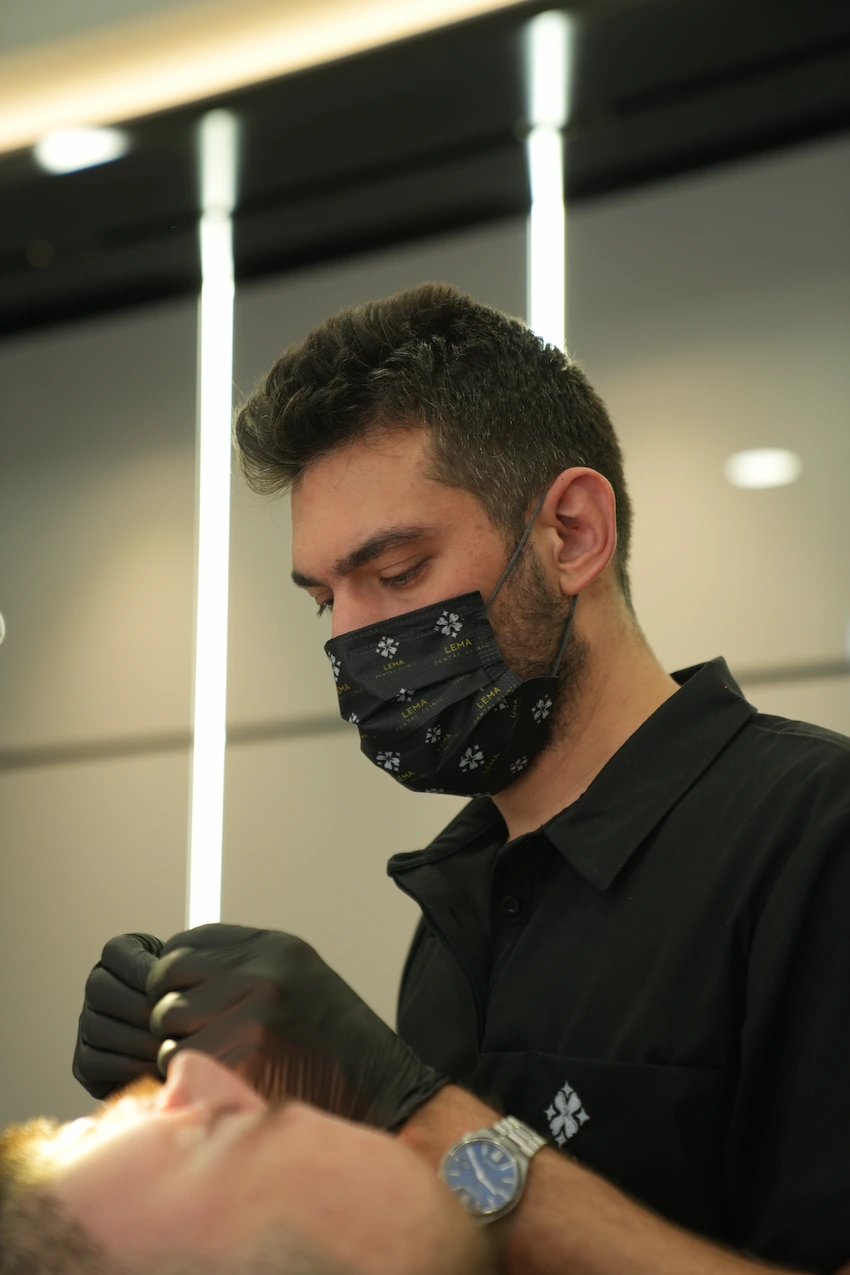
A dental implant is a strong and solid metal root that should fuse quite firmly with the bone around it. Obviously then, it is an activity that highly depends on the blood supply that one receives.
If you are a person with a weak heart, it is very likely that recovering and healing will be longer for you than it is for a healthier person. That’s the reason why planning is one of the most important steps of the entire implant treatment process. We offer one of the safest clinics in Turkey, which has the luxury standard of care. This will allow your body to rest, remain relaxed, and finally heal properly.
Frequently Asked Questions
Does the heart medicine have to be stopped altogether?
Probably not. But in any case, you must NOT take this decision on your own and must go to your doctor. We normally take your heart specialist’s input as well. We can use special clinic equipment to ensure bleeding is stopped safely even while you maintain your medications.
Can the local anaesthetics raise my cardiac workload?
Standard dental numbing injections contain some ingredients that may cause your heart to speed up for brief moments. But for sure, we are not going to do such a thing with you! We use safe, gentle anaesthetics only. You feel no pain, while your heart remains perfectly calm and safe.
Is there a high risk of getting infected?
If your valve inside the heart has been replaced or repaired (prosthetic valves), you have a chance of infection (endocarditis) after invasive procedures such as dental implant surgery, which could be deadly in a fraction of a minute. But we can easily prevent this. We simply give you antibiotics that are totally safe for you to take. That is a dose of such antibiotics for 1 hour before your appointment with us.
How long does the recovery period take?
Essentially,y it is like the other human bones: once laid, they gradually grow stronger over time until they can support heavy loads. The normal time for your implant in the bone to get really locked is between 3 and 6 months, depending on several parameters. The healing of the surrounding gum tissue is relatively straightforward and only takes 7 days on average. We monitor you closely during these periods so that all developments meet our expectations.
What are the reasons for coming here to us for the implantation of the dental prosthesis?
First and foremost, at Lema Dental Clinic, we see you rather than only looking at the problem in the mouth. Professor Doctor Coşkun Yılmaz and Dentist Polen Akkılıç are leading a team of experts who can provide hospital-level security in a clinic-like, pleasant surroundings. A journey toward your new smile is safe with us and quite comfortable.
Academic References
- Diz, P., Francés, R., Álvarez, J., & Pérez, A. (2013). Dental implants in the medically compromised patient. Journal of Dentistry, 41(3), 195-206.
- Madrid, C., & Sanz, M. (2009). What influence do anticoagulants have on oral implant therapy? A systematic review. Clinical Oral Implants Research, 20(s4), 96-106.
- Bacci, C., Maglione, M., Macrì, A., et al. (2010). Management of patients undergoing anticoagulant treatment: results from a large, multicentre, observational, cross-sectional study. British Journal of Oral and Maxillofacial Surgery, 48(5), 377-380.
- Gual-Vaqués, P., Jané-Salas, E., Egido-Moreno, S., Ayuso-Montero, R., & López-López, J. (2017). Management of patients treated with direct oral anticoagulants in dental practice. Medicina Oral, Patología Oral y Cirugía Bucal, 22(4), e432.
- Niwa, H., Sugimura, M., Satoh, Y., & Tanimoto, A. (2001). Cardiovascular response to epinephrine-containing local anesthesia in patients with cardiovascular disease. Oral Surgery, Oral Medicine, Oral Pathology, Oral Radiology, and Endodontology, 92(6), 610-616.

