


Yes, denture adhesive can cause a metallic taste, especially if overused or zinc-containing.
Millions of people, in fact, start their day just like you. The first thing you do is wake up and clean your gums. After that, you squish the pink paste onto your dentures. This is just the regular, harmless routine that you associate with it. Most likely, you never even stop for a second to think about the glue that is holding your smile intact.
Still, let’s look at their daily habit more closely. Several patients coming to Turkey for treatments at our clinic are making peculiar complaints. It is a sharp, metallic taste in their mouth, which is so strong that it completely kills their appetite. They blame the food, the medicines, but hardly ever, if at all, think of the denture cream as the culprit.
At Lema Dental Clinic, we have seen through experience that this persistent bad taste is a major indicator. It is a symptom that often hints at metal poisoning resulting from heavy metals. And the culprit? The very adhesive that is supposed to secure your teeth in place.
Behind The Scenes of Your Denture Adhesive: The Role of Zinc
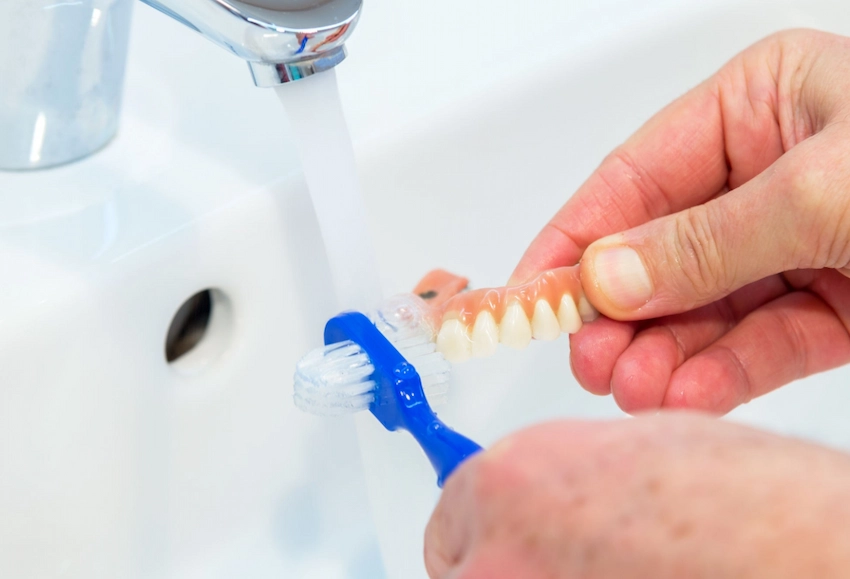
To get a grasp on this, we have to examine the components. Zinc is a component used in a lot of denture creams to create a durable adhesion.
Zinc is an element found in nature. Your body only requires very tiny amounts of it in order to perform its functions adequately. However, your body also needs equilibrium to perform all of its functions well.
Imagine the presence of zinc and copper in your body as two very competitive plants that share a tiny pot of soil. If you give the zinc plant a lot of food, its roots will just keep growing everywhere, and the copper plant will have no room at all . Eating a small amount of zinc-containing denture adhesive daily will release a large amount of zinc into your body. Your body’s system will stop copper absorption.
Professor Doctor Coşkun Yıldız pinpoints this exact problem on many occasions. The striking symptoms of severe copper deficiency manifest as a metallic taste. Apart from just being irritating, it’s actually a sign that the nervous system’s neurotransmission is impaired.
From A Small Problem To Severe Bone Loss
The question is still, why do people rely so heavily on glue?
Your natural teeth are the only ones that keep your jawbone alive. Jawbone can be compared with the foundation of a building. The tooth roots stand for the steel supports in a building. As the steel supports disappear, the foundation will start to fall apart.
You will need to use more denture glue whenever the jawbone begins to decrease in size,e and your teeth no longer fit properly. The glue that you apply to your dentures will not only help you get rid of the pain but also indirectly cause further shrinkage of your bones. The more you use the glue, the more zinc you get, and the more you expose yourself to the zinc-related health risks.
Signs You Are Exposed To A High Level Of Zinc And Low Copper
The metallic taste is just a very minor symptom that only indirectly points to the main problem. If this is the case, the extent of the physical damage will be such that it can hardly be ignored. So you need to be very careful with the main culprit.
- Nerve Damage: You will experience numbness, tingling, or a sensation of “pins and needles” especially in your lower limbs and hands.
- Stomach Pain: You will feel as if you want to vomit all the time. Also, you will experience acute cramps and pains in your abdomen after consuming food.
- Clumsiness: You will find it harder and harder to maintain your balance when you are standing and walking.
- Deep Fatigue: If you get exhausted to the point where you literally cannot do anything, it may be because of a lack of red blood cells or a shortage of healthy ones.
Stopping The Destructive Cycle: Best Clinical Methods
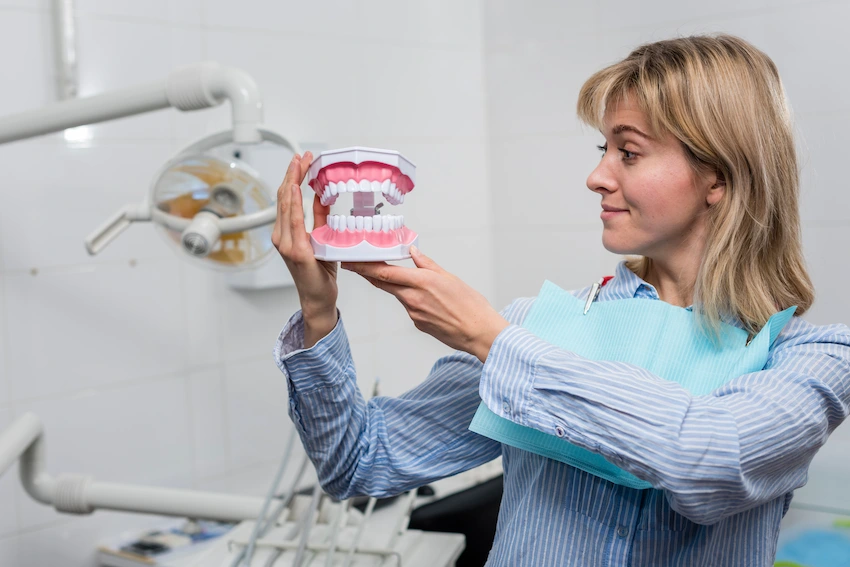
One of the things that we observe at the Lema Dental Clinic is that the patients come in low on energy. They have a strong dislike of their glue routines on a daily basis. They are afraid of it causing them permanent nerve damage. Deep down, they just want a way out.
Not to worry – This marks the point where care based on the latest dental technologies can make a difference. Dentist Polen Akkılıç and her team are experienced in empowering patients to say goodbye to toxic glues forever. We adopt modern Zygomatic, All-on-4, and All-on-6 implant solutions. We secure gorgeous fixed bridges directly to your bones. There are no plastics covering the roof of your mouth. You will never be in need of thick layers of zinc paste again.
Treatment Comparison
| Feature | Old Dentures + Daily Glue | Permanent Implants (All-on-4 / All-on-6) |
| Daily Routine | High effort (removing, cleaning, applying paste) | Very easy (brushing normally, like natural teeth) |
| Toxicity Risk | High (swallowing zinc paste daily) | Zero (no glues or pastes used at all) |
| Chewing Power | Only ~20% of natural bite force | Over 90% of the natural bite force |
| Jawbone Health | Bone shrinks and decays over time | Preserves and strengthens the bone foundation |
Patient FAQ: Straight Talk from the Clinic
Can I just use less adhesive to stop the metallic taste?
You may only need a few tiny drops of glue if your dentures fit perfectly. However, if your jawbone has shrunk and your plates are loose, using less glue will only cause you to get sore from the plastic rubbing. Reducing the amount of denture adhesive does not resolve the bone shrinking phenomenon.
Are zinc-free adhesives completely safe?
In theory,y they can completely prevent zinc poisoning, which is definitely the good news. But at the same time,e you are getting the synthetic compounds in your body every day. Also, when zinc is removed from the paste, the problem of the really low bonding of the paste is often a matter of worry. This makes it quite difficult to eat while using the paste.
How long does it take for the metallic taste to go away?
Due to a slight zinc overload, the metallic taste may remain for a very short time (a few weeks after you stop applying the glue). As far as copper deficiency causing major nerve harm is concerned, recovery will be gradual and quite challenging. The doctor will probably have to write you a prescription for copper supplements.
Why do my dentures suddenly need so much more glue?
Your dentures did not change size. What changed is your gums and bone. Without tooth roots delivering blood, the jawbone will atrophy into the body. A denture that fitted perfectly two years ago will feel like a loose shoe today.
Will permanent implants really feel like natural teeth?
Yes, they will. Titanium posts serve as the artificial roots. They tightly bond with your bone. That is the reason your new teeth will not be resting on the gums. Your biting, chewing, and speaking activities will be the same as those before the loss of your teeth. Also, you will never have the taste of denture adhesive.
Academic References
- Hedera, P., Fink, J. K., Bockenstedt, P. L., & Brewer, G. J. (2003). Myelopolyneuropathy and pancytopenia due to copper deficiency and high zinc levels of unknown origin. Archives of Neurology, 60(9), 1303-1306.
- Nations, S. P., Boyer, P. J., Love, L. A., Burritt, M. F., Morgan, J. A., & Glass, J. A. (2008). Denture cream: an unusual source of excess zinc, leading to hypocupremia and neurologic disease. Neurology, 71(9), 639-643.
- Nofel, A. A., & Al-shami, I. Z. (2020). Cytotoxicity of denture adhesives: A scoping review of the literature. The Journal of Prosthetic Dentistry, 124(5), 534-541.
- Spinazzi, M., Casalegno, P. S., Zavattaro, M. A., Amati, A., & Tavolato, B. (2007). A frequently unrecognized cause of zinc toxicity and copper deficiency. Journal of Neurology, 254(7), 1000-1001.
- Willis, M. S., Monaghan, S. A., Miller, M. L., Holmes, R. W., Hossain, D., & Linder, H. E. (2005). Zinc-induced copper deficiency: a report of three cases initially recognized on bone marrow examination. American Journal of Clinical Pathology, 124(2), 220-226.

