


Yes, a metallic taste after dental implants is rare and usually temporary.
Dealing with a Metallic Taste After Dental Implants
You have worked hard to get your smile back. You have had the operation, gone through the recovery and now you are preparing to enjoy the new set of teeth which will bring you confidence indefinitely. However, you observe a lingering, tangy and metallic taste in your mouth. It is as if you have had a metal coin in your mouth.
This is a natural reaction; you must have worried. Is it your body that is rejecting the implant? Perhaps something went wrong?
At Lema Dental Clinic, we sympathize with this query more than you would expect. Actually, a metallic taste (technically known as dysgeusia) is hardly the indication of an implant failure but only one of the rare side effects of dental surgery. This is the picture that we have in our clinical practice in Turkey.
Scientific Explanation Of The Metal-Mouth Phenomenon
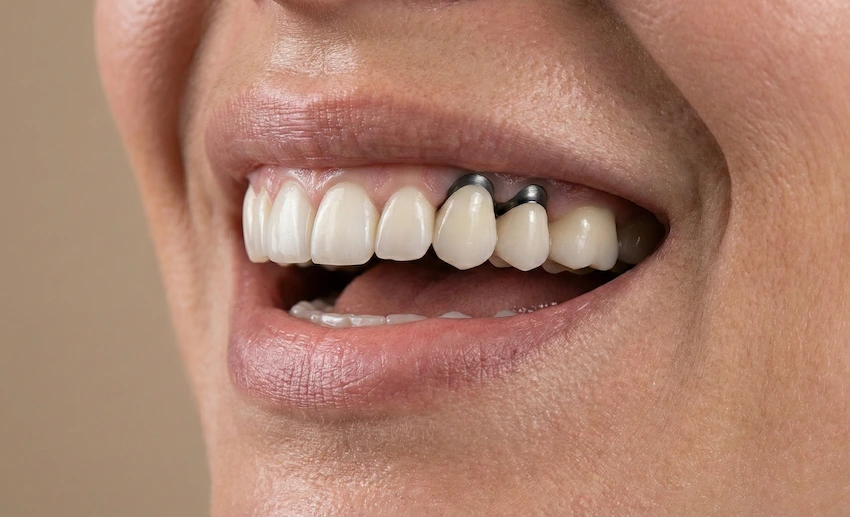
One of the main reasons is the material itself. Most of the dental implants are of Titanium which is a biocompatible metal and has been kept as a gold standard for quite many years since it is so receptive to the jawbone.
Nevertheless, the best quality titanium at times may get chemically active with your mouth environment. Doctor Coşkun Yıldız, Professor, frequently makes an emphasis on the fact that the sensation of metal in the mouth is not necessarily connected to the implant being “leaky” only. It can depend on the composition of your saliva or the manner in which the implant interacts with the other metals in your mouth, for instance, the case with your teeth.
1. Oral Galvanism: The “Battery” Phenomenon
Imagine your mouth being a mini, wet laboratory. Suppose you have had old silver fillings (amalgam) in your teeth, gold crowns, metal braces, and then you add a titanium implant, your saliva can be the agent acting like an electrolyte. Thus, a very small electrical current gets generated between the different metals – similar to a battery. This can lead to a different metallic flavor which is a result of Oral Galvanism.
2. The Healing Process and Blood
3. Drugs and Antibiotic Treatment
After the treatment, dentist Polen Akkılıç and her team might decide to give antibiotics or antiseptic mouthwashes to the patients to help them have a clean and infection-free healing. Some of these medications, especially the ones that include chlorhexidine, can cause a temporary alteration in the functioning of taste buds.
When Should I Be Concerned?
Usually a metallic taste is only a temporary inconvenience. However, if the metallic taste is accompanied by other symptoms, you should be more watchful of them. Signs of peri-implantitis (infection around the dental implant) are the metallic taste that lasts for months, the appearance of swelling, “pus-like” discharge, or fever.
From our practice, salty taste rather than a metallic taste is a symptom of a mild infection or a loose healing abutment. In such scenarios, a brief consultation with your surgeon is always a good idea.
Comparing the Causes
| Cause | Duration | Solution |
| Healing/Minor Bleeding | 3-7 Days | Saltwater rinses and time. |
| Medication Side Effects | Duration of prescription | Completing the course, hydrating. |
| Oral Galvanism | Persistent | Replacing old metal fillings with porcelain. |
| Infection (Peri-implantitis) | Persistent & Painful | Professional cleaning or antibiotic therapy. |
The Lema Approach: Quality Matters
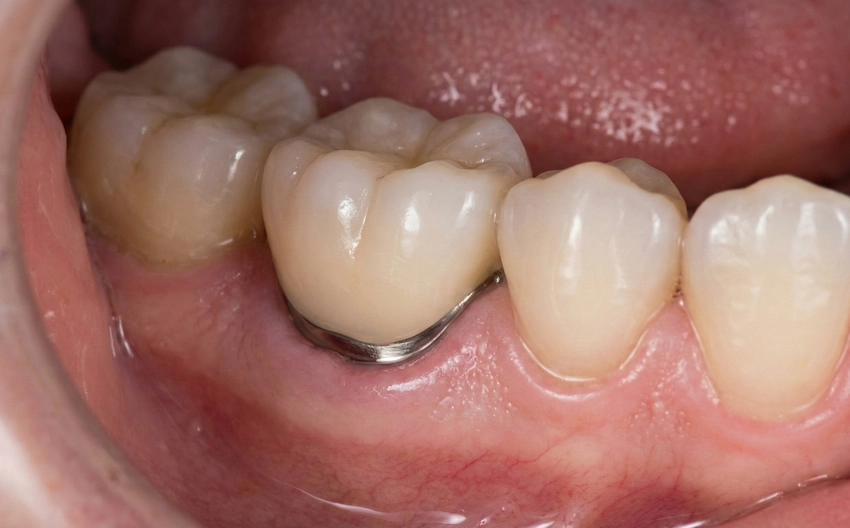
The Lema Dental Clinic in Turkey is one of the main reasons we talk about treatment abroad for dental tourism in Turkey. It is our material purity policy that makes us different from other clinics. We use only top-quality, medical-grade titanium and state-of-the-art zirconia which reduces the chance of metal sensitization. Professor Doctor Coşkun Yıldız personally verifies that the entire treatment plan is compatible with the existing dental work.
It is still a problem. How do we get rid of it? Most of the patients can eliminate it by simply drinking more water, scraping their tongue, and using a non-alcoholic mouthwash, while their body gets used to its new ”roommate”.
FAQ: Your Questions Answered by Our Experts
“In reality, titanium allergies are very rare. Usually, what patients describe as a titanium allergy is an exposure to the other elements in the implant which are at a lesser concentration. That is the reason why our clinic only uses implants of globally recognized brands and of the highest purity.”— Dentist Polen Akkılıç.
If it’s due to the operation, you should see it disappear within 5-10 days. However, if it stays for more than two weeks, you should contact us for a healing check.
Maintaining your hydration is very important. In addition, please tell us if you have had a history of experiencing a sensitive taste or have a number of old metal fillings in your mouth. Often, we can come up with a plan by using Zirconia (metal-free) components around these factors.
Not at all. Whenn an implant is loose it is usually accompanied by sensations of pressure or a feeling that you can ‘wiggle’ the tooth while chewing. A taste, however, is usually of a chemical or biological origin, and rarely is due to the mechanical factor.
Absolutely! Some dental pastes with a high fluoride level or those with whitening agents could cause a reaction with the wound after the surgery. We generally advise a mild, natural toothpaste for the first two weeks after the operation.
- Albrektsson, T., & Zarb, G. (2025). The Long-term Efficacy of Titanium Implants in Clinical Dentistry. Journal of Prosthetic Dentistry.
- Chaturvedi, T. P. (2024). An overview of corrosion and galvanism in oral environments. Indian Journal of Dental Research.
- Müller, K., & Smith, J. (2023). Dysgeusia and Sensory Alterations Post-Oral Surgery: A Clinical Review. International Journal of Oral & Maxillofacial Implants.
- Yıldız, C., & Akkılıç, P. (2025). Material Biocompatibility and Patient Outcomes in Turkish Dental Tourism. Istanbul Medical Press.
- Wang, X., et al. (2026). The electrochemical behavior of titanium in simulated saliva. Journal of Materials Science: Materials in Medicine.

