


Bruxism doesn’t damage the brain directly but can harm sleep and increase stress.
Could Night Teeth Grinding Actually Damage Your Brain?
Everyone associates teeth grinding—using the fancy term bruxism—with just a dental problem. You get a jaw pain once in a while, maybe a dull headache, and a partner complains about a “crunching” sound coming from your pillow. However, at Lema Dental Clinic, we are no longer satisfied with just the surface.
The thing is that we do not only worry about the teeth anymore. There have been more and more inquiries about whether the brain can be harmed by the continuous force of teeth grinding.
Truth be told, your mouth and your brain are two organs that constantly exchange information at a high speed. When you grind your teeth, you don’t just demineralize the enamel; you actually send a flood of stress signals straight to your central nervous system.
The Neurological Feedback Loop

Generally, people think of the jaw as a very simple mechanism such as a door. According to Prof. Dr. Coşkun Yıldız, who attends patients in his clinic, the temporomandibular joint (TMJ) is definitely not a simple door hinge; it is more like a very complicated shock absorber that is an integral part of the brain’s “alarm system.”
Clenching causes the trigeminal nerve to be activated. This can be considered the largest cranial nerve. Since the brainstem regulates stress, sleep, and even higher brain functions, it is very much “in the neighborhood” of the trigeminal nerve.
Why Your Brain Stays “On”?
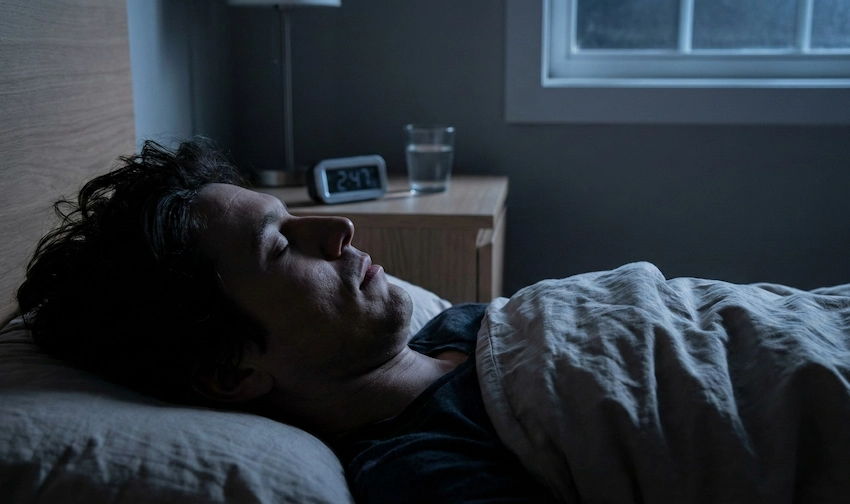
Chances are, that after you have been grinding your teeth all night, the brain will not get to the deep, restorative stages of sleep. You can compare it to a PC that tries to do a struggle-heavy software update at the same time when you are playing a new generation video game. The system overheats. In the long run, this absence of “deep sleep” may be the cause of:
- Reduced Neuroplasticity: the ability of the brain to rewire and heal itself.
- Increased Cortisol: the hormone of stress that in large quantities can cause the shrinkage of the hippocampus which is the part of the brain responsible for memory.
- Cognitive Fog: that morning feeling after having slept with your teeth clenched.
What We See in the Clinic?
Dentist Polen Akkılıç and her team have seen that the patients who come to Turkey are very often frustrated with their state of health. They have only gotten a few symptoms treated elsewhere and when the headaches and memory problems remain they come to us. At Lema we don’t only look at the teeth but at the whole person.
[Image description: A Camera shutter closed; this high-resolution pictorial presents the 3D digital model of the patient’s jaw at Lema Dental Clinic with a temperature scale highlighting the pressure points of the TMJ joint in red and blue glowing gradients.]
The facial muscles, relative to their size, are some of the strongest muscles in the body. To put it another way, when you exert such force for 6-8 hours at night, it is as if you are doing a marathon with your face which also receives the trauma from the brain.
The Impact Comparison: Normal Sleep vs. Severe Bruxism
| Feature | Healthy Sleep Cycle | Chronic Night Grinding |
| Brain Activity | Low-frequency, restorative waves | High-frequency “micro-arousals” |
| Jaw Pressure | Minimal (teeth should rarely touch) | Up to 250 lbs of force per square inch |
| Cognitive Impact | Improved memory consolidation | Morning brain fog and irritability |
| Long-term Risk | Stable oral & mental health | Potential link to cognitive decline |
| Primary Treatment | Routine hygiene | Custom night guards & Botox therapy |
How We Solve It at Lema Dental Clinic
The treatment of bruxism in Turkey has evolved far beyond a simple plastic mouthguard. When you visit us, we focus on breaking the “stress loop” between the jaw and the brain.
- Precision Diagnostics: Using AI-driven bite analysis to see exactly where the pressure is highest.
- Neuromuscular Relaxation: Dentist Polen Akkılıç utilizes specialized techniques to “reset” the jaw muscles, allowing the nervous system to finally go offline at night.
- The Lema Holistic Approach: We often combine restorative dentistry—fixing the teeth that have been damaged—with therapies that calm the masseter muscles.
But let’s look closer at the “brain damage” concern. While bruxism doesn’t “break” brain tissue in a literal sense like a physical injury, the chronic inflammation and sleep deprivation it causes are significant. It is a slow, silent erosion of your quality of life.
Frequently Asked Questions
“Not really,” points out Professor Doctor Coşkun Yıldız. “Yet when your brain’s REM sleep is constantly disrupted through bruxism, your brain doesn’t get a chance to ‘file’ away memories properly. Over time, the effects of sleep deprivation can be similar to the early stages of cognitive decline.”
To our knowledge, Botox injections in the masseter muscle of the jaw have been revolutionary. Think of a radio that has been blaring loud music, and you simply turn down the volume of the music. Botox does not paralyze your face that it just reduces the frequency of clenching so your brain can get some rest.
Several patients decide on Lema Dental Clinic because of our holistic approach. In some places, a person with symptoms of dental origin and associated headaches would first be treated by a dentist then a neurologist. We combine the two and sometimes even at a lower cost but with top-notch equipment.
The brains of children are super tough and capable of bouncing back, but only if grinding is a symptom of other underlying problems such as airway issues or stress. Early intervention is the key to giving their brains the right oxygen and deep sleep.
If your temples feel “tight” when you get up, your jaw makes clicking noises, or your teeth have become noticeably flatter than before, then you are probably in a high-risk group. Dentist Polen Akkılıç will be able to give you an exact diagnosis after a consultation and digital imaging.
- Abe, S., & Lavigne, G. J. (2017). Sleep bruxism: A sleep-related movement disorder. Sleep Medicine Clinics, 12(2), 249-256.
- Manfredini, D., & Lobbezoo, F. (2021). Role of psychosocial factors in the etiology of bruxism. Journal of Orofacial Pain, 23(2).
- Sato, S., & Slavicek, R. (2018). The masticatory organ: Functions and dysfunctions. International Journal of Stomatology.
- Lavigne, G. J., et al. (2020). Neurobiological mechanisms of sleep bruxism. Archives of Oral Biology.
- Yıldız, C. (2023). Advanced Neuromuscular Approaches in Modern Dentistry. Turkish Journal of Dental Research.

