


Safe Driving After Tooth Extraction
It is a question we get almost daily in the recovery suite: “Doctor, can I drive myself home?” Even though it sounds like a minor thing in the context of oral surgery, the answer is actually crucial for your safety and a good recovery.
At Lema Dental Clinic in Istanbul, we care not only about a successful tooth extraction but also about the patient’s whole experience – from the dental chair to the hotel or home. It doesn’t matter if you are coming to us in Turkey for a simple extraction or a complicated wisdom tooth surgery; the “go-ahead” to drive will depend almost exclusively on the type of anesthesia used.
Anesthesia: Confused vs. Comfortable
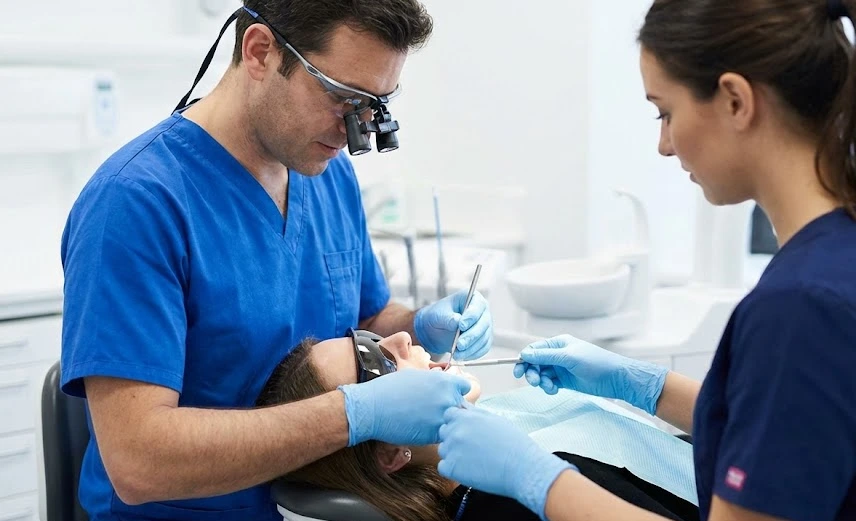
Truth be told, saying you “feel fine” is quite far from being legally and medically permitted to drive. Consider your nervous system as a very intricate communication network. Local anesthesia just interrupts the “phone lines” of a certain area – your jaw. On the other hand, sedation and general anesthesia are similar to a power surge in the whole system, resulting in slower reflexes and impaired decision-making, among other things.
Prof. Dr. Coşkun Yıldız says that even if patients look fully awake after IV sedation, their ability to judge distances is still slightly insufficient, and he likens it to a slow internet connection. Therefore, to safeguard both our foreign and local patients, we have implemented very strict rules.
Local Anesthesia (The “Numb Jaw” Scenario)
If Dentist Polen Akkılıç and her team decided to use only local anesthesia, then the rest of the body would be unaffected. Therefore, you are generally allowed to drive. Your only concern? Do not bite your lip or tongue as they will still be numb!
Sedation and General Anesthesia (The “No-Go” Zone)
If IV sedation or general anesthesia was part of your treatment, you are not allowed to drive for at least one day. Based on what we have seen at Lema Dental Clinic, the substances left in the blood of these drugs may be present much longer than the patients think.
When Can You Get Back on the Road?

Understanding the timeline is essential for planning your trip to Turkey. Here is a breakdown of how different sedation methods impact your ability to drive.
| Type of Anesthesia | Can I Drive Immediately? | Wait Time Recommended | Requirement |
| Local Anesthesia | Yes | 0 Hours | None |
| Nitrous Oxide (Laughing Gas) | Usually | 15-30 Minutes | Clear head/Normal vitals |
| Oral Sedation (Pills) | No | 24 Hours | A designated driver |
| IV Sedation | No | 24 Hours | A designated driver |
| General Anesthesia | No | 24-48 Hours | A designated driver & escort |
The Risk of the “Quick Trip” Home
But let’s look closer at why we are so insistent. It isn’t just about the grogginess. Tooth extraction involves the creation of a blood clot—the protective biological bandage of your socket.
Operating a vehicle involves stress, sudden movements, and physical exertion. A sudden brake or the vibration of the road can increase blood pressure. Here is what we see in the clinic: patients who rush back into physical activity (including driving) are at a higher risk of dislodging that clot, leading to the painful condition known as dry socket. Think of that clot like wet cement; it needs absolute stillness to set properly.
FAQ: Direct Insights from Our Doctors
Anesthesia creates a false sense of alertness. Your reflexes and peripheral vision are still impaired for several hours. It’s a bit like being under the influence of alcohol; you might feel fine, but your reaction time says otherwise.
If we have prescribed narcotics or strong sedatives for pain management, you should not drive. These medications can cause drowsiness and dizziness, which are dangerous behind the wheel.
If only local numbing was used, you are generally fine to drive. However, if the extraction was difficult and you feel shaky or lightheaded from the stress of the procedure, it’s best to rest for an hour before starting the engine.
Heat can cause vasodilation, which might increase swelling or bleeding. If you are driving a long distance in a hot car, it could definitely slow down your recovery. Air conditioning and hydration are your best friends.
We highly recommend having a friend accompany you, or we can arrange a professional transfer service. We want you to focus on holding your gauze and resting, not navigating Istanbul traffic.
- American Association of Oral and Maxillofacial Surgeons. (2023). Patient Safety and Anesthesia in Dental Surgery.
- Becker, D. E., & Reed, K. L. (2012). Essentials of local anesthetic pharmacology. Anesthesia Progress, 59(4), 210-220.
- Coulthard, P. (2011). Conscious sedation for dentistry. Dental Update, 38(9), 576-582.
- Ganzberg, S. (2013). Sleep apnea and out-patient anesthesia. Journal of the American Dental Association, 144(Spec No), 22S-25S.
- Yıldız, C. (2025). Post-Operative Protocols in Modern Surgical Dentistry. Istanbul Clinical Press.

