


With proper care, porcelain veneers can last over 20 years.
Patients come to our hospital in Turkey every day. What most of them want to know is if their new smile will last forever.
In reality, porcelain veneers can be one of the most important changes in your life. However, doctors rarely use the word “forever” in medicine. The mouth actually functions as one of the most highly active, high-pressure areas of the body. Here, we shall examine the real facts behind the lifespan of dental materials. To do this, we will skip the marketing myths and give you the straightforward, clinical truth.
The Mechanics of a Hollywood Smile
Think of your natural tooth as a solid base of a house. A veneer can be compared to beautiful, strong, and resistant walls that not only cover the foundation but also enhance the appearance of the house. Even though they are designed to resist daily activities such as biting, chewing, and drinking very hot or cold beverages, it is a fact that all materials will be, to a certain extent, susceptible to stress as time goes by.
From our practical experience at Lema Dental Clinic, we found that the life of a veneer is largely based on two factors: the condition of the original tooth and the type of ceramic material employed. In a minor way, it is also dependent on the bonding process being carried out accurately and on your daily maintenance. However, before that, let us know about the materials.
Material Matters: What Are You Getting?
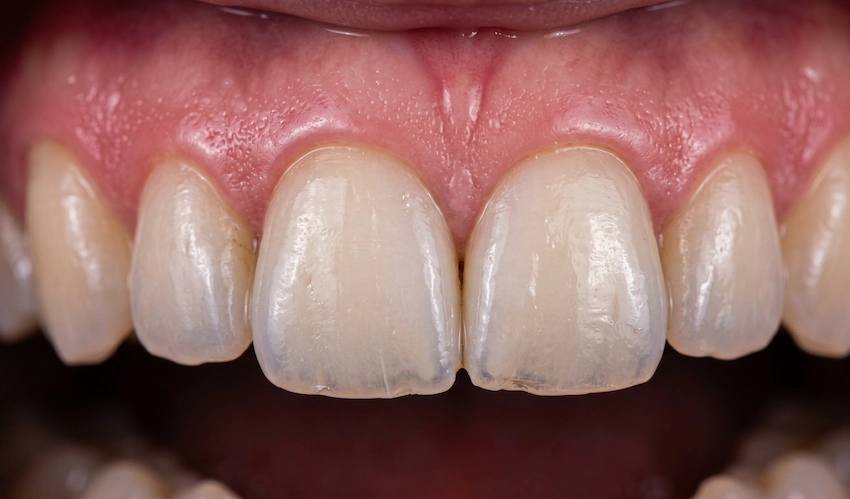
Not every ceramic is identical. Professor Doctor Coşkun Yıldız points to an important consideration very often during our practice sessions. And one of the key things to make a smile makeover a success is to select the right material that will match your bite and the results that you want.
E-max (lithium disilicate) is extremely similar to natural enamel. It is not surprising, then, that it is the absolute gold standard for front teeth. Zirconia, however, is very robust. For patients who want to stop grinding their teeth, it’s usually our choice. And for very strong molars that are used for heavy chewing, it is an excellent alternative as well.
The Expected Timeline
This is what we observe in the clinic. E-max veneers made of the best quality usually have a lifespan of 10 to 15 years. In fact, some of our patients have been able to get to 20 years and beyond. How? They brush well, visit the clinic regularly, and wear a night guard.
Over time, the edges may become worn. This edge refers to the very small line where the ceramic meets your gum. Also, as natural aging occurs in other parts of the body, it has the effect of pulling the gums.
Material Longevity Comparison
| Material Type | Average Lifespan | Strength Level | Stain Resistance |
| E-max (Porcelain) | 10 – 15+ Years | High | Excellent |
| Zirconia | 15 – 20+ Years | Very High | Excellent |
| Composite Resin | 3 – 7 Years | Moderate | Moderate |
Why Do Veneers Need Replacement?
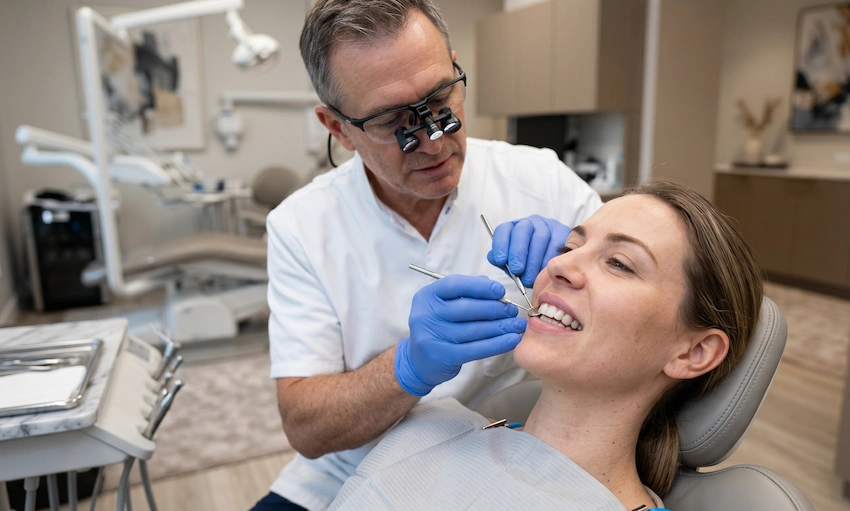
Ceramics do not decay. A porcelain veneer cannot have a cavity. Therefore, the real problem lies in your natural teeth and gums. If you get gum disease, your bone and gums shrink. This will lead to the root of the tooth becoming visible underneath the veneer. Dentist Polen Akkılıç and her team quite effectively educate our international patients on the prevention of this. Your treatment does not finish when you leave Turkey by plane. It is simply day one of taking care of your new smile.
Frequently Asked Questions (From the Doctor’s Desk)
This sensation is common, so I will try to explain it to you in simple terms. Our removal of enamel is only enough to account for the thickness of a contact lens. Teeth are not damaged, we just finish them slightly so that the ceramic material bonds nicely and the smiles are naturally beautiful.
There is really no reason to worry. Let’s say you bit into an olive and chipped your veneer; consider it just a minor repair. Typically, we take out the fractured ceramic and then position a new one identical to the old one. Your tooth remains protected throughout the procedure.
Rarely. There are some patients whose whole mouth can be affected by severe gum issues. For the most part, we only replace individual veneers as they get old.
They are like your teeth, only requiring a little more attention. Brush twice daily with soft toothpaste. Floss daily in order to protect your gums and, moreover, if you grind your teeth at night, wear your custom-made mouthguard.
Not at all! Local anesthesia effectively blocks pain. Removing the old ceramic and scanning the new one is performed with very high precision. You will feel so comfortable that you won’t mind the departure from the clinic after the treatment, just like the day when you had your first set installed.
- Beier, U. S., Kapferer, I., Burtscher, D., & Dumfahrt, H. (2012). Clinical performance of porcelain laminate veneers for up to 20 years. The International Journal of Prosthodontics, 25(1), 79-85.
- Layton, D. M., & Walton, T. R. (2012). The up to 21-year clinical outcome and survival of feldspathic porcelain veneers: accounting for clustering. The International Journal of Prosthodontics, 25(6), 604-612.
- Peumans, M., De Munck, J., Fieuws, S., Lambrechts, P., Vanherle, G., & Van Meerbeek, B. (2004). A prospective ten-year clinical trial of porcelain veneers. Journal of Adhesive Dentistry, 6(1), 65-76.
- Morimoto, S., Albanesi, R. B., Sesma, N., Agarwala, A., & Lawson, N. C. (2016). Main clinical outcomes of feldspathic porcelain and glass-ceramic laminate veneers: a systematic review and meta-analysis of survival and complication rates. The International Journal of Prosthodontics, 29(1), 38-49.
- Guess, P. C., Stappert, C. F., & Strub, J. R. (2006). Preliminary clinical results of a prospective study of IPS e.max Press- and Cerec ProCAD-partial coverage crowns. Schweizer Monatsschrift für Zahnmedizin, 116(5), 493-500.

