


Why All-on-4 Beats Traditional Bridges
It isn’t an easy choice. This is a scene we see daily at Lema Dental Clinic in Istanbul. Here is a patient in the chair, reviewing the X-rays and being really confused as if he was split between two worlds: a conventional dental bridge on one side, and a modern All-on-4 implant system on the other.
People keep asking the question… which one of these two is really suited to your life? Not merely for now, but when in ten years from now you will be at a dinner table, carefree with your laughter.
In fact, these two choices are not even comparable. One is a mere band-aid. The other? A complete makeover.
The Neighbor Problem: The Hidden Cost of Bridges
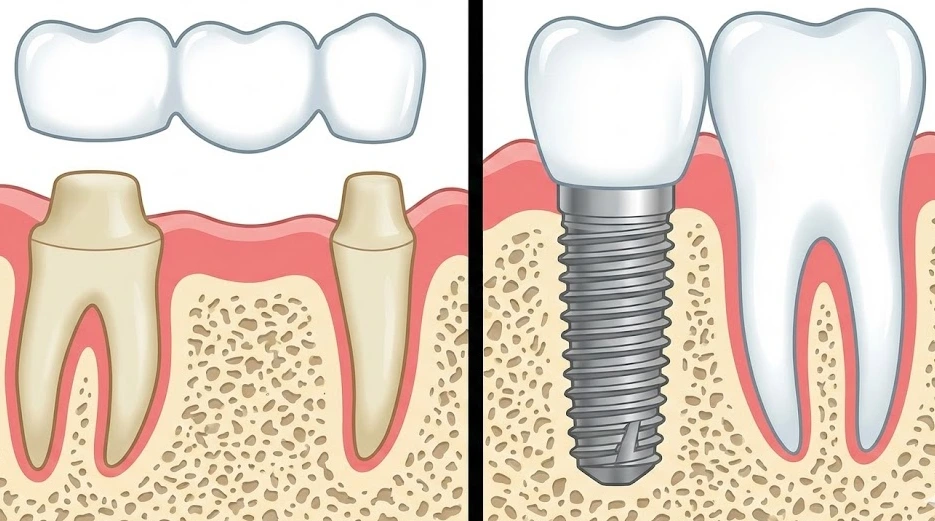
Let’s look closer at the traditional bridge. It sounds simple. It sounds safe. But there’s a catch—a big one. To bridge a gap, you need pillars. In dentistry, those pillars are your healthy, natural teeth.
Dentist Polen Akkılıç and her team often have to deliver the hard news: to save one missing space, we have to grind down two perfectly good teeth into tiny pegs. It feels wrong because, frankly, it is a sacrifice. You are compromising the “neighbors” to fix the “void.”
In our clinical experience at Lema Dental Clinic, we’ve seen too many bridges fail not because the bridge broke, but because the teeth holding it up finally gave out. They were never meant to carry that extra weight. It’s like asking a small car to tow a massive trailer—eventually, the engine burns out.
Bone: Use It or Lose It
Here is what we see in the clinic that most brochures won’t tell you. Your jawbone is alive. It needs exercise. When a tooth is gone, the bone underneath it realizes it’s “unemployed.” So, it starts to disappear. It melts away.
A bridge? It just sits on top. It’s a decorative cover. Underneath that bridge, the bone continues to shrink. This is where Professor Doctor Coşkun Yıldız steps in. He often notes that the jawbone is like a building’s foundation. If the foundation shrinks, the whole structure—your face, your lips, your smile—begins to collapse inward.
All-on-4 changes the game. It’s not a cover; it’s an anchor.
Four titanium posts. Placed at precise angles. They don’t just “hold” teeth; they talk to the bone. They tell the bone to stay strong. They provide the stimulation that keeps your facial structure looking young and full. In Turkey, we use these implants to literally stop the clock on bone loss.
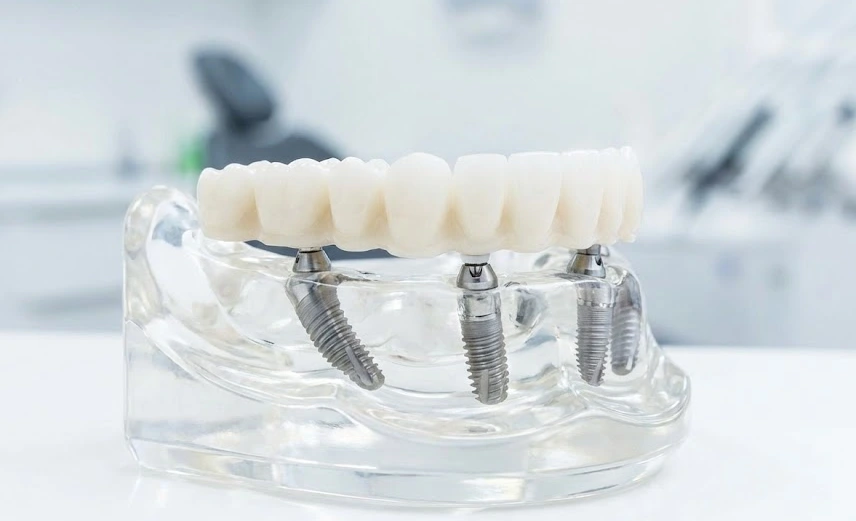
The Breakdown: Bridge vs. All-on-4
Decisions are easier when you see the cold, hard facts.
| The Factor | The Dental Bridge | All-on-4 Implants |
| Healthy Teeth | Grinds them down. Sacrificed. | Leaves them alone. Untouched. |
| The Bone | Shrinks over time. Unprotected. | Stay strong. Integrated. |
| Lifespan | 10 years? Maybe 15 if you’re lucky. | Decades. Potentially a lifetime. |
| The Feel | Like a “thing” in your mouth. | Like your own teeth. Solid. |
| Maintenance | Special floss. Hidden traps. | Normal brushing. Water flossing. |
Why Lema? Why Turkey?
You could get a bridge anywhere. But for All-on-4? You need a team that lives and breathes surgical precision. At Lema Dental Clinic, we don’t just “do” implants. We map your entire mouth in 3D before we even touch a tool.
Professor Doctor Coşkun Yıldız handles the heavy-duty structural work, ensuring the implants are anchored in the strongest possible bone. Then, Dentist Polen Akkılıç and her team craft the aesthetics. We aren’t just looking for “white.” We are looking for “natural.” The subtle translucency of the edges, the way the light hits the ceramic—it’s an art form.
But let’s look closer at the “Turkey” factor. Patients come to us from the UK, Germany, and the US because we offer elite-level technology—the same Swiss and German implants—but with a level of personalized care that is becoming rare in the West.
FAQ: Straight Talk from the Surgeons
If you’re only missing one or two, a single implant is better. But if you’re looking at a bridge that replaces four or five teeth? All-on-4 is the smarter, more stable move. It’s about building a foundation that won’t fail.
Look, it’s surgery. But you won’t feel a thing during it. We use advanced sedation. Afterward? It’s mostly pressure and swelling. Most of our patients are out exploring Istanbul two days later. It’s much less ‘scary’ than people think.
Initially, yes, the price tag is higher. But think about the ‘re-do’ cost. A bridge fails. You lose more teeth. You need a bigger bridge. Eventually, you end up with implants anyway. All-on-4 is a ‘buy once, cry once’ investment.
We usually place ‘temporaries’ that look great right away. You leave with a smile. Then, after 3-6 months when the bone has fully embraced the titanium, you come back for the final, ‘forever’ set. We don’t rush biology.
Steak, apples, corn on the cob—whatever you want. Unlike a bridge, which can feel ‘flexy’ or weak, All-on-4 is anchored. It’s like having your 20-year-old teeth back.
- Albrektsson, T., & Wennerberg, A. (2019). On the bone-anchored dental implant. Journal of Clinical Periodontology.
- Maló, P., et al. (2019). The All-on-4 concept: A retrospective study with up to 18 years of follow-up. Journal of Oral Rehabilitation.
- Misch, C. E. (2020). Contemporary Implant Dentistry. Elsevier.
- Pjetursson, B. E., et al. (2023). Comparison of survival rates between bridges and implants: A systematic review. International Journal of Prosthodontics.
- Yıldız, C. (2025). Bone Resorption Dynamics in Fixed vs. Removable Prosthetics. Istanbul Medical Press.

