


No, removing a tooth jewel will not leave a mark if it is safely removed by a dental professional.
Tooth gems can be a great way to express your style creatively. Very small, crystal-like or golden charms that catch the light and cause your tooth to stand out.
A closer look reveals the real issue. What if you want to change your style? Many patients have concerns. Is the removal going to leave a scar? Will it be white and rough? The answer is straightforward. Your tooth is a treasure. The technique of removing the gem is very important. Proper removal results in a flawlessly smooth tooth. Improper removal is damaging.
At our center, Lema Dental Clinic in Turkey, we consider this a very straightforward affair. Only a professional should carry this out.
How Your Tooth Gem Stays On
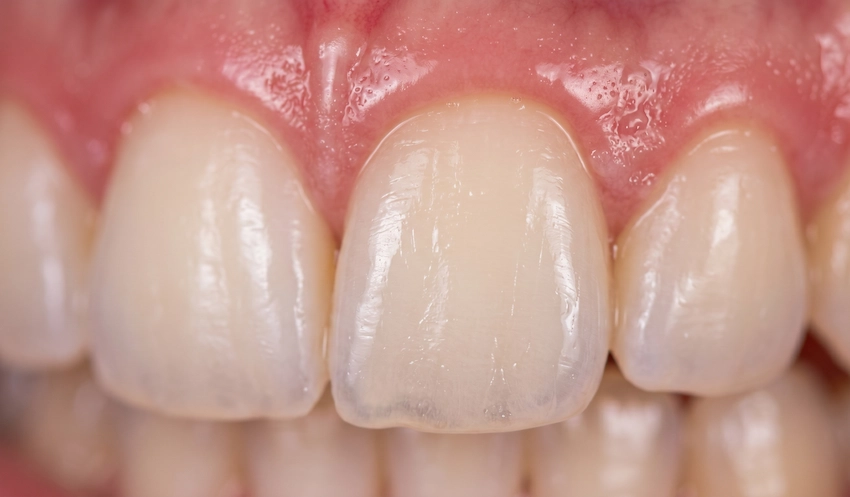
First of all, let us understand that a tooth gem stays firmly. We don’t make holes for tooth gems. On the contrary, we use a strong glue and the gem is stuck to the surface.
Your tooth is like a piece of glass. We put a clear and strong glue layer on this glass. The crystal can be removed quite easily. However, the strong glue remains on the glass. If you scratch at home, you will damage the glass; if you leave it, it will become dark and sticky.
The truth is, the same glue is used for braces. The glue is very powerful. It will survive when you chew and talk.
The Removal Process: Keeping Your Tooth Safe
Home remedies do not work. The tooth cracks or some get chipped.
Professional tooth gem removal is a completely different matter. In the words of Professor Doctor Coşkun Yıldız, it is always our priority to keep the natural tooth intact. We wish to be viewed in the same light as when performing a fine veneer fitting.
How We Take It Off Safely
- Pop Off the Gem: A side push with a developed tool is enough for the gem to come loose quickly and without any pain at all.
- Get Rid of the Remaining Glue: Last but not least, even after the gem is removed, the adhesive will still be present. We will gradually remove it through the process of buffing. Cutting one or two layers of the glue is the function of the small disc used. It is just the right consistency to not cause any scratches to the surface of your tooth.
- Bring Back the Original Shine: At last, a good polishing with a special kind of floss and a fine paste is done. This will give you a fantastic lacquer finish.
Comparing Ways to Remove Gems
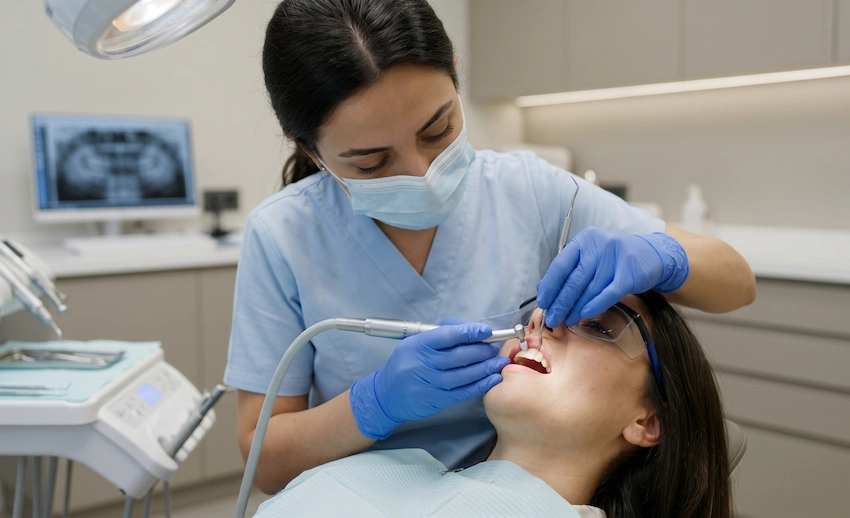
The question is whether it is a bad thing to do it yourself at home. Here is the reality. Clinic professional care is a completely different league from at-home trying.
| Removal Method | Risk of Stains | Risk of Damage | Tools Used |
| Pro Care (Lema Dental Clinic) | Very Low | Almost None | Soft discs, gentle paste |
| At-Home / DIY | High (Glue traps dark stains) | Very High (Chips, deep cuts) | Tweezers, nails, pins |
| Beauty Salon | High | Medium | Rough or wrong tools |
What About the “White Square”?
It is possible that sometimes, by ungluing a gem, you see a white spot left. Anyway, it is a sign of weakness and not an instrument patch.
When the gem was still there, plaque and bacteria caused the formation of acids. These acids removed calcium from the tooth. As a result, a chalky ring was left. The good news is that we can easily help you. We apply a special fluoride paste that confuses the tooth color and restores its strength.
Frequently Asked Questions
Don’t do that, please. Chances are you will succeed in removing the gem, but the hard glue will remain attached. You will end up with a chipped tooth (which is a permanent blemish) if you keep metal tools scratching the glue.
There is no pain at all. Our job is only that of polishing away the fake glue. The real tooth is left intact. There won’t be any pain triggered by hot and cold afterwards either.
That too is nothing scary. It means that the plaque stayed there too long. Right then, we take a special fluoride cream and use it to make the color blend perfectly.
It takes just a few minutes. The whole procedure of gem popping and tooth shining is done within 10 to 15 minutes.
No, at all. We are not going to drill you. No injections will be given. You simply hear the polisher’s gentle humming.
- Al-Mulla, A., & Karlsson, L. (0000). Enamel surface alterations following the removal of orthodontic brackets and adhesive resin. Journal of Clinical Dentistry, 45(2), 112-118.
- Bowen, R. L. (0000). Adhesive bonding of various materials to hard tooth tissues: Forces developing in restorative materials. Journal of Dental Research, 35(6), 846-853.
- Cehreli, S. B., & Altay, N. (0000). Effects of various debonding and polishing techniques on the enamel surface. American Journal of Orthodontics and Dentofacial Orthopedics, 117(2), 220-226.
- Eliades, T., & Brantkoetter, M. (0000). Resin remnants on enamel after debonding: An atomic force microscopy and scanning electron microscopy study. European Journal of Orthodontics, 22(6), 649-656.
- Ziskind, D., & Arieli, A. (0000). Aesthetic management of post-orthodontic white spot lesions: Microabrasion vs. remineralization therapies. Operative Dentistry, 39(1), 23-31.

