


Dental implants permanently fuse with your jawbone to restore full chewing power, whereas traditional dentures merely rest on the gums and accelerate bone loss.
There is not much point in having nice dentures if you have to keep them in a glass at night. While it was considered normal to put in dentures years ago, the situation has changed completely with the evolution of dental medicine. Nowadays, patients can have surgery that would allow them to never think of prosthetic teeth again, and this is a reason thousands of people from all parts of the world flock to Turkey on a weekly basis.
The change is not only a convenience factor but also a medical revolution. Denture prostheses cover the problem on the surface without really solving it whereas the whole mouth anatomy is restored through dental implants.
The Hidden Danger Of Traditional Dentures
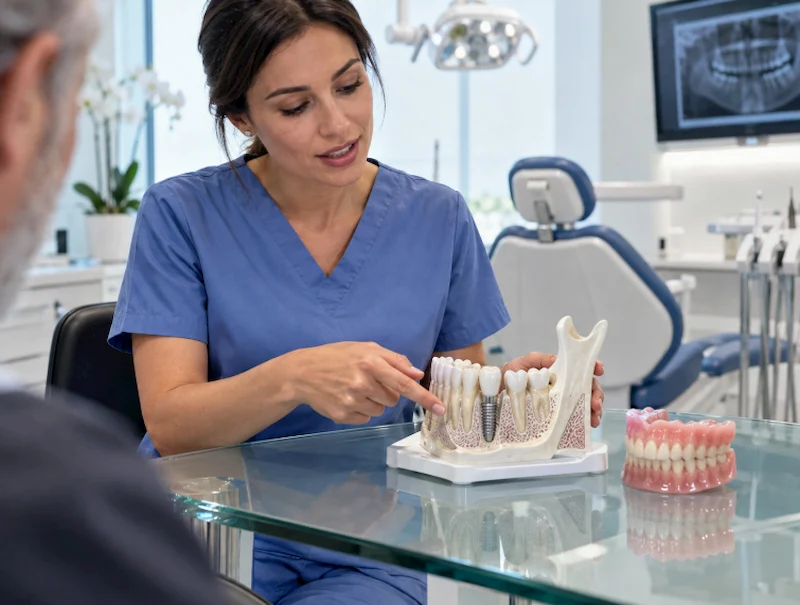
The only thing a full-face conventional denture has in common with an artificial prosthesis is that both of them are made of plastic and are glued or held together through different means. Dentures are supported by either a strong vacuum created over the mucous membrane or by a sticky paste stuck at the interface. It’s the type of fake teeth you can put on for dinner, look a lot like ones from a healthy mouth, but they won’t help to grind the food and chew like natural teeth would.
According to Professor Doctor Coşkun Yıldız, the jawbone is pretty much a muscle that gets exercised when we chew. In the process, the tooth roots apply a force which gets transmitted into the bone tissue leading to its maintenance and growth. On the contrary, dentures are nothing more than a veneer placed very close to the tissue but not making any use or contact with the jaw through the gum line.
No matter if patients chew or not, a denture is just a substitute and no stimulation will ever reach the area below the bone tissue that way. If bones were left out of this picture completely and they were to just be sitting on the top, in the absence of the stimulation and the forces generated, they get destroyed through bone loss – the phenomenon of resorption to be a bit specific – so to speak, they literally get dissolved.
If a patient is to lose a certain amount of the supporting bone then their facial features may get pushed down and the lower third of the face may be seen to be getting saggy which is a sign of very bad health even though the patient is just aging normally on the outside. That way, dentures will get a looser grip and will cause a lot of discomfort.
The Implant Solution Is Forever
The dental implant treatment goes straight into the cause of the issue by turning it into the permanent part of a person. We drill holes into the jaw and put biocompatible titanium posts there. Then, your body naturally integrates the implant with your own bone through a healing process known as osseointegration. Basically, this means the bone cells are growing together with the implant surface and thereby a very secure connection is formed between the implant and your bone tissue. This way, the artificial tooth roots are fixed to your jawbone and you never have to think twice about their durability.
Before performing implant surgery, Lema Dental Clinic has been using the best technologies of the market in terms of 3D volumetric bone imaging to precisely evaluate the bone conditions to ensure an uncomplicated procedure for your implant surgery. The digital imaging technique gives us such information about the location of the bone and its thickness that we can confidently decide which type of implant we will choose and how.
Dentist Polen Akkılıç and the rest of the implant team use this detailed information as a basis for accurate, risk-free implant surgery. After that, when the permanent porcelain-colored crowns are screwed on top of implants as roots of your teeth you can go about your daily life without any fear, like biting a big apple with teeth, saying your words clearly through speech, or even smiling without worrying about a denture being pulled down from your face with the palate and all as a result of a plastic slipper-like appliance.
Implants vs. Dentures: Core Differences
| Feature | Dental Implants | Traditional Dentures |
| Jawbone Health | Prevents bone loss through active stimulation. | Accelerates bone loss due to lack of pressure. |
| Bite Force | Restores 90% to 100% of natural chewing power. | Restores only about 20% to 30% of bite force. |
| Maintenance | Brush and floss normally. | Requires removal, soaking, and messy adhesives. |
| Lifespan | Titanium roots are designed to last a lifetime. | Must be relined or replaced every 5 to 7 years. |
| Palate Coverage | Leaves the roof of the mouth completely open. | Covers the upper palate, reducing taste sensation. |
The Psychological Impact of a Fixed Smile
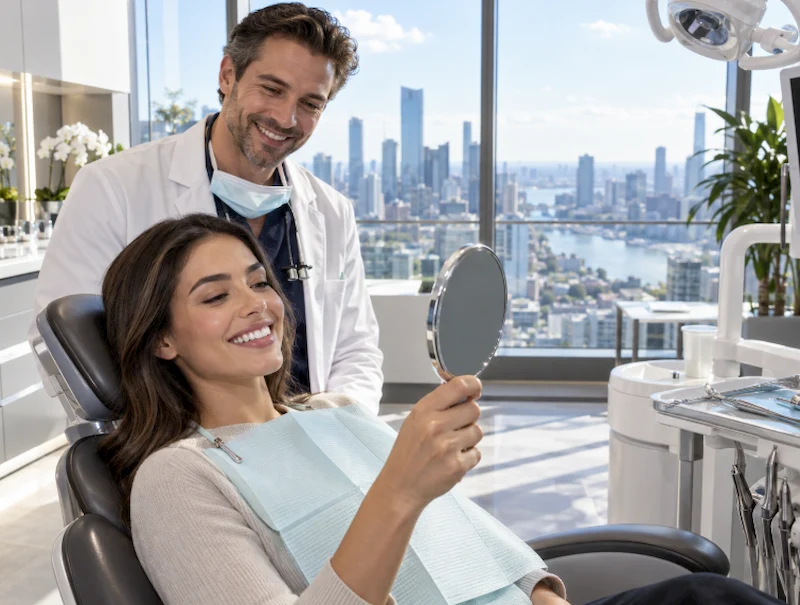
Beyond the physical benefits, the psychological relief of choosing implants is massive. Removable dentures come with a constant, lingering anxiety. Patients worry about them clicking during a business meeting, falling out during a laugh, or trapping food during a dinner date.
By anchoring the teeth permanently to the jaw, international patients regain total dietary freedom and social confidence. They stop viewing their teeth as a medical device and start treating them like a natural part of their body again.
Frequently Asked Questions
1. Can I switch to implants if I have been wearing dentures for years?
Yes, but you will likely need a bone grafting procedure first. Because dentures accelerate jawbone shrinkage, long-term denture wearers often lack the bone density required to immediately hold a titanium post. We can rebuild that bone structure to prepare your mouth for successful implants.
2. Are implant-supported teeth removable?
No. While there are hybrid options like “snap-on” overdentures that you can remove to clean, the gold standard treatment (like the All-on-4 or All-on-6 method) involves a permanent, fixed bridge. Only your dentist can remove this bridge during a routine cleaning.
3. How many trips to Turkey does the implant process require?
You will need two separate trips. The first trip (3 to 5 days) is for the surgical placement of the titanium posts. You then return home for 3 to 6 months to allow your jawbone to heal and fuse with the metal. The second trip (5 to 7 days) is for attaching your permanent ceramic teeth.
4. Will I be without teeth while the implants heal?
Never. We always provide a comfortable, temporary aesthetic solution so you can eat, speak, and smile confidently while your titanium roots integrate with your jawbone beneath the gums.
Academic References
- Carlsson, G. E. (2014). Responses of jawbone to changing dentition. Clinical Oral Implants Research, 25(S10), 11-15.
- Misch, C. E. (2007). Contemporary Implant Dentistry (3rd ed.). Mosby Elsevier.
- Thomason, J. M., Feine, J., Exley, C., Moynihan, P., Müller, F., Roessler, D., … & Awad, M. (2009). Mandibular two implant-supported overdentures as the first choice standard of care for edentulous patients. European Journal of Prosthodontics and Restorative Dentistry, 17(2), 73-78.
- Zarb, G. A., & Schmitt, A. (1996). The longitudinal clinical effectiveness of osseointegrated dental implants: the Toronto study. Part III: Problems and complications encountered. The Journal of Prosthetic Dentistry, 64(2), 185-194.

