


Europe turns to Istanbul for gold teeth because of quality expertise and lower costs.
Gold resurfacing has always been a focal point of restorative dentistry. Even if at present, porcelain and zirconia are used to create “natural look” prostheses, gold is still the best option in terms of durability and biocompatibility. Recently, a surprising change in the situation has been observed at Lema Dental Clinic. Patients from London, Berlin, and Paris periodically skip their local clinics and visit Turkey for their dental treatment.
Why is that?
It’s not only the attraction of the Bosphorus or the famous Istanbul old town streets. At the core is a rare combination of the one most exquisite metalworking, the highest standard of clinical practices that have been gradually disappearing from Western Europe.
Stronghold of the “Noble Metal”
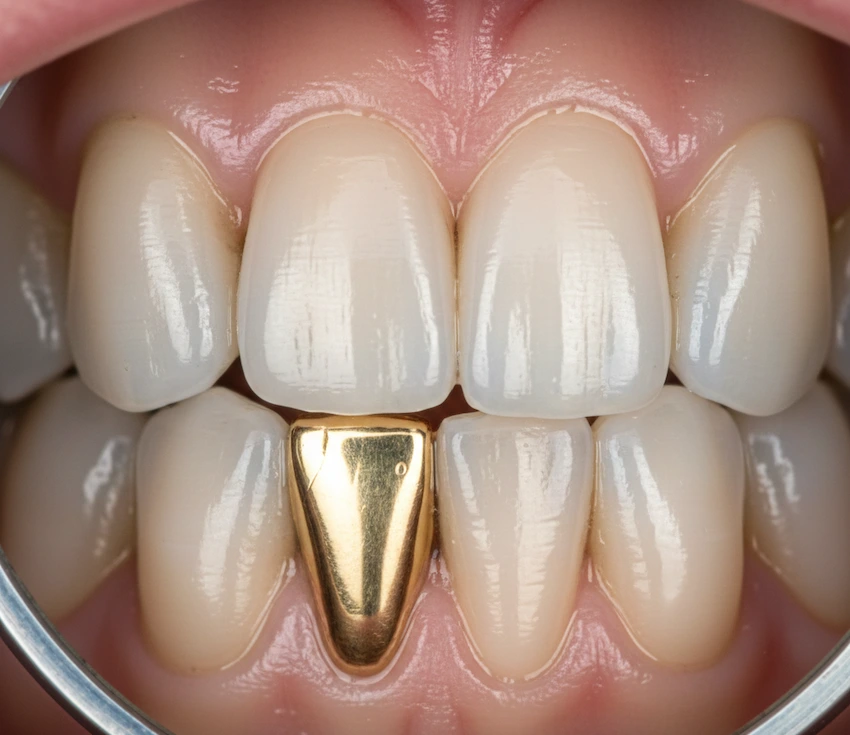
At Lema Dental Clinic, dental care is somewhat akin to tuning a high-grade vehicle. It is subjected to heavy load, humid conditions, and temperature changes every day. Gold alloys act as the mouth’s ultimate “shock absorbers”. As opposed to ceramics which may shatter easily, gold exhibits a wear rate that is very close to that of the natural tooth enamel.
Prof. Dr. Coşkun Yıldız frequently refers to gold as the “gentle giant” of the restorative materials. It is not harmful to the opposite teeth, and it forms the tightest seal to the tooth.
Why Istanbul?
Truth be told, in Europe, dental labs focusing on high-carat gold restorations are few and executing such jobs comes at a very high cost. Here in Turkey, the coral tradition of dental artistry goes back a long time. At the same time Dentist Polen Akkılıç and her team after the clinic integrate traditional metalworking and modern digital technology very seamlessly, thus bridging the gap.
What we observe in the clinic is that patients don’t want simply a “gold tooth“. They want the Turkish Medicine Experience. This includes:
- Cost-Efficiency without Sacrificing Quality: Gold is priced globally, but in Turkey, we can offer more than 18k or 22k gold work at a price which is only a portion of that in the UK or Germany, thanks to lower lab and clinical overheads.
- Fast Delivery: We know that our foreign patients’ time is very precious. Using a fully digital workflow we’ve made it possible for your tailor-made inlay or crown to be ready before you leave.
- Gold is a “Noble” Metal: It is non-reactive. Gold can be a sanctuary for those patients who are allergic to base metals found in cheap PFM (Porcelain-Fused-to-Metal) crowns.
Comparison of Different Restorative Materials
| Points of Comparison | Gold Alloys | Zirconia | Porcelain (E-Max) |
| Durability | Top (perfect for 20+ years) | High | Medium–high |
| Wear on the Enamel | Near to zero (soft) | Average | Average |
| Biocompatibility | Very good | Very good | Okay |
| Appearance | Noticeable/daring | Natural/opaque | Very translucent |
| Suitable For | Molars | Full arch/stress areas | Front teeth |
| Precision in Fit | Excellent | High | Moderate |
How do you view a gold crown? Custom-made suit, right? Margins are where the crown and gum meet. If they differ by even 0.1 mm, bacteria will have a way in. Prof. Dr. Coşkun Yıldız says that the “malleability” of gold enables the dentist to press the edges of the restoration effectively against the tooth, thus “disappearing” into the natural tooth margin and preventing future infection.
Now, when you come to Istanbul, an impression is not the only thing that completes your journey with us. Dentist Polen Akkılıç chooses the design so that the gold alloy is strong enough to resist chewing and soft enough not to hurt the joint of the jaw.
Much More Than a Session
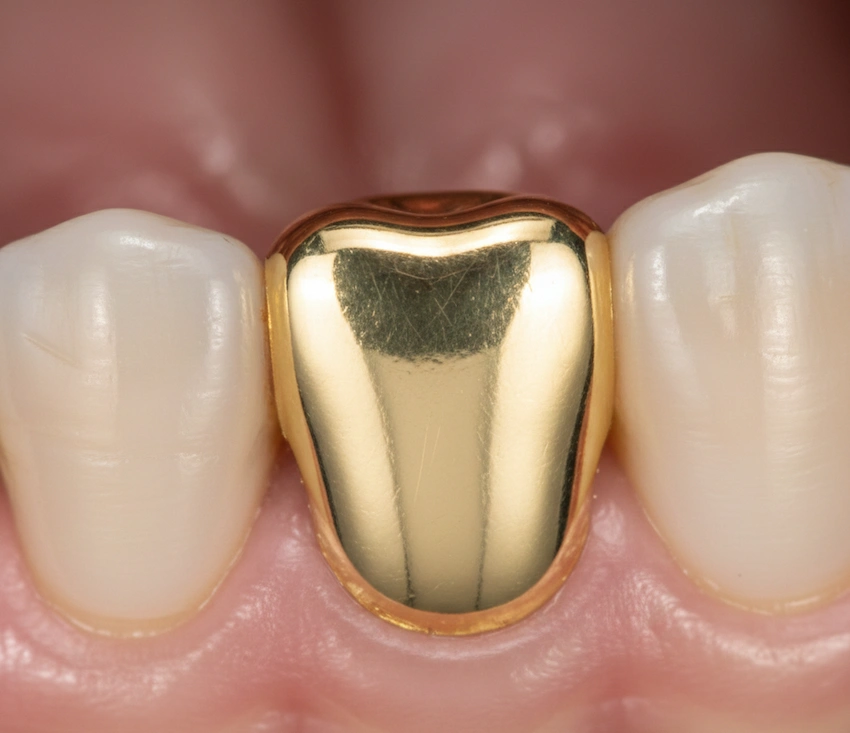
So that’s the main point: is the trip worth it? People are led by the overall care to the answer. Opting for Lema Dental Clinic means coming to a platform where technology meets empathy. Here, our purpose is not solely that of filling a tooth; it’s about restoring your health through a material that has been proven to be the most reliable one by mankind.
FAQ: The Doctors Speak
The quick answer to that question is no. A gold filling is not enough to be detected and additionally, high-quality gold alloys are non-magnetic so you will not be stopped at a metal detector.
Gold, particularly in a high-carat form, is very stable and it won’t rust or oxidize in the mouth. Metallic taste is most likely caused by the base-metal components of the alloy (such as nickel). Gold is the most neutral element.
Gold is a commodity that is traded all over the world, but the way it is used is still dependent on the traditions of the specific region. Our dental alloys are certified and conform to the standards of internationally recognized organizations including ISO in Turkey.
Generally, the whole therapy could be done over a period of 3 to 5 days. Moreover, preliminary work and laboratory work along with the final fitting experiment can all be all performed in such a time period.
Yes, you can have that (That is essentially a PFM crown), but gold we generally mean “full gold”. If you want a white tooth, Zirconia is a next-generation alternative that fits the bill better. Gold is chosen not only for its unique mechanical properties but also for its exclusive appearance.
- Anusavice, K. J., Shen, C., & Rawls, H. R. (2012). Phillips’ Science of Dental Materials. Elsevier Health Sciences.
- Donovan, T. E., & Cho, G. C. (2001). Predictable fabrication of soft tissue casts with polyurethane. Journal of Prosthetic Dentistry, 85(5), 503-505.
- Kelly, J. R., & Nishimura, I. (2008). Science-based decision making in restorative and prosthetic dentistry. Journal of Applied Oral Science, 16(5), 333-346.
- Knosp, H., Holliday, R. J., & Corti, C. W. (2003). Gold in dentistry: Alloys, uses and performance. Gold Bulletin, 36(3), 82-95.
- Richter, W. A., & Ueno, H. (1968). Relationship of crown margin placement to gingival inflammation. Journal of Prosthetic Dentistry, 20(2), 156-161.

