


Have you ever been curious about the fact that some people are almost immune to dental caries, even if they eat a lot of sugary food and hardly ever go to the dentist? It is almost as if they were born with the perfect smile from birth! The truth is that one of the secrets of nature to strong teeth is not just the luck of the draw but a mix of genes, lifestyle choices, and daily habits. In fact, genetics can be like the light that guides the way, but the level of your oral hygiene, along with lifestyle, will be just as good or even better.
At our dental office, Lema Dental Clinic, we are of the opinion that the perfect smile can be attained irrespective of being naturally strong or not the teeth. Hollywood Smile is more than just a smile with aesthetics; it is the health and the strength of the teeth that matter most. First of all, let us examine the factors that cause teeth to be naturally strong and then the related ways for you to be able to have a healthier and stronger smile, while not being “naturally lucky.”
Is It All in Your Genes?

The genetic code of a person might be considered the home plan for that person’s dental health. There are some people who have some birth attributes that are very helpful in holding the teeth at bay, like enamel with more thickness or a stronger dental structure. The enamel, which is the protective coat of our teeth is together with the rest of the layers a perfect defense against decay. So, if the enamel is thicker the teeth are going to be less prone to decay, life, and lessening besides that they are going to be less sensitive. Apart from that, the size and the contour of your teeth, which are also tightly connected to your genes, can make a difference regarding how well they will be able to resist daily wear and tear.
Evidence suggests that the thickness of dental enamel is mostly influenced by heredity. To illustrate, several people have enamel of weak genetic origin, which makes their teeth vulnerable to caries and fractures. Contrariwise, individuals with tougher enamel are not likely to be bombarded with cavities even if the dental hygiene routine is not strict enough. Just hang on- genes are not the gospels in the matter of your dental health. Through good oral care, a person can improve the quality of their teeth regardless of heredity.
The Role of Daily Dental Habits in Tooth Strength
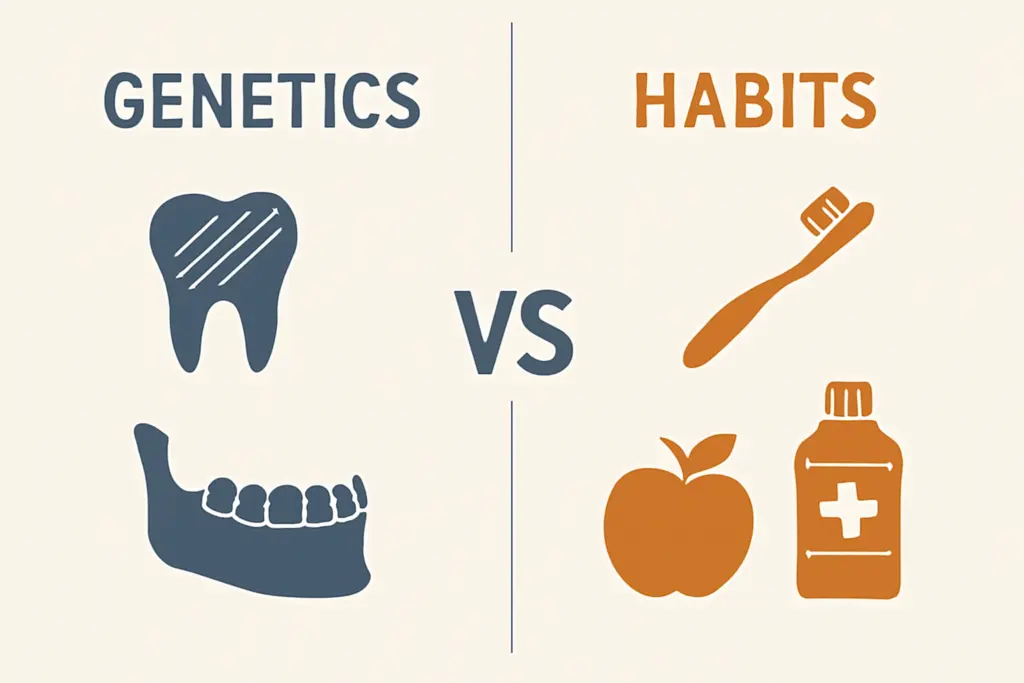
Although genetics provides the blueprint, it is your daily dental habits that determine tooth strength and overall health. Implementing the daily routine of brushing with fluoride toothpaste two times and flossing once is considered the most vital dental care of all. Brushing facilitates plaque, a sticky substance that nourishes bacteria and leads to caries, removal, while flossing makes sure that food particles and bacteria that settle in the areas where brushing is not efficient are removed.
In addition to brushing and flossing, the oral hygiene routine should be completed by mouth rinsing for bacteria-killing purposes and by regular visits to a dentist. Even if your teeth do not have strong genetics, good oral hygiene can prevent the development of caries, gum disease, and other dental problems. The key to healthy teeth is consistency, i.e., daily brushing and flossing as well as professional cleanings twice a year, which, in the long run, will make a big difference.
Enamel: Your Teeth’s Natural Armor
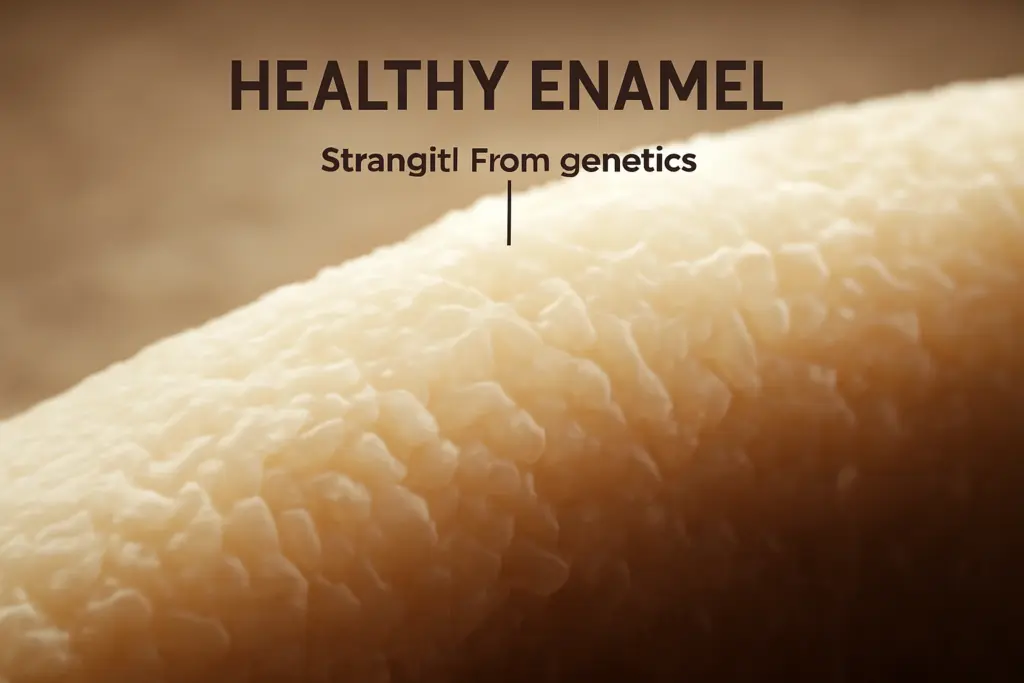
Enamel is the extremely solid protective outer shell, which is second to none in nature when it comes to defense against the outer world. The enamel layer is what mainly delivers the strength and resilience to the teeth. Of course, enamel is not a wonder. It can be gradually destroyed by improper mouth habits or the frequent use of sweet and sour foods. Once enamel is gone, it is no longer regenerated; therefore, the more we protect it, the better.
Some people happen to be endowed by nature with an extra thickness of enamel that, in turn, acts as a protective shield against not only caries but also tooth sensitivity. On the other side, there are people with thinner dental enamel, so that their teeth are more susceptible to damage. Even though genes are the main determinants of enamel thickness, one can always take care of his or her enamel to prevent it from thinning and even strengthen it. The intake of fluoride toothpaste on a regular basis will help the enamel to remineralize, making it stronger and less vulnerable to decay. Additionally, fluoride therapy may be given by the dentist for cases which require more protection.
Besides fluoride, the most important thing is to prevent yourself from engaging in activities that can erode your dental enamel, such as tightly grinding your teeth or continuously sipping sweet liquids throughout the day. These lifestyles may accelerate your enamel and expose your teeth to caries.
Diet, Fluoride, and Lifestyle: Do They Really Matter?

Good diet and lifestyle choices have always been of utmost importance to tooth health. The consumption of dairy products, leafy vegetables, and nuts, all rich in calcium, will not only help the enamel get stronger but also improve the overall dental health of the person. The foods that contain phosphorus, such as eggs and fish, are also good because they reinforce the healthy enamel formation.
Fluoride is a major element that is necessary for and contributes to the durability of the teeth. Its source may be toothpaste or water, and definitely, it is one of the methods that make protective and strengthening of the enamel the easiest. Fluoride is a remineralization agent by which the parts of your teeth that are weakened by acids become less susceptible to decay.
Your lifestyle is equally important. To put it concretely, water is quite helpful in washing away the tiny food particles that get stuck in the mouth and in neutralizing the acids that can cause enamel erosion. Besides, consumption of sugary and acidic foods should be limited to almost zero since these products can contribute to the formation of cavities and enamel erosion. Eating small quantities of good foods such as fruits, veggies, and nuts on a regular basis will indirectly help to strengthen your teeth by making the teeth receive the required nutrients.
Would You Be Able to Strengthen Your Teeth If You Were Not Naturally Strong?
Let’s say you don’t have naturally strong teeth, then you should not worry as long as you have a proper dental care regimen and have had practices that are harmful to your teeth under control. It is highly recommended that you take good care of your teeth by using fluoride toothpaste for brushing, flossing, and a mouthwash. It is a protection even if the genes didn’t give us the strongest enamel.
Besides oral hygiene, the need for a balanced diet cannot be neglected when it comes to the issue of stabilizing the teeth. The intake of calcium, vitamin D, and phosphorus-rich foods is a very good way of reinforcing the enamel and also the oral health in general. Carbonated drinks, milk, and also vegetables are the best foods for the teeth, and they should be at the top of the calcium-rich food list.
The dentist can actually contribute to your dental health by giving you special treatments that are protective and that strengthen your teeth. Fluoride treatments, dental sealants, and regular visits can maintain the health of your enamel and ensure that your teeth are safe from decay. In case your teeth were not strong initially, it is still possible for you to get a beautiful and strong smile by consistently taking care of your teeth.
FAQ: Why Do Some People Have Naturally Stronger Teeth?
Yes, genetics play a significant role in determining the strength of your teeth, including enamel thickness, tooth size, and overall structure. If your parents had strong teeth, there’s a good chance you may have inherited those traits.
While brushing and flossing can’t change your genetic makeup, they can help protect your teeth and preserve the enamel you do have. Good oral hygiene is essential for everyone, regardless of their genetic predisposition.
Yes, some individuals are genetically predisposed to stronger enamel and fewer cavities. However, even those with strong teeth need to maintain good oral hygiene to keep their teeth healthy.
Signs of weak enamel include tooth sensitivity, a yellowish appearance to your teeth, and visible wear or damage to the enamel. Your dentist can provide an evaluation to determine the health of your enamel.
Yes, with proper care, including good oral hygiene, a balanced diet, and professional dental treatments, you can strengthen your teeth and protect your enamel from further damage. Regular fluoride treatments and a healthy lifestyle can go a long way in maintaining strong teeth.

