Did you ever find yourself in a situation where you were enjoying your pizza, but after a bite, you felt a sudden pain in your tooth? The experience is shocking, comes out of nowhere, and just completely spoils everything you were eating. If you wonder, “Why do my teeth hurt when I bite down?” then you are amongst many with the same question. This is called bite-like discomfort, and it is often characterized as tooth pain when biting down, teeth that hurt when chewing, or even a biting pressure toothache. It is common for dental diseases, such as dental decay or nerve damage, to be at the root of the problem.
If it’s porcelain veneers, zirconium crowns, dental implants, or perhaps a complete makeover to a Hollywood Smile, Lema Dental Clinic is known for utilizing the latest technologies and the best dentists to make you not just pain-free but red carpet-ready.
Insight Into Tooth Pain When Eating
The toothache that appears only when you bite down is the kind of dental signal that is partially specific (Farlex). This type of pain is the first sign that your tooth is suffering from something serious below the tooth’s exterior. It exemplifies the opposite of the ordinary aches or the sensitivity experienced due to a dish served hot or cold; biting is always the prominent cause of the inflammation of the tooth itself or the gum around.
The pain can be of various strengths, contingent upon the cause. Where one kind of movement might not be so severe as to cause pain, there are other people who will feel some sort of pain, which is continuous even when they are chewing food. The latter describes the feeling of a quick electric shock from one point in the tooth to the whole jaw. Sometimes it may only happen when you eat sweet food or when biting down on one particular spot, in which case it’s clear-cut evidence of a fractured, infected tooth, etc., and immediate intervention would be required.
Common Dental Issues That Cause Bite Pain
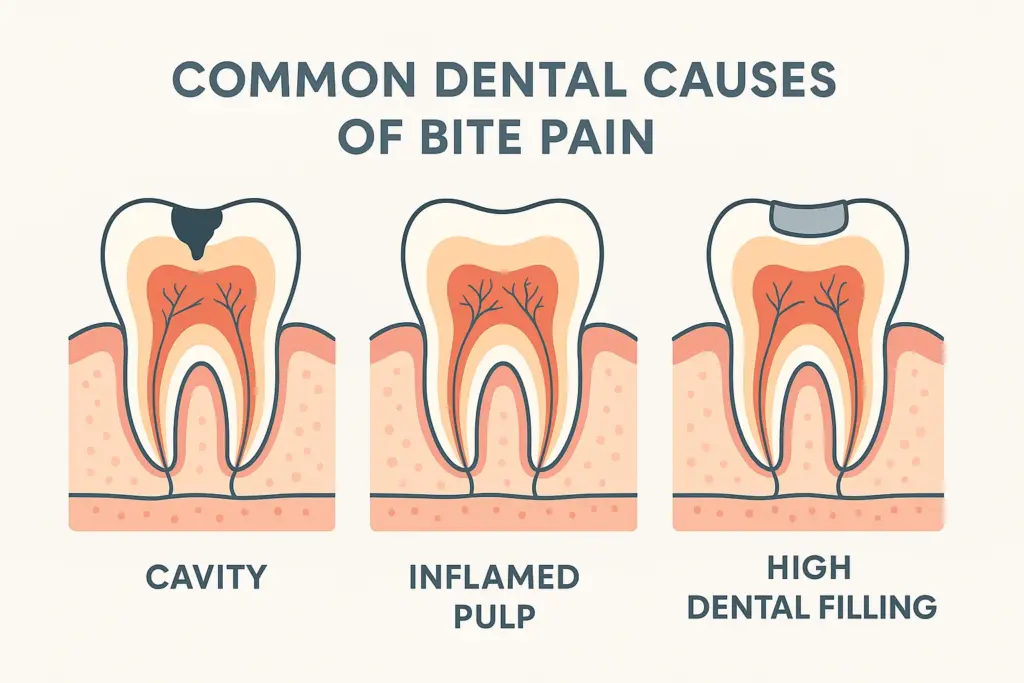
Believe it or not, cavities are the most common reason for a toothache while eating. This is because they can lead to the exposure of the dentin or even the nerve tissue in cases of severe infection. All in all, the burden of decay lies in very sensitive areas that, through the action of biting, can be affected with the pain that is felt.
However, you should not quickly label cavities as the primary responsible beings. Once you have had the dentist work in your mouth, for example, they did fillings or root canals, those teeth that are the reason for the treatment will still remain sensitive over time. This usually is a result of the treated area being weaker or small (microscopic) fractures that occur in the proximal area, or the filling is a bit high, causing an uneven distribution of pressure. As a result, a mismatched bite happens, and only some teeth get the necessary load. As a result, the teeth lose their function, while the familiar tooth pain occurs in the process of biting down and ruining your day.
If your teeth have been ground or worn out due to the process of bruxism, etc. (bruxism means tooth grinding), the problems in swallowing your drink or choosing a hard toothbrush lead to the thinning of the protective layer of enamel. Here, enamel erosion leads to tooth pain when biting down, as dentin is coming into direct contact with the nerve endings, which are extremely sensitive
Could It Be a Cracked Tooth or Filling?
Definitely, and it could be a lot more mysterious. It is often the case that a crack in the tooth is not visible even when a person is facing an X-ray. You might not even be aware of such an event. However, in the event that you have bitten down on a popcorn kernel, eaten some hard candy, or received a blow to your jaw, it is possible to develop a crack. Any kind of fracture, even if it’s on such a small scale, can cause sudden and very strong pain as you bite into your food.
The most noticeable symptom of a cracked tooth involves pain, and biting or chewing the tooth is the only condition that makes you feel it. However, once the pressure diminishes, the pain usually goes away, at least for a short time. The pressure stimulates the crack to be open; this, in turn, leads to the irritation of the inner tissues of the tooth and hence the pain. By the time the crack is big enough, bacteria invade the tooth, causing an infection that is characterized by more intense pain.
We can also take the case of a tooth with an old or damaged filling. In the same way, a filling that is not in good condition behaves similarly. With a loose, fractured, or leaking filling, there occurs some kind of movement when you are eating by putting pressure on it, generating pain. If the filling does not stick properly with the tooth anymore, the outside area of the tooth will be exposed to bacteria, which, in turn, can lead to decay inside and cause tooth pain disguised as normal tooth sensitivity.
Gum Problems and Bite Sensitivity
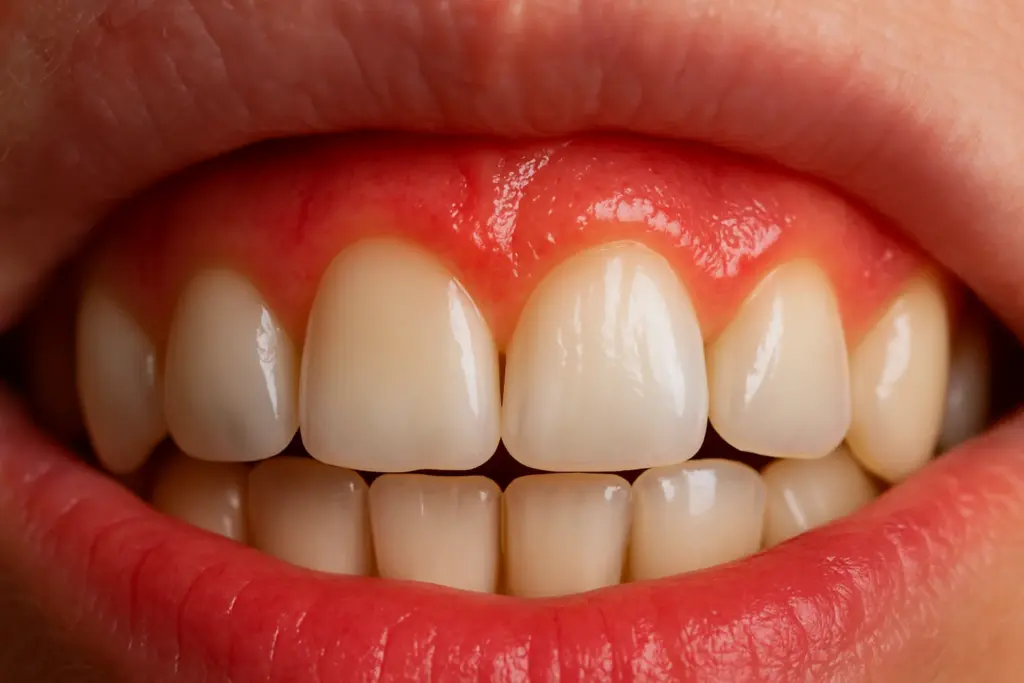
Don’t be mistaken that your gums are less important than your teeth regarding the issue of eating comfortably. The two major stages of gum disease are the reasons why we never ignore our gums; apart from if they are sick or not, our gums can change the way we eat. For instance, in the case of gingivitis or periodontitis (the two major stages of gum disease), the person perceives that the gums have become swollen, inflamed, or receded.
When you enter the stage of receding gums or periodontal disease, your bite might be affected by this. The alignment of your teeth can change if inflammation or some kind of infection occurs between your teeth. By doing so, you can unconsciously put more pressure on one side and overuse and thus create a lot of pressure from biting. Pain from biting pressure, which was never experienced before, can also be a cause of it.
The advanced stage of gum disease can be the root cause of the dental abscesses, that is, the pockets of pus that occur when teeth have been infected. Such pockets of pus can cause a lot of pain while chewing or biting and are usually accompanied by some of the symptoms of swelling, bad taste in the mouth, and even fever, among others. If this is not taken care of, the pus may spread, thereby damaging the surrounding bones and requiring further treatment, which is a more complicated and expensive one.
When Is Pain in the Bite Serious?
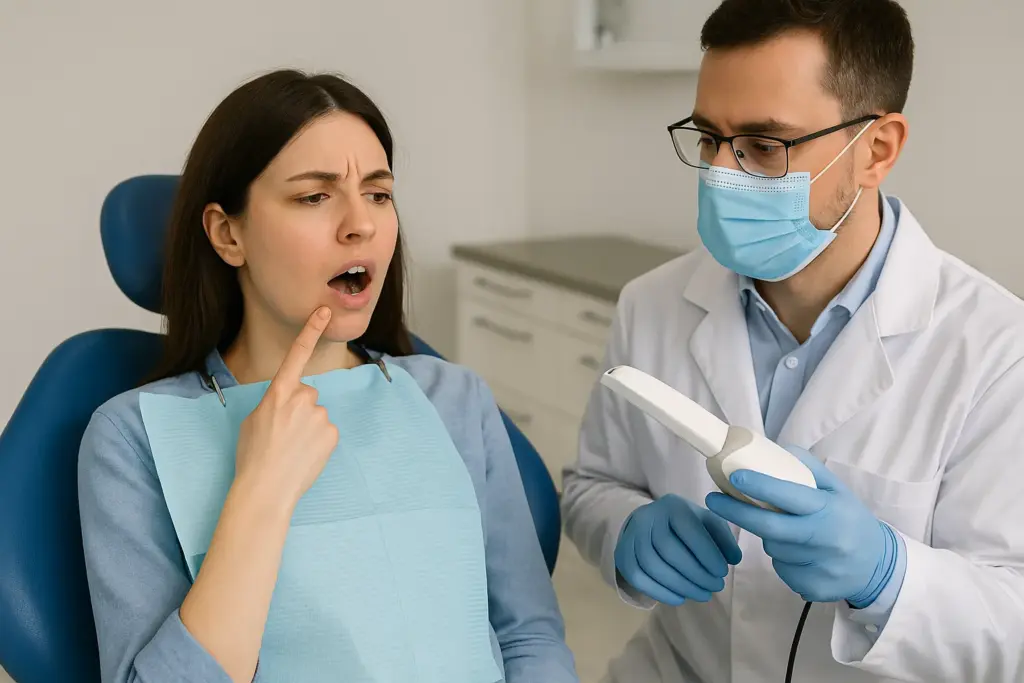
To be honest, no person really gets excited about a dentist’s appointment. However, if you face a toothache while chewing or you have spurts of severe pain when biting, you shouldn’t be surprised – most likely, it is an indicator that your teeth are damaged. The dentist’s visit should be the first thing you would put on your to-do list if the pains are constantly present, worsen, or if they are followed by swelling or temperature-sensitive teeth.
Dentists have bite tests, x-rays, and sometimes 3D imaging at their disposal to diagnose problems like cavities, cracks, gum disease, or problems with the dental work. The earlier the diagnosis is made, the less complicated and cheaper it is to get rid of the problem. One of the reasons is that sometimes you only have to remove the filling to be freshened. Other times, there is no option but to perform a root canal or arrange for a new crown to be put in place.
Don’t let the fear of discovering what’s happening to the tooth keep you from seeing a doctor, because if you procrastinate the treatment, there may be more pain, more interventions, and even tooth loss.
FAQ: Why Do My Teeth Hurt When I Bite Down?
You might have a cracked tooth, a cavity, or inflammation in the pulp. Sharp pain when biting usually signals that something inside the tooth is irritated or damaged.
Yes! Cavities can cause pain, especially when they reach the dentin or nerve. Biting down puts pressure on these sensitive areas and triggers discomfort.
Cracked teeth often cause pain that comes and goes with pressure. You may also notice sensitivity to temperature or a sharp pain while chewing hard foods.
Definitely. Inflamed or receding gums expose tooth roots, which are more sensitive. Gum disease can also cause bite misalignment and tenderness.
If the pain lasts more than 48 hours, recurs frequently, or is sharp and localized, book a dental visit ASAP. Early treatment can prevent bigger issues later.