


Screwless implants suit patients with good bone quality seeking a seamless result.
Who Really Qualifies for Screwless Implants?
The field of restorative dentistry is advancing very fast. It is natural to find that when you are looking up the different possibilities of replacing the missing teeth, you may come across the term “screwless implants” which is the technical term for conometric or friction-fit systems. It almost sounds like a dream, right? A tooth that stays tight in the mouth without a screw hole being visible or the hassle of glue.
Here in Lema Dental Clinic, Turkey, we come across patients daily who are fed up with wearing conventional dentures but at the same time, they do not want the ‘mechanical’ feeling of regular implants. Professor Doctor Coşkun Yıldız frequently says the move to screwless systems is not just about beautifying; it is also about the body being in equilibrium.
However, deconstructing this matter further might be helpful. Is this advanced technology truly suitable for your bone?
The “Friction” Principle: How It Works
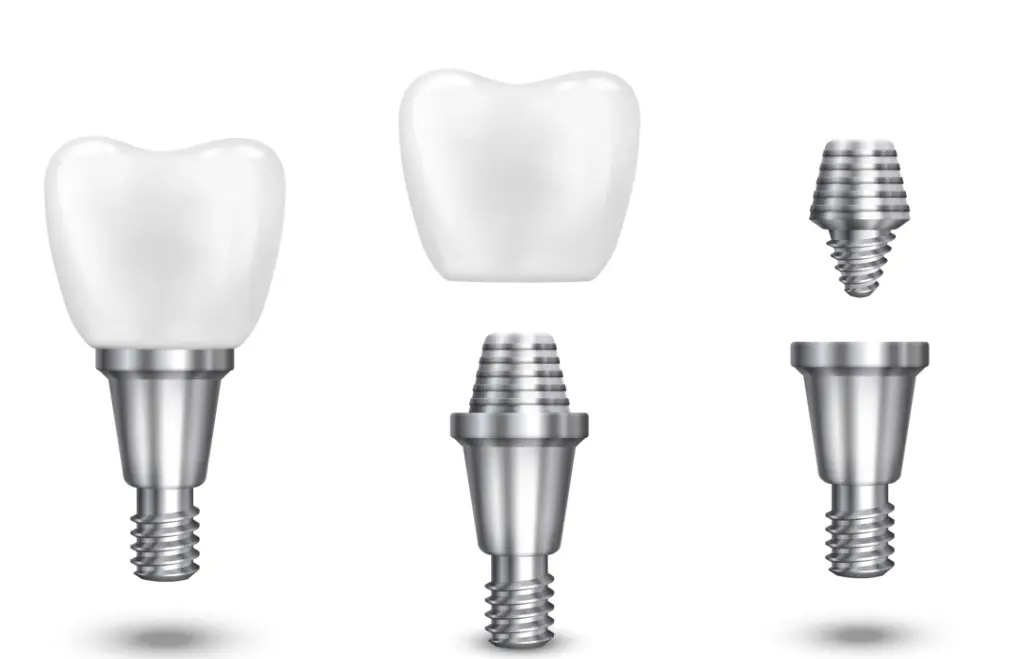
Imagine a conventional implant to be a bolt fixing a shelf to a wall. It works, but that mechanical point could fail. But a screwless implant operates more like a luxury telescope or German-engineered car door; it employs a tapered joint at which the crown and the implant post are locked through pure friction.
In fact, this innovation makes it possible to do away with the “access hole” which is present in screw-retained crowns, and thus a composite filling that gets worn out or discolored over time on the biting surface is eliminated.
Are You a Suitable Candidate?
Screwless implants are not suitable for everyone. To be frank, our hands are tied by your anatomy. Dentist Polen Akkılıç together with her crew will never compromise the duration of the treatment for the sake of following ‘trends’. Here is what will happen to your case during the dental consultation in Istanbul.
1. The Basis: Bone Density
Think about your jawbone as the roots of a tree. It doesn’t matter if a tree is the best type; it won’t stand if the soil is loose and sandy. As screwless implants rely so much on the perfect and stable fit, it is needless to saying that the bone volume should be healthy. If your problem has resulted from bone loss, we will first do a graft or a sinus lift. The sinus membrane is similar to the surface of an eggshell — very fragile, and we have to make sure that there is enough ‘buffer’ for an implant to be secured properly.
2. The Perfectionists: Aesthetic Requirements
When you are replacing a front tooth, you are probably the kind of patient this treatment is designed for. Since there is no screw hole, light goes through the porcelain crown just like through a natural tooth. No ‘grey shadows’ or unsightly spots are.
3. Patients with “Cement Sensitivity.”
Traditional implants generally use a medical-grade cement for fixing the crown. For some people, the acid might leak into the gum and cause a reaction-known as peri-implantitis. Screwless systems do not use cement. If your gums are prone to bleeding or you have had periodontal problems before, this biologically friendly method is the very first thing we suggest to you at Lema Dental Clinic.
4. The Maintenance-Minded
Would you like the restoration to be both easy for the dentist to remove and clean and impossible for you to wiggle? Friction-fitting enables us to “click” the tooth off during your professional cleanings without the need to unscrew the hardware, so there is no trauma involved.
Comparing Your Options
The question remains: how does the screwless approach stack up against the classics?
| Feature | Traditional Screw-Retained | Cement-Retained | Screwless (Conometric) |
| Aesthetics | Visible filling on top | Excellent | Superior / Flawless |
| Gum Health | High risk of irritation | Risk of cementitis | Lowest Risk |
| Retrievability | Easy (via screw) | Difficult | Easy (via specialized tool) |
| Complexity | Moderate | Low | High (Requires precision) |
| Best For | Molars / Back teeth | General use | Front teeth / Full arches |
The Lema Experience in Turkey
Choosing to fly to Turkey for dental work is a big decision. We don’t take that lightly. When you walk into Lema Dental Clinic, you aren’t just a “case number.” Dentist Polen Akkılıç focuses on the “Golden Proportion” of your smile, ensuring that the screwless system we choose complements your facial structure.
The precision required for screwless implants is immense. A fraction of a millimeter can be the difference between a perfect fit and a loose crown. This is why we utilize 3D intraoral scanning and CAD/CAM milling right here in our facility.
FAQ: Direct Answers from Our Experts
Actually, most patients say it feels more natural. Because the connection is so tight (microns of space), there is no “micro-movement” when you chew. It feels like a solid part of your body.
Not at all. The “screwless” bit is only about the way the tooth fits to the post, not the way the post is fixed to the bone. The surgical placement is almost the same and is done under local anesthesia.
Many people think about this, but the physics of the tapered fit make it extremely strong. Removing it requires a specific dental force. No normal biting in an apple will loosen it.
It demands a much higher level of lab precision and more costly parts. We at Lema have made this technology available because your long-term gum health is definitely worth the extra work.
Generally, the process takes two trips. The first appointment (3-5 days) is for the implant and the second appointment, a few months later, is for the “click-on” crown (7 days).
- Degidi, M., et al. (2017). Conometric Concept: A 5-year follow-up of fixed partial restorations. Journal of Oral Implantology.
- Lanza, A., et al. (2018). Comparison between screw-retained and friction-fit abutments. International Journal of Periodontics & Restorative Dentistry.
- Misch, C. E. (2015). Contemporary Implant Dentistry. Elsevier Health Sciences.
- Pieri, F., et al. (2020). Clinical performance of cone-morse connection implants. Clinical Oral Implants Research.
- Schwarz, F., et al. (2014). Peri-implantitis: A complication of a biological process. Journal of Clinical Periodontology.

