


Did you ever take a look at yourself in the mirror and ask why your teeth don’t seem to meet as they are supposed to? That tiny misalignment of your teeth might give a lot more signals of your health than you think. Additionally, it is not only your appearance that is at stake with the issues from overbites to underbites, but also your talking, eating, breathing, and even the quality of your sleep may be impacted by it. Hence, let us find out the implications of your bite on your health and see why it is the right time to visit your dentist.
Hollywood Smile is just what you need. No matter whether you have an overbite, an underbite, or other alignment issues, the combination of the dentist’s artistry and cutting-edge technology that Lema Dental Clinic offers not only takes care of your bite but also brightens your smile. Just one personalized plan, and it is time for you to have the treatment you think appropriate, such as veneers, crowns, aligners, or full-mouth restorations to achieve your desired smile and optimal bite.
What Is a “Bite” and Why Is It Important?
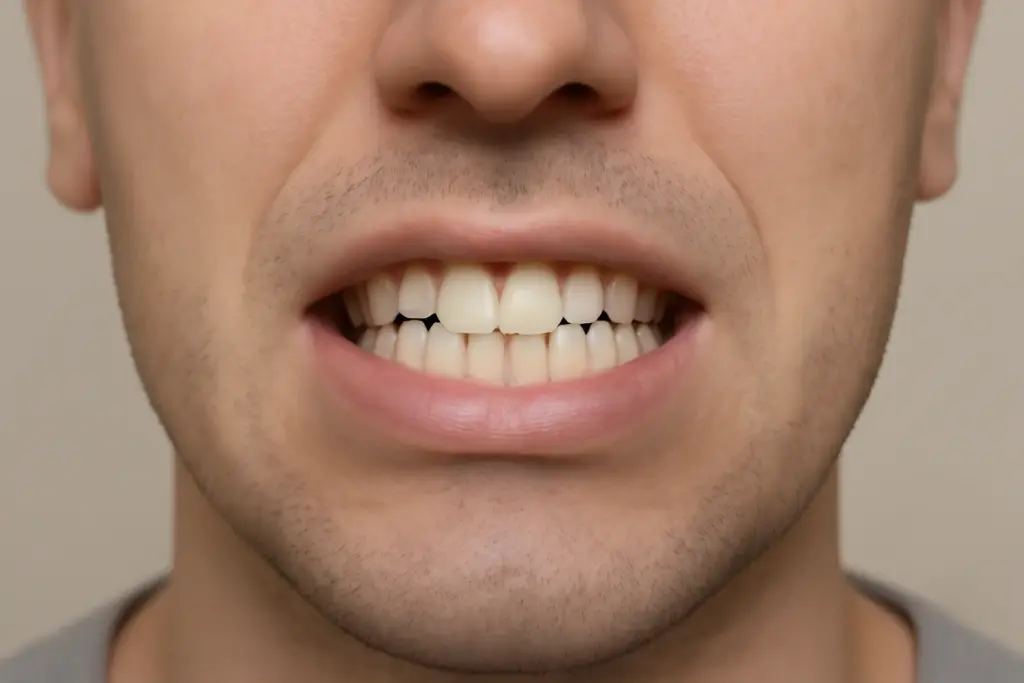
Essentially, your “bite” refers to the interaction between your upper and lower teeth when your mouth is shut. The idea is that your upper teeth should overlap the lower ones a bit, with everything fitting like a perfect puzzle. Unfortunately, that is not the case for many people. And that is completely okay! It only indicates that your bite may not be working at its best.
Misalignment of your bite (also called malocclusion) can lead to more trouble than you might anticipate. It doesn’t just change the way your smile looks, but it can cause a range of issues like an overworked jaw, muscles, or even uneven teeth. Hence, although it is just a “cosmetic” thing, your bite and alignment can be a matter of your entire quality of life.
Overbite: The Most Common Misalignment
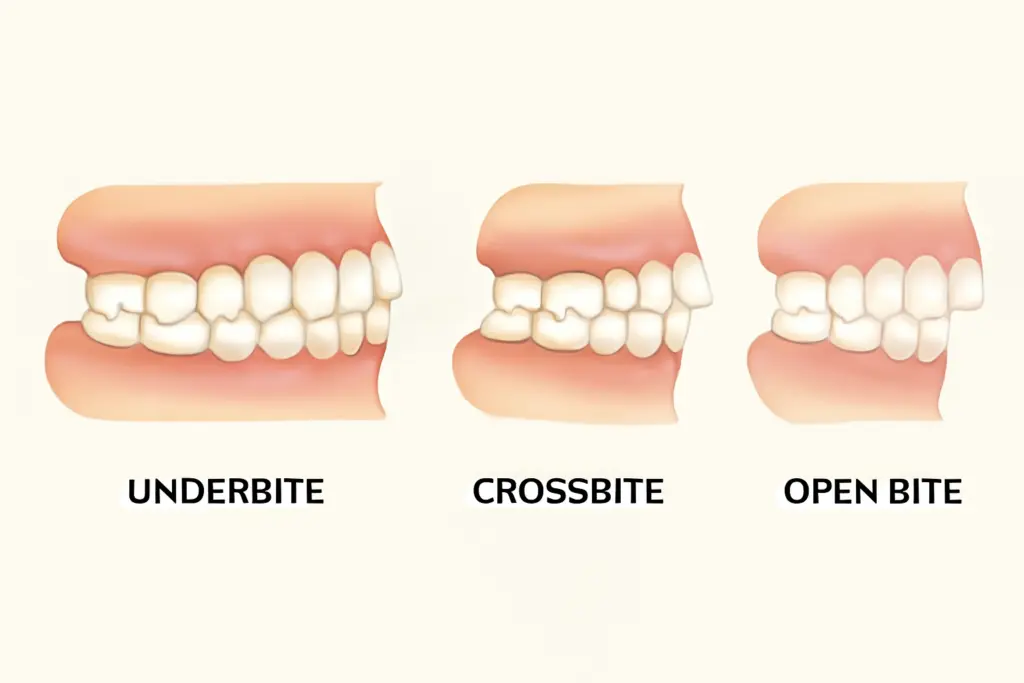
An overbite is when the upper front teeth are a long way over the lower front teeth—imagine the traditional “buck teeth” picture. It is the root of most bite issues and can be either quite evident or just faintly perceptible.
A mild overbite, if it is, might not lead to serious problems, whereas a deeper one can cause jaw ache, speech impairment, and make your front teeth more vulnerable to chipping. The difficulty in fully closing the lips or breathing comfortably through the nose is also experienced by some people. The good thing, in this case, is that overbites can easily be fixed by one of the treatments, such as braces, aligners, or veneers, for only aesthetic correction.
Underbite: When the Lower Jaw Takes the Lead
An underbite is referred to as a situation where the lower teeth are in front of the upper teeth. Usually, this happens when the lower jaw develops more than the upper jaw, thus resulting in a prominent chin or a “bulldog-like” appearance.
The issue, however, is not just one of aesthetics. Underbites can make the person really hard to eat, speech capabilities can also be affected, and the uneven tooth wear is another possible consequence. In some cases, the jaw joint (TMJ) is put under so much strain that it leads to headaches and facial tension. The best time to initiate underbite treatment, especially in childhood, is thus early, but even adults can avail themselves of therapies like braces, clear aligners, or corrective surgery in certain situations to reverse the severity of the problem.
Crossbite and Open Bite: Hidden Risks for Your Health
A crossbite is a condition where some of your upper teeth fit inside your lower teeth as you bite, instead of going outside. This could be a situation of one tooth and a small area, or several teeth and a larger area in the front or the back of your mouth. Though it may look like a small thing, crossbites can bring on severe problems, such as gum recession, tooth grinding, and jaw stress.
While a crossbite refers to the teeth going out of their normal position, an open bite is a condition where the top teeth and the bottom ones can’t touch at all, even after the closure of the mouth. Mainly, it is observed in people who were sucking their thumbs or pushed their tongues against their teeth during childhood. Apart from that, a person with an open bite problem may face speech difficulties, low self-esteem, and the back teeth might get overloaded with the pressure, which can be the reason for early wear.
Health Problems Linked to Poor Bite Alignment
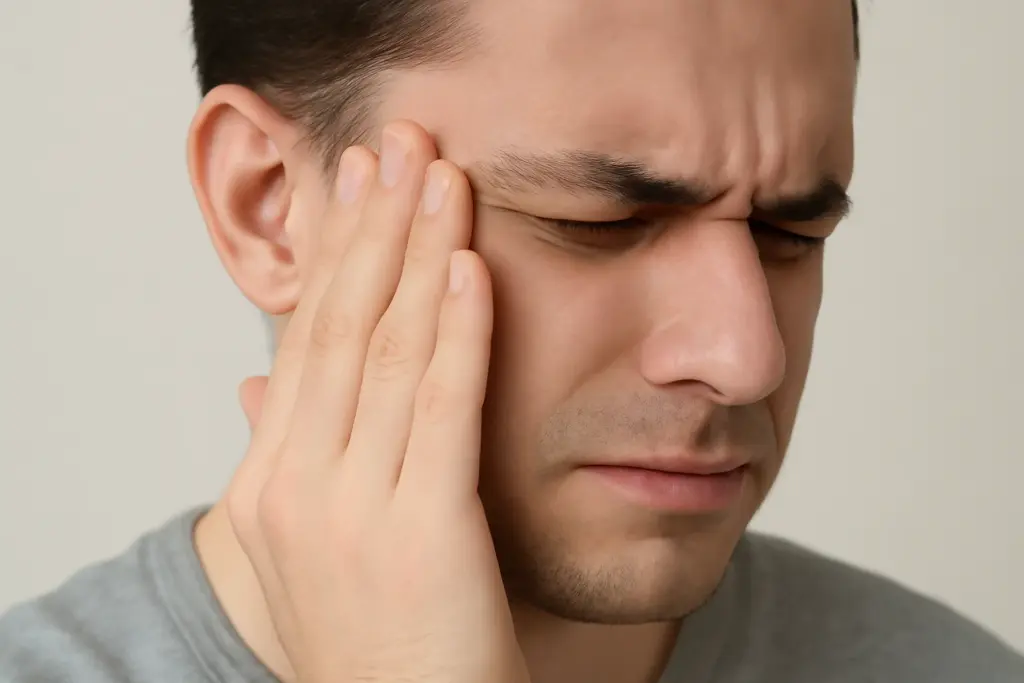
Honestly speaking, bad bite alignment is not only a problem of your picture-showing abilities, but it has the potential to cause chronic health problems if you decide to neglect it. To begin with, a misaligned bite is like a malefactor that can bring about the destruction of your teeth, chipped and worn at the zone where they come in contact, and even loss of teeth in the long run due to the constant fight between them.
In addition, bad alignment is also associated with the so-called symptoms of tension, such as headaches, neck and jaw pain, and TMJ disorders—the main reason for which is that the entire face that the person can feel terrible. Moreover, it is capable of becoming a factor for snoring or sleep apnea in very serious cases. Therefore, if you have experienced jaw soreness in the morning or clenching teeth while being under stress, then it means that your bite wants to talk to you about it.
FAQ: What Your Bite Says About Your Health
Overbites and underbites are usually genetic, but habits like thumb sucking or prolonged pacifier use can also play a role.
Yes! Poor alignment can lead to headaches, jaw pain, digestion issues, and even sleep disturbances.
Absolutely. Many adults successfully correct their bites with aligners, braces, veneers, or even surgery in complex cases.
Not always! Some cosmetic fixes like veneers or crowns can improve the look and function of your bite without full orthodontic treatment.
Yes. Bite misalignment can overwork your jaw muscles and lead to TMJ-related pain, headaches, and tension in your neck and face.

