


Alternatives to All-on-4 include All-on-6, All-on-8, and other implant-supported full-arch solutions.
Is All-on-4 Always the Best? Exploring the Real Alternatives for Your New Smile
We hear it every single day at Lema Dental Clinic in Turkey. A patient walks in, holds up a phone, and points to a picture of an All-on-4 bridge. It has become the “Kleenex” of dental restorations—a brand name so famous that people forget other, often better, options even exist.
The All-on-4 is a brilliant piece of engineering, don’t get me wrong. But let’s be honest: your mouth isn’t a factory-made part. It’s a living, breathing, unique environment. Professor Doctor Coşkun Yıldız often reminds our team that “we don’t treat X-rays; we treat people.” Sometimes, those people need more than just four pillars to hold up their future.
Why “Four” Isn’t a Magic Number
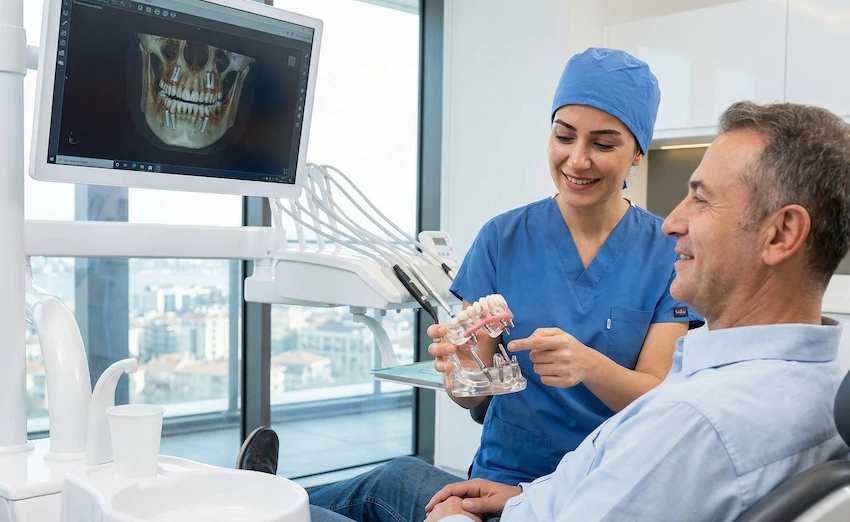
The All-on-4 works by tilting the back implants to use as much bone as possible. It’s a great “save” for patients with bone loss. But the reality is, if one of those four implants fails—due to infection or just bad luck—the whole bridge usually has to come out. It’s like a chair with four legs; remove one, and it’s no longer a chair.
This is why we look at alternatives that offer a bit more “insurance” for your investment.
1. The All-on-6: Adding a Safety Net
If the All-on-4 is a sturdy bridge, the All-on-6 is a reinforced highway. By adding two extra implants, we aren’t just adding more metal; we are distributing the force of your bite more naturally.
In our clinical experience at Lema, we find this is the gold standard for patients with a strong “masticatory force” (basically, people who chew hard). It feels more anchored. But the real benefit? If one implant gets “sick,” you still have five others holding the fort while we fix the issue. It’s peace of mind you can’t put a price on.
2. The 3-on-6: A More “Human” Way to Chew
This is a personal favorite of Dentist Polen Akkılıç and her team. Instead of one giant, continuous bridge that spans your whole jaw, we use six implants to support three separate, smaller bridges.
Think about a long wooden pier. If a heavy wave hits one end, the whole structure vibrates. But if the pier is built in three separate sections, they can “flex” independently. The 3-on-6 mimics the natural flex of your jawbone. Plus, it usually doesn’t need that “fake pink gum” look, making it look much more like the teeth you were born with.
[Image description: A side-by-side comparison diagram showing the All-on-4 (four tilted implants) versus the All-on-6 (six vertical/tilted implants) in a 3D jaw model.]
3. Zygomatic Implants: The “Last Resort” That Works
What happens if you’ve been told your jawbone is “too thin” for implants? In many clinics, they’d tell you that you need a year of painful bone grafts. But let’s look closer at the Zygomatic option.
These are longer implants that anchor into your cheekbones (the zygoma). Your cheekbone is incredibly dense—think of it like anchoring a bolt into solid granite instead of soft limestone. It is a more complex surgery, but for our patients here in Turkey, it means getting a fixed smile immediately without waiting months for bone grafts to heal.
Which One Actually Fits Your Life?
The question remains: how do you choose? Here is a quick breakdown of what we discuss during a consultation at Lema:
| The Option | Best For… | The “Vibe” | Bone Requirement |
| All-on-4 | Budget & Low Bone | Efficient & Proven | Minimal |
| All-on-6 | Long-term Stability | Robust & Secure | Moderate |
| 3-on-6 | Natural Aesthetics | The “Premium” Feel | Moderate to High |
| Zygomatic | Severe Bone Loss | The “Total Save” | Almost None |
The Lema Approach in Istanbul
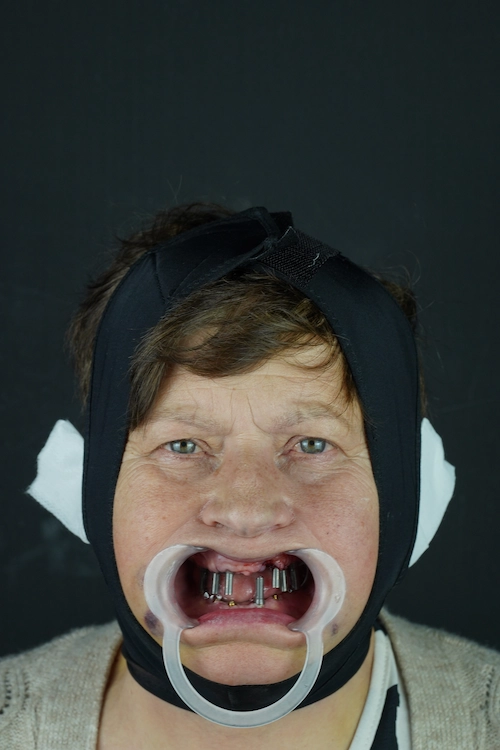
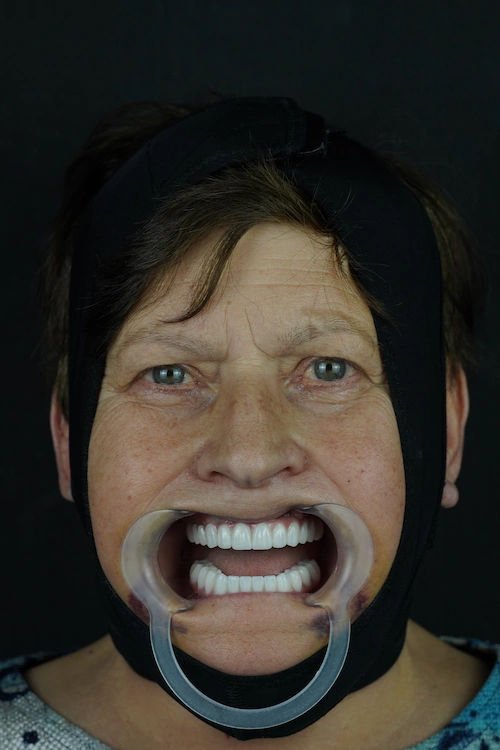
Turkey has become a global hub for dental work, but at Lema Dental Clinic, we try to move away from the “dental factory” feel. We use AI-driven smile design to map out exactly where these implants should go before we even touch a tool.
Whether it’s Dentist Polen Akkılıç obsessing over the shade of your porcelain or Professor Doctor Coşkun Yıldız planning the surgical placement, the goal is a smile that doesn’t just look good on Instagram, but one that actually functions when you’re eating a steak five years from now.
Common Questions from Our Patients
Not at all. You are under the same local anesthesia or sedation. Your body doesn’t really distinguish between four and six “points of contact” during the healing phase. If anything, the All-on-6 can sometimes feel more “balanced” during the first few weeks of chewing.
It’s difficult. It’s always better to “over-engineer” from the start. Adding implants later requires new bridges and new surgeries. We usually recommend getting the extra support on day one if your bone allows it.
Because it’s segmented. It doesn’t have a bulky “hybrid” base. This means you can clean it more like natural teeth, and it doesn’t interfere with your speech or the way your tongue moves as much as a full-arch bridge might.
For most of these procedures, we use a “two-trip” model. You come for a week for the implants and temporary teeth, then return 3–6 months later for the final, permanent masterpieces.
In the hands of an expert, yes. It is a specialized surgery that requires deep anatomical knowledge. At Lema, we perform these regularly for patients who were told “no” by every other dentist.
- Malo, P., et al. (2011). A longitudinal study of the “All-on-4” configuration in edentulous patients. Clinical Implant Dentistry and Related Research.
- Jensen, O. T., & Adams, M. W. (2012). The All-on-4 shelf: Maxillary alveolar ridge reduction. Journal of Oral and Maxillofacial Surgery.
- Chrcanovic, B. R., et al. (2016). Survival of zygomatic implants: A 10-year systematic review. Journal of Oral & Maxillofacial Surgery.
- Agliardi, E., et al. (2010). Immediate loading of full-arch fixed prostheses: A comparative study. The Journal of Periodontology.
- Babbush, C. A. (2011). Posttreatment quantification of patient experiences with full-arch implants. Implant Dentistry.

