What is Restorative Dentistry?
Maybe it’s a bit embarrassing to admit that your very own teeth are not flawless, and still are natural without any artificial intervention. And so, many people have cracked, chipped, and discolored teeth, and on top of that, still think it’s “normal.” However, do you know the good news? You don’t have to get used to it. If your smile has been turning into a frown lately, restorative dentistry might be nothing less than a miracle to breathe new life into it.
Restorative dentistry is not just the repairing of the damaged parts of the body; it is rather better in terms of the function of the teeth and their appearance. However, if we speak about going beyond such results, we are talking about dental veneers, implants, or even the most brilliant transformation: the Hollywood Smile at Lema Dental Clinic in Istanbul, Turkey.
Translating all the technical terms that are typically encountered in the world of dental health into the teen-magazine language makes this guide on restorative dentistry unbelievably understandable and appealing at the same time.
What is Restorative Dentistry?
Restorative dentistry is a procedure that completely changes the appearance of your teeth. It is everything the dentist does to repair or replace the dental units that are damaged, missing, or do not function properly.
By using this method, regardless of the size of the chip, dental caries or tooth loss, the function of the mouth is restored, while the beauty of the smile is elevated at the same time. It’s not a matter of braces or whitening; it’s about rebuilding what is broken.
💬 It’s like a renovation TV program, but the dental way: getting something that’s worn and turning it into something dazzling.
How Is Restorative Dentistry Performed?
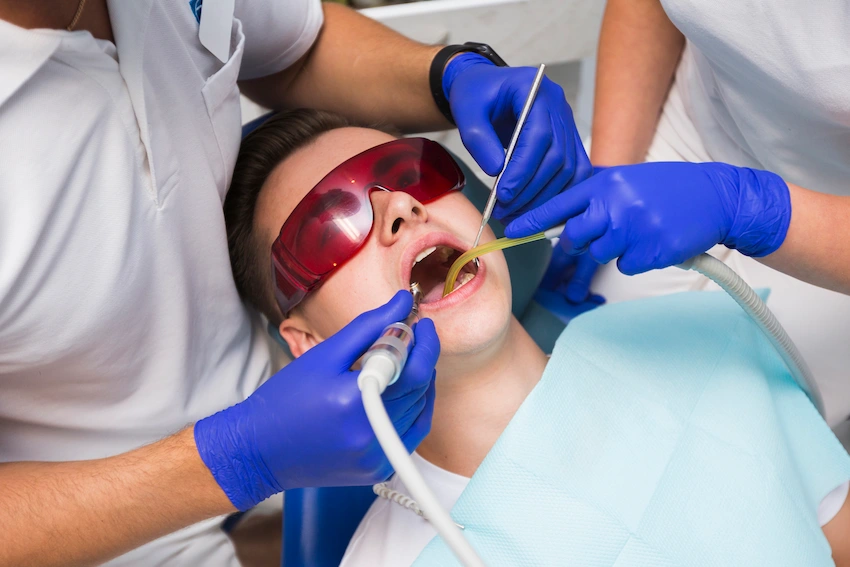
No two smiles are the same; therefore, no two treatment plans will be identical. Nevertheless, the primary objective of restorative dentistry is to alleviate the dental problem present in the teeth of the patient, that is, if it is a crack, a hole, or even a missing piece.
Generally, the process goes like this:
- Examination & Diagnosis – Dentists do X-rays and scans to see what is going on under the surface of the teeth.
- Treatment Plan – Your dentist will establish a specific plan for you based on what is discovered (maybe with multiple procedures).
- Restoration Work Begins – Fillings, crowns, veneers, implants…
- Final Touches – When everything is done, you get polishing, shaping, and bite-checks to be sure that all looks and works perfectly.
The most fantastic thing? A lot of restorative work can be merged with aesthetic dentistry in order to get a smile makeover that will shine in just a few visits.
What Methods Are Used in Restorative Dentistry?
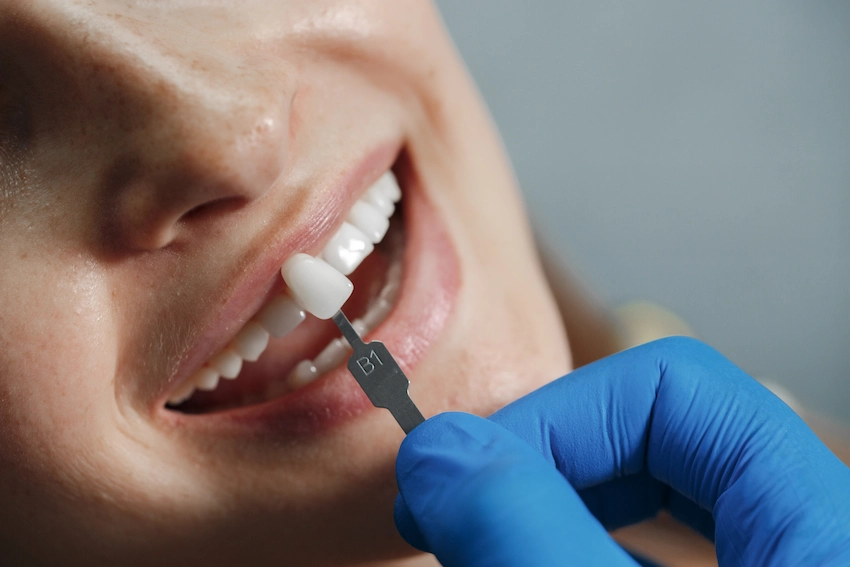
Restorative dentistry, on the other hand, is not something to be treated with a singular solution. It is, however, a collection of procedures used to treat various dental-related issues, such as small cavities or even full mouth reconstruction.
The most common restorative procedures are:
🦷 Fillings
Are the main options to fix the decay of a tooth of small or medium-sized tooth? Today, fillings are tooth-colored and thus, they are almost invisible.
👑 Crowns
The metal/ceramic parts that we put on top of the teeth, which are either broken or rotting due to decay, so that the tooth regains both its function and its beauty.
🌟 Veneers
They are ultra-thin one-piece dental appliances that fit perfectly on the flat side of your teeth, whether they are chipped, with small spaces between them, or yellowing, such that they become nice and bright from the first tooth to the last one.
🪛 Bridges
Are the false teeth that fill the gap that is left after some teeth fell out?
🧬 Dental Implants
They are made of titanium and will be placed inside your jaw by injection, and then you will have new teeth with a look so natural that it will be hard to tell the difference.
😬 Dentures
They are the removable prosthetics that are used in situations where teeth either remain in very low numbers or are completely missing—the present-day dentures are more natural-looking than ever before.
At Lema Dental Clinic, these procedures are done with state-of-the-art technology and personalized smile designs, especially for those who are undergoing a complete Hollywood Smile transformation.
What Materials Are Used in Restorative Dentistry?
Materials matter—a lot. The right choice depends on where the tooth is located, how much pressure it takes, and what the patient wants in terms of looks.
These materials are the most common ones:
- Composite resin – A tooth-colored material that is perfect for small fillings and aesthetic repairs.
- Porcelain – Used for veneers and crowns; extremely durable and amazing in terms of natural look.
- Zirconia – Very strong and compatible biologically, it is thus used in the back of the mouth or full-arch crowns.
- Gold alloy – Although it is old-school and not very popular for visible teeth, it is very resistant.
- Acrylic – Used mainly in temporary dentures or bases.
If you are fantasizing about that Hollywood-style smile, then porcelain veneers and zirconia crowns are the right choices for both the strength and the beauty of your smile.
Who Is Suitable for Restorative Dentistry?
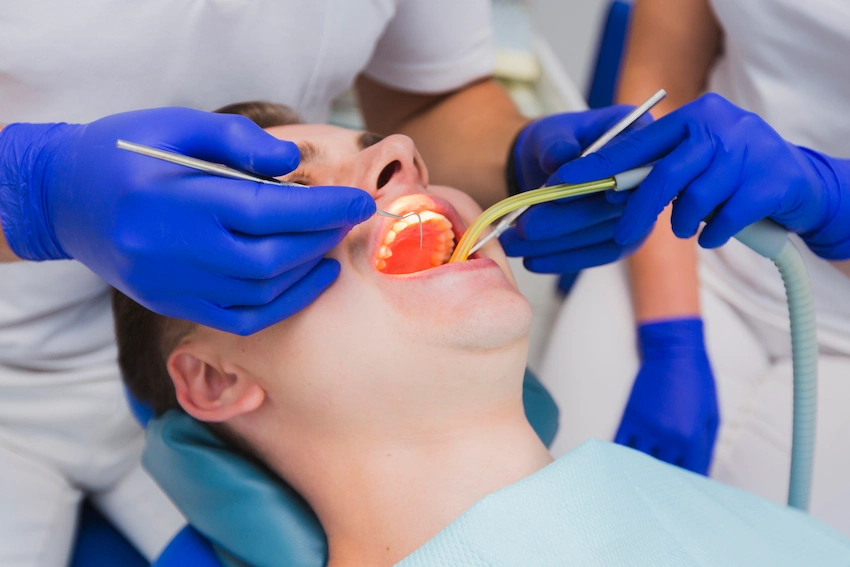
In brief? Practically everyone.
If you are 16 or 60 and have broken, decayed, missing, or uneven teeth, you are a perfect patient for restorative dentistry. The following list illustrates what are the main groups of people for which it is particularly beneficial:
- People with numerous cavities
- Any person who has suffered tooth trauma
- Patients who grind their teeth or have bite issues
- Those with old, deteriorating dental work
- People who have finally decided to improve their smile
Besides, if you have ever uttered the words, “I hate my smile,” then restorative dentistry could be the next closest thing to your new best friend. Even more so, by allying it with aesthetic treatments at Lema Dental Clinic in Istanbul, you are setting yourself up for a complete Hollywood-grade smile transformation.
FAQ: Restorative Dentistry
Nope! In most cases, local anesthesia or sedation is used, and thus you won’t sense any pain—only a little bit of pressure or discomfort. The after-soreness is usually very light and can be treated with ease.
Not necessarily. Restorative treatment aims at repairing the function and the beauty of the teeth, while braces are for the teeth’s alignment—yet both can be used together for the optimum outcome.
It is dependent on the treatment. A dental filling can be done within 30 minutes, whereas a full-mouth restoration with dental implants and crowns might take several weeks.
Generally, yes. If a tooth is infected or the nerve is damaged, a root canal is performed before a crown or other restoration can be placed.
The most frequent issues for the front teeth are treated by composite bonding, porcelain veneers, crowns, and, at times, implants. These methods not only bring back the function but also the beauty of teeth.