Let’s take a look at this: when it comes to the question of how many teeth an adult has without wisdom teeth, let me just explain that the usual number of teeth in an adult is thirty-two or thirty-two teeth (in the presence of wisdom teeth). However, if you remove the four third molars, commonly referred to as wisdom teeth, the total number of teeth drops to twenty-eight.
Now, let’s meet each section. A set of 28 teeth with no wisdom teeth includes the following varieties:
- 8 Incisors (4 top, 4 bottom): These are your front teeth, responsible for cutting food since they have flat surfaces for grinding but are also a little sharp like two knives in cutting things like 2 thin sheets of paper simultaneously.
- 4 Canines (2 top, 2 bottom): These are the teeth present next to the incisors, an adult’s first major defensive weapon against enemies like biscuits and meat, with a pointed shape for tearing and eating, making them a dual-purpose appliance.
- 8 Premolars (4 top, 4 bottom): It is more challenging to separate the canines and molars.
- 8 Molars (4 top, 4 bottom): The only type of molars remaining combine the greatest and roughest teeth in somebody’s mouth. Except for wisdom teeth, considered to be their powerful colleagues.
When it comes to the issues of “What type of teeth do adults have, except for wisdom teeth’’, then you could state that the answer is: All the important ones! Just imagine that you are gearing up for an important meal only because its three spinner grillers have been stripped off from below, but you are dressed in your battle gear and shall fight this dish with all your strength for a few thin pieces of meat that shall precede its serving.
Why Do Some Adults Have Fewer Teeth Than 28 Without Wisdom Teeth?
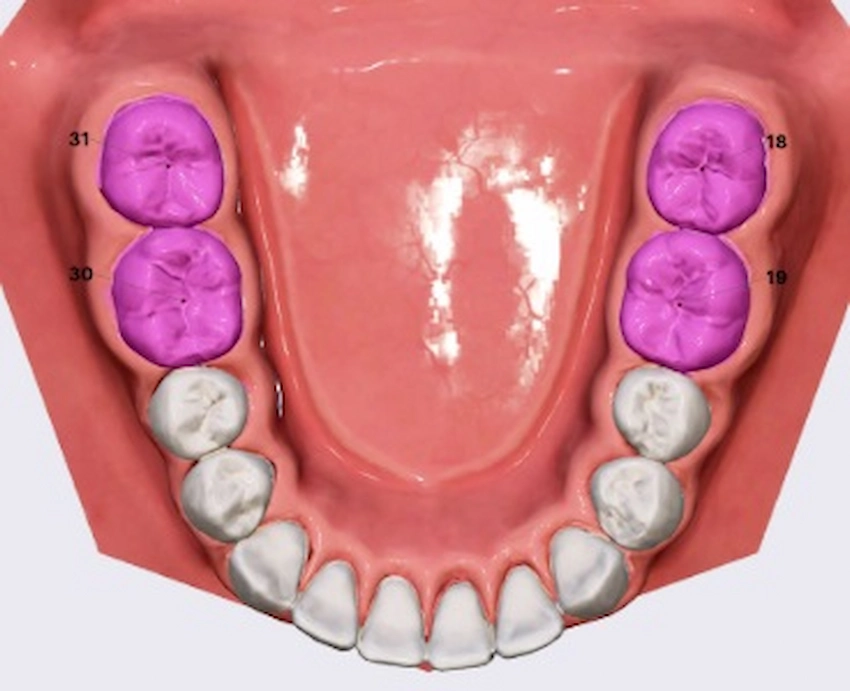
Theoretically, when you ask how many teeth an adult has without wisdom teeth the average number always pops up as 28, however, not every individual conveniently achieves this number. Some people were unfortunately born with a few teeth of which were cut down or nay even early teeth; this is a rare phenomenon known as hypodontia.
Moreover, during some orthodontic treatments in particular cases, a tooth or teeth could be removed for spacing purposes. This procedure usually aims at the aesthetic improvement of the smile or the leading alignment of the teeth thus causing further absence of more than fewer than 28 teeth including the wisdom teeth.
So, in some cases, we can say that the standard number of teeth that an adult has keeps remaining 28, but also one always has an individual may not possess a total of 28 teeth in some instances due to a condition experienced in the eruption of molars, where molars either erupt non-optimally or do not erupt at all.
In certain rare instances, it may occur that the second molars fail to erupt entirely or may be impacted as it happens with wisdom teeth. In such conditions, an individual can either have only 26 teeth or even fewer if any of the canines or incisors are missing.
What Happens to Your Bite and Smile When You Have 28 Teeth?
The reality is that you don’t need wisdom teeth to have a nice smile or good dental health. Dentists in most cases are the ones who send a patient to a surgeon to have them extracted in order to preserve harmony in the oral cavity. As a result, the question, ‘how many teeth does a person have without wisdom teeth and does it affect my smile?’, is immediately answered: full functionality and aesthetics are completely achievable with 28 teeth.
Occlusally 28 teeth keep your bite in good shape. All of the four types of teeth (incisors, canines, premolars, and molars) are in correct positions and give you the proper distribution of chewing forces. Lack of space due to impaction is the most common reason for the adjacent ones to move and that is when the problems in terms of equilibrium show up.
Most of the time, the lack of wisdom teeth does not pose any problem from an aesthetic point of view because they are located at the very back of the oral cavity. Turning from 32 to 28 doesn’t mean less smile but in many cases, it means more smile and also healthier.
How to Keep the 28 Teeth an Adult Has Without Wisdom Teeth Healthy?
Knowing that the adult human has 28 teeth in total excluding wisdom teeth, the next question is how to keep them healthy. Brushing and flossing daily, as well as going to a dentist every six months, could be considered one’s medical routine. However, there is also the setting side of it.
Chewing habits are also important. Using your teeth to open bottles or biting down on ice can lead to the fracturing of the molars. Remember: the 28 teeth an adult has without wisdom teeth are doing all the work—don’t overburden them!
Furthermore, watch out for bruxism, especially that which takes place at night. Bruxism may lead to the thinning of the hard dental tissue or even to the fracture of which one is already worn.
FAQs About How Many Teeth Does a Person Have Without Wisdom Teeth
28 teeth is the normal number of adult teeth excluding wisdom teeth.
Absolutely. 28 teeth are sufficient to make a complete, functional bite and a healthy smile.
Yes. A few individuals don’t have their earlobes from birth, and in addition, there are people whose earlobes have been surgically removed – these two conditions are both ordinary.
The common dental formula is 2 incisors, 1 canine, 2 premolars, and 2 molars per quadrant- 28 in total.
Adults usually have their wisdom teeth extracted because these teeth are the cause of crowding in the mouth, getting impacted, or producing pain.