What Are Pointy Teeth and Why Do Some People Have Them?
Starting with the fundamentals—pointy teeth are what exactly? Sharp teeth are those that seem to be sharper and more conical as compared to the regular teeth. Most of the time, this means the canines, which are also known as cuspids, which are by nature structured to be pointed so that they can easily cut a piece of food. Having prominent canines is perfectly normal and a lot of people even accept them as a little bit different feature of their smile.
However, the pointy teeth do not necessarily refer to the canines only. In some cases, the lateral incisors or even the molars can have more prominent or rough tips and thus grow with nature. Usually, genetics is the factor that influences the pointiness of your teeth. Some people have shorter and less sharp enamel spots than others of which some might have sharper and longer ones of enamel tips.
So, are pointy teeth normal? In the majority of situations, yes. They may even form part of your natural dental anatomy. In contrast, if you have noticed your teeth getting pointier gradually lately or if the figure of the teeth is causing you some discomfort, it might be an indication of an issue such as bruxism or enamel wear.
When Do Pointy Teeth Become a Dental Issue?
Pointy teeth are most of the time, not a threat, however, on some occasions, they may be a sign of a hidden dental concern. If you are wondering, “Are sharp teeth problem?”, really the answer relies on your exact circumstance.
The first common problem is bruxism, or teeth grinding at night. This condition can unevenly wear down your teeth, which will result in some that are sharper than the others. You might get a headache and jaw pain when you wake up along with tooth sensitivity that may be lethal in several cases. In such cases, pointy teeth are not only the cause of embarrassment but at the same time, they are the reason why the enamel of your teeth is getting damaged without your knowledge.
Moreover, sharp teeth are also a red flag, which, if they interfere with the biting process, cause the mouth to be unusable. Very sharp canines not only may make you feel pain but also they can press so hard on opposing teeth or soft tissues that new small ulcers can be caused. There are those patients whose condition of pointy teeth is so peculiar that they do not even realize that they bite the inside of their lips or cheeks unintentionally with their sharp teeth.
Finally, accidents in the dental area or the weak development of the enamel can be factors causing pointy or jagged edges. Suppose you got your tooth chipped and as a result, the enamel wore unevenly. In that case, you may have an awkwardly pointy shape left that not only is rough but also can be sharp to your tongue.
Consequently, pointy teeth can be normal; however, they are sometimes signs of a problem that requires a professional dental check-up, particularly, if they are accompanied by pain, wear or getting worse and you don’t like how they look.
Cosmetic Options to Fix or Modify Pointy Teeth
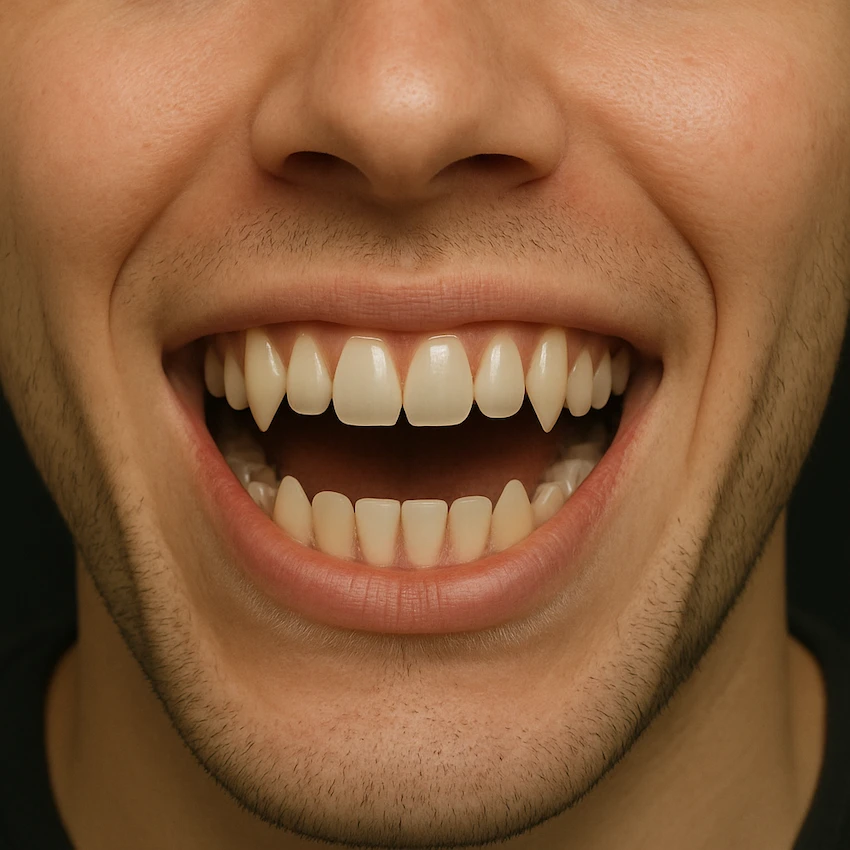
Pointy teeth to a point that you cannot even stand looking at them yourself may cause discomfort and become a nightmare for your confidence. In this case, several dental procedures can reshape or improve their appearance. Such knowledge can take you to the next level of getting an even and well-aligned smile.
- Dental Contouring: It is a quick and simple cosmetic procedure in which the dentist carves a very small part of the tooth enamel so as to make the sharp teeth look rounded. If you have just a few pointy canines or your teeth edges are a little bit irregular, it is just what you need.
- Dental Bonding: In case of pointy teeth, short and narrow teeth, bonding is the procedure of lengthening the teeth by placing tooth-colored resin on the tooth’s surface to make it seem longer. It can be combined with other treatments to repair fractured teeth and to add material to the abraded one.
- Porcelain Veneers: If you want an outright change, veneers can be a solution as they cover the smile with newly designed shells according to individual requirements. It is also one of the most long-lasting and beautiful ways of giving attention to those which might have multiple-pointed teeth that come in combination with other problems such as staining or gaps.
- Orthodontics: Nevertheless, the case in point may be that sharp teeth are only a child part coming from something greater like an alignment issue. In this case, the help of braces or even clear aligners would be required in order to reposition the teeth which, in turn, might lessen the prominence of the points.
For your aesthetic purposes and in case of functional reasons, you do not have to live with pointy teeth if these are making you feel uncomfortable. Your dentist will be able to inform you which of the treatment(s) would be the most suitable for your smile and bite structure.
Can You Prevent Pointy Teeth from Getting Worse?
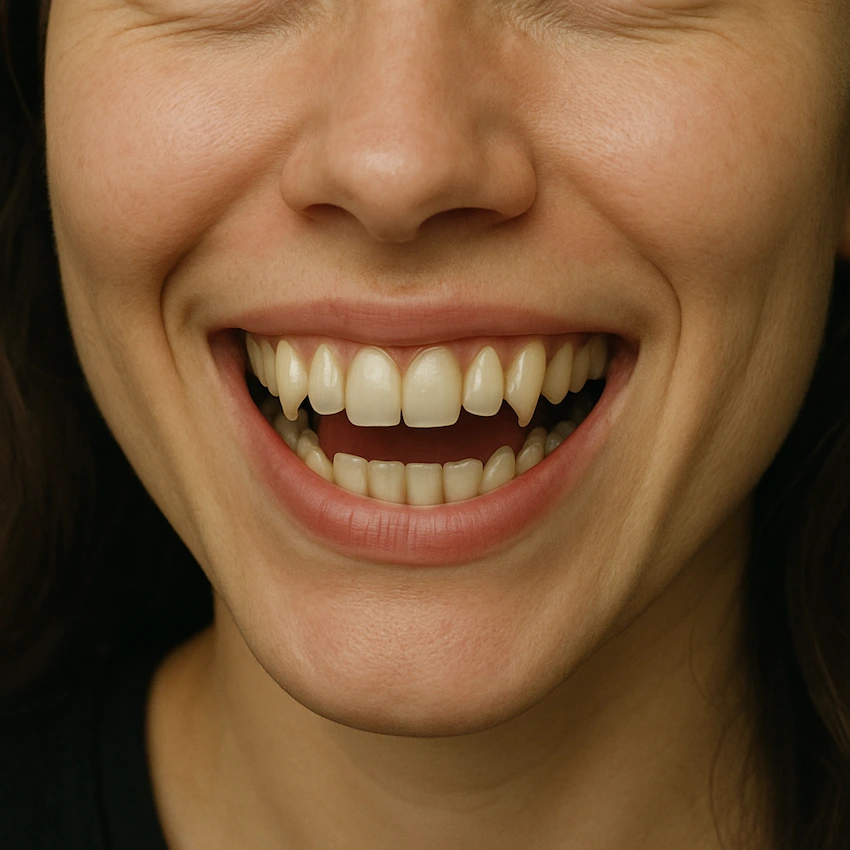
If pointy teeth to you are due to a grinding, clenching, or erosion of enamel, prevention is the core of the whole process. Then, by knowing how to safeguard your teeth, not only can you prevent them from becoming sharper but also from getting more damaged with time.
Put your bruxism on the spot. If you happen to grind your teeth at night, then wearing a custom night guard designed just for you can help protect your enamel from getting worn out due to abrasive contact. Hence, pointy teeth can be prevented from getting sharper and other problems caused by bruxing such as cracking and fractures can be easily avoided.
Practice standard good dental hygiene. Brushing with a soft-bristled toothbrush, using fluoride toothpaste, and not consuming acidic foods are all ways of protecting your enamel and, hence, preventing the gum from wearing unevenly which could lead to the formation of sharp edges or an increase in the existing ones.
Regular dental check-ups are very important as well. So, your dentist is the one to find the first signs of enamel loss or grinding and offer you the necessary preventive treatments before the situation gets worse. On the other hand, if you happen to be genetically predisposed to having pointy teeth, then early cosmetic shaping may be the best option to get an even bite.
Hence, in case you are troubled about the long-term management of sharp teeth, then the solution is to remember that adequate care and intervention at the right time make a lot of difference.
FAQs About Pointy Teeth
Braces not only straighten the teeth but also can make them look less pointy as well which is the most common cause of this type of teeth shape.
Pointy canines are quite normal— No. They are necessary to tear the food and hence a natural part of human dentition.
First, dental contouring, bonding, or veneers can make an appearance smoother by removing sharp edges and safely reshaping pointy teeth.
Bruxism is probably the problem resulting in the sharp feeling of your teeth. A dentist must be consulted to get a proper diagnosis. If your teeth are getting more pointed gradually or have become sharp without a clear reason.
Yes, in some cases, pointy teeth may indicate enamel erosion, dental trauma, or conditions like bruxism. If accompanied by sensitivity, pain, or wear, it’s best to consult a dentist.