


What Are Inlays and Onlays?
Inlays and onlays are types of indirect dental restorations that support the dental structures, which have been moderately decayed or fractured, or have lost their structure. These restorations, which are the decision of clinical expertise of Dentist Polen Akkılıç and her team, are the final stage when the tooth is no longer directly filled but is not yet covered with a full crown.
The first intention of these restorations is to fit the patient’s dental anatomy and bite. Thus, by saving the natural tooth and reinforcing the parts that have been weakened, inlays and onlays become a source of increasing the masticatory power, securing oral stability for a long time, and reducing the risk of structural failure in the future.
Inlays and Onlays in Dentistry: A Modern Tooth Restoration Method
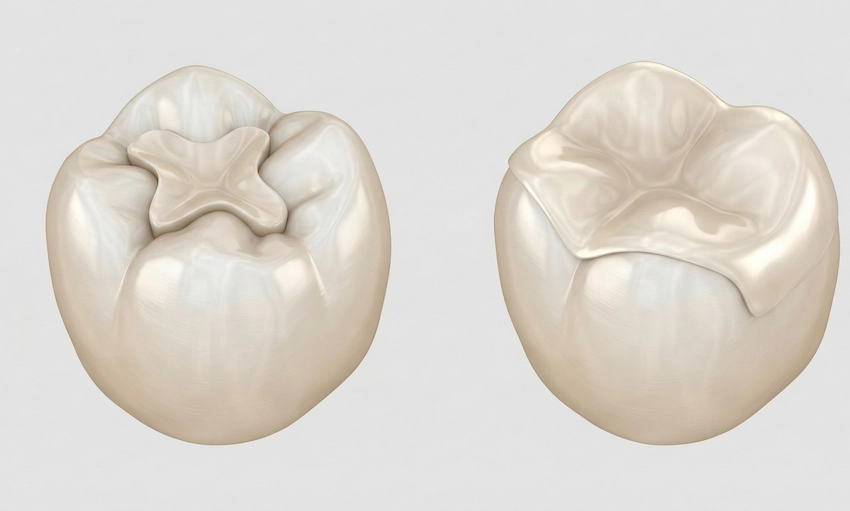
Modern restorative dentistry is essentially based on the patient’s expectations, tissue conservation, and biomechanical balance. Professor Doctor Coşkun Yıldız indicates that inlays and onlays are in line with these goals as they make the weakened teeth stronger without a significant removal of the enamel.
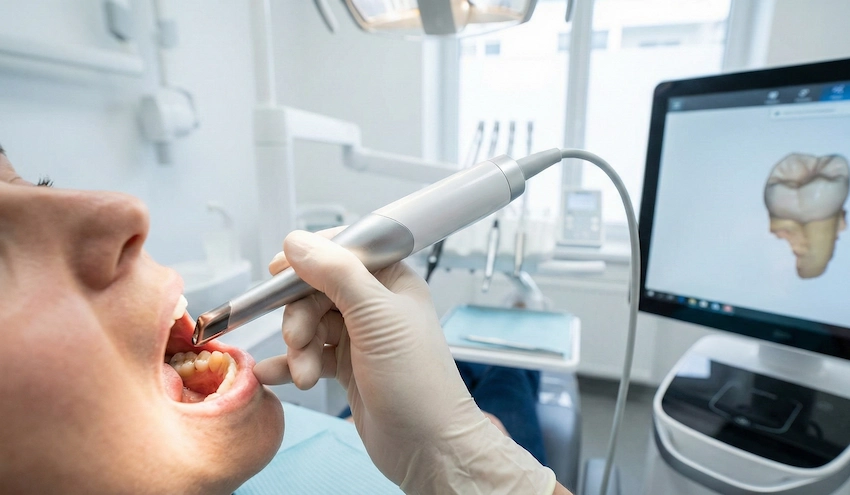
What Dentist Polen Akkılıç and her team can do with the help of digital scanning and CAD/CAM fabrication is to perform restorations that have very precise margins as well as the optimum occlusal contact. Such a progression not only makes the restoration bacteria-tight, thereby strengthening the bonding, but also a long time can the restoration be durable with a clinical reliability that can be measured.
Inlays vs. Onlays: Key Differences
- Coverage area: Inlays represent a kind of restoration that is confined to the inner grooves of a tooth and does not extend to the chewing cusps. Onlays can surpass one or more cusps to cover and safeguard those areas that get the most biting forces.
- Indication based on damage level: When deciding on inlays, dentists see that decay or fractures have only impacted the central biting surface. On the other hand, when structural damage reaches the tooth’s cusps without the need for a full crown, onlays are chosen.
- Tooth preservation: Inlays still keep the tooth enamel intact to a higher degree as they are less tooth reduction is needed. Although Onlays involve slightly more coverage, they still conserve significantly more tooth structure than crowns.
- Strength and protection: Inlays strengthen the internal tooth structure without changing the cusp anatomy. Onlays also protect against breakage by extending the stabilization of the weakened cusps and thus, preventing cracking.
- Clinical decision-making: Dentist Polen Akkılıç and her team decide on inlays when retaining conservative restorations with the cusps intact. Professor Doctor Coşkun Yıldız advises onlays when the long-term protection of the cusps is necessary for the stability of the bite.
- Functional outcome: Inlays are able to regain the chewing function that was lost due to the localized damage. On the other hand, Onlays not only restore the chewing function, but also the stability of the cusps in the teeth that have been subjected to higher occlusal stress.
Advantages of Inlays and Onlays for Tooth Restoration
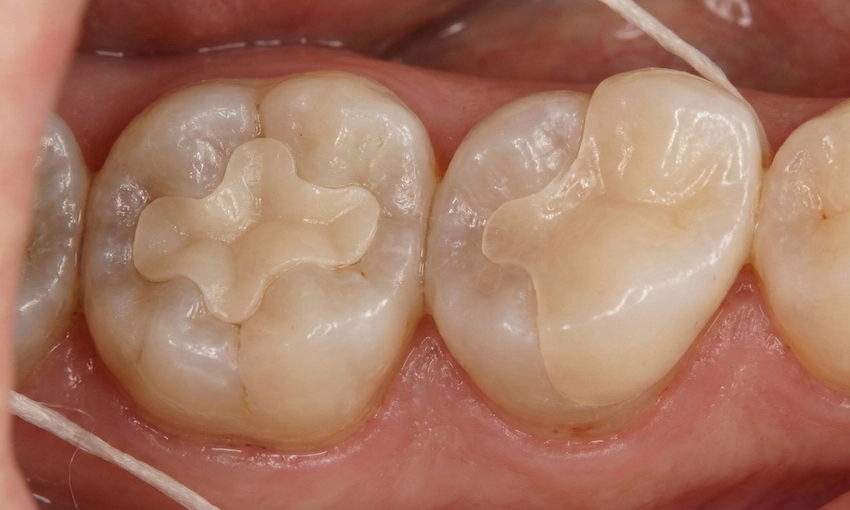
Inlays and onlays are more stable from a mechanical point of view for a longer time as compared to composite fillings, since they are made under strict laboratory conditions. Their adhesive bonding not only strengthens the leftover tooth structure, but also makes the occlusal forces evenly distributed.
Among the advantages of the clinical practice are:
- Conservation of natural enamel and dentin
- Lowered risk of occurrence of secondary fractures
- Tightening of the marginal seal against bacteria
- Structural support throughout the lifespan
- Good aesthetic matching with natural teeth
The advantages in question place inlays and onlays at the top of the list of treatment options available to patients who want durable and conservative therapy.
Who Should Consider Inlays and Onlays?
Generally, inlays and onlays are the appropriate treatments for the restoration of the teeth of those patients who have been adversely affected by decay, cracking, or wear, to some extent. Dr. Polen Akkılıç and her team figure it out by checking the life of the tooth, the health of the roots, the firmness of the bite, and oral hygiene practices.
The patient who regulates his bite, has healthy periodontal tissues, and is devoted to dental care routines, will get the most excellent result. A patient’s oral health future will be better off with a treatment plan that is in line with clinical findings and diagnostic tools .
Inlay and Onlay Treatment: The Detailed Process
The first step of the treatment is a thorough clinical examination followed by the administration of local anesthesia, which is usually lidocaine-based, to keep the patient comfortable and the procedure safe. Professor Doctor Coşkun Yıldız points out that the preparation should be conservative and the remaining healthy part of the tooth should be preserved.
Once the decayed area has been removed, the dentist takes a digital impression to create a restoration that will fit accurately. As soon as it is made, the inlay or onlay is fixed in place with the help of a modern resin cement that is strong, which allows for the correct bite, and the patient can use the tooth immediately.
Common Materials Used for Inlays and Onlays
| Material | Strength | Biocompatibility | Clinical Use |
| Porcelain / Ceramic | High | Excellent | Aesthetic restorations |
| Composite Resin | Moderate | High | Smaller restorations |
| Gold Alloy | Very High | Excellent | Heavy bite areas |
Essential Inlay and Onlay Care for Durable Results
Daily oral care is essential if the restoration is to be kept long-lasting and the adjacent teeth healthy. Dentist Polen Akkılıç and her team advise brushing with a fluoride toothpaste and flossing very gently around the margins of the restoration.
Check-ups on a regular basis allow you to notice changes in your bite or wear at a very early stage. Those who quit doing such things as ice chewing or grinding their teeth without a guard, thereby, greatly lessen the stress of the restoration and lengthen its functional life.
How Long Do Inlays and Onlays Last? Durability and Longevity
Inlays and onlays are mediums of function attempting to last for a time of 10-20 years if the installation is done correctly and the maintenance is kept regularly. Prof. Dr. Coşkun Yıldız states that the duration of the life span is mainly a factor that depends on the materials, the bonding process, and the behavior of the patient.
If these restorations are done by a professional and are regularly maintained, they can keep their structural strength, give you comfortable chewing, and remain beautiful for a pretty long time, so they become a reliable long-term solution.
Frequently Asked Questions About Inlays and Onlays
They rebuild teeth that are damaged by decay or have broken, to a moderate extent, and at the same time keep the healthy part of the tooth intact. Dentists employ them in situations where fillings cannot provide enough support.
Yes, that is assured by clinical studies and the process is done under local anesthesia while following safety protocols very strictly.
They fit perfectly with the other natural teeth and a person can chew food as usual.
For pain relief dentists normally employ local anesthetics like lidocaine.
In most cases, they save the natural tooth structure so they don’t have to place crowns.
Patients generally return to their regular diet after the anesthesia has worn off and the bite has been checked.
However, for their longevity, they have to be maintained by usual oral hygiene and regular dental visits.
- Burke, F. J. T. (2012). Dental inlays: Indications, materials, and clinical performance. Journal of Dentistry, 40(10), 843–852.
- Ferrari, M., Vichi, A., & Fadda, G. M. (2013). Clinical evaluation of indirect ceramic restorations: Inlays and onlays. International Journal of Prosthodontics, 26(6), 509–516.
- Hickel, R., Heidemann, D., Staehle, H. J., Minnig, P., & Wilson, N. H. F. (2004). Direct vs. indirect restorations: Extended service life and biomechanical considerations. Clinical Oral Investigations, 8(1), 1–7.
- Magne, P., & Belser, U. (2003). Porcelain versus composite inlays/onlays: Effects on tooth integrity. Quintessence International, 34(6), 405–416.
- Rocca, G. T., & Krejci, I. (2015). Bonded indirect restorations for posterior teeth: A review of clinical outcomes. Journal of Adhesive Dentistry, 17(4), 341–352.

