When a child loses teeth, it is a big event – in a way, it is the moment when the child turns into a grown-up! But if you ask me, I would say that the question that is posed the most is: “Which of the teeth are going to fall out and which of them will stay there forever?” Your kid is going from spending a day with a toothless smile to having the tooth fairy come over for the first time – quite a change! Being aware of the difference between baby teeth and permanent teeth can make parents feel less panicked and kids more sure during the toothy transition.
Our expertise at Lema Dental Clinic in Istanbul, Turkey, is in developing bright and healthy smiles for children and adults. We cover the complete range of treatments from pediatric dentistry, orthodontics, to Hollywood Smile.
Which Are the Baby and Which Are the Permanent Teeth?
Primary teeth, main teeth, or baby teeth are the first set of teeth that kids get, normally starting at six months of age. These small teeth are the smallest, more white, and are gradually getting out in order to give the place by permanent teeth. Generally, children have 20 primary teeth in total, 10 in the upper jaw and 10 in the lower jaw.
Permanent teeth refer to the teeth that are expected to be with a person for their entire life. The substitution of milk teeth with permanent teeth starts at the age of six. Besides, there are molars that don’t replace any baby teeth location— they are just the ones that are grown in the back of the. A complete set of adult teeth consists of 32 teeth (if we are talking about the wisdom teeth that usually come in the late teens or early 20s, then the number is 36).
At What Age Do Kids Start Losing Baby Teeth?
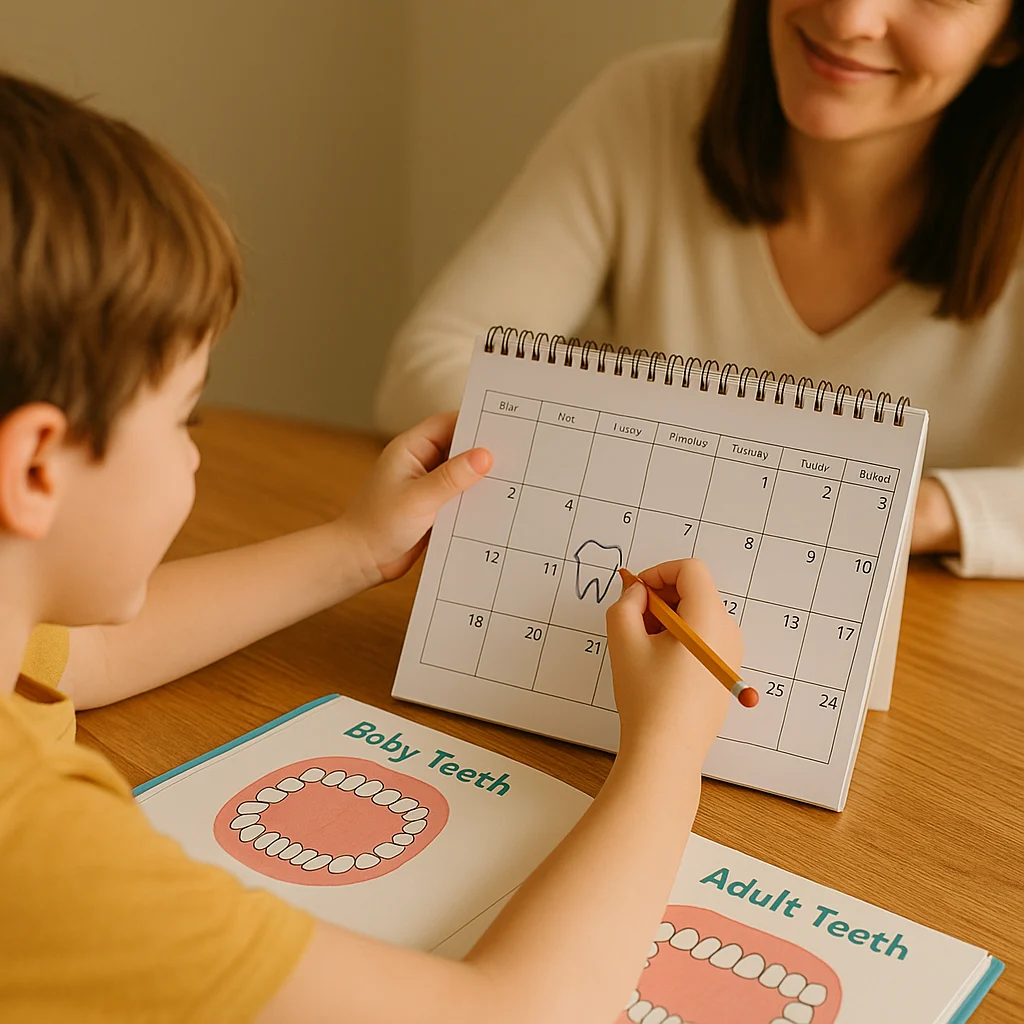
Typically, 6 to 7 years is the age when the majority of children lose their primary teeth. However, don’t be alarmed if it occurs earlier or later, since each kid is unique. Sometimes, the first loose tooth has been known to appear at the age of 4 or even 8. The most essential point is that the baby teeth come out in a more or less expected sequence.
The operation is not a quick one and takes several years to complete. Generally, it is done by the time the child is 12 or 13 years old. It indicates that the last to leave are usually the second molars, whereas the permanent molars that are aimed to replace the lost ones start coming out in the back of the mouth at the same time. A smile makeover of this magnitude certainly doesn’t happen in a flash!
Which Teeth Fall Out and Which Stay for Life?
The primary teeth to fall out are the lower central incisors (the bottom front teeth) most time, and the upper central incisors (top front teeth) come next. Later, the lateral incisors, first molars, canines, and second molars go in a similar sequence as they appeared.
The permanent first molars are the ones that do not fall out (typically around age 6) and later the second permanent molars are the ones that are behind the baby teeth and thus do not replace any of the baby teeth. And yes, it is true that the third molars (i.e., wisdom teeth) that come late will often be taken out.
One more point to consider: how can you recognize that a tooth is going to last forever? Compared to primary teeth, permanent ones are usually bigger, less bright, and have more pronounced ridges. In other words, if your child had a tooth that got loose but still no other one has come through, no need to panic. Sometimes, the arrival of adult teeth may be slow, and it can take several weeks or months for them to come out fully.
Signs of Normal vs. Abnormal Tooth Loss in Children
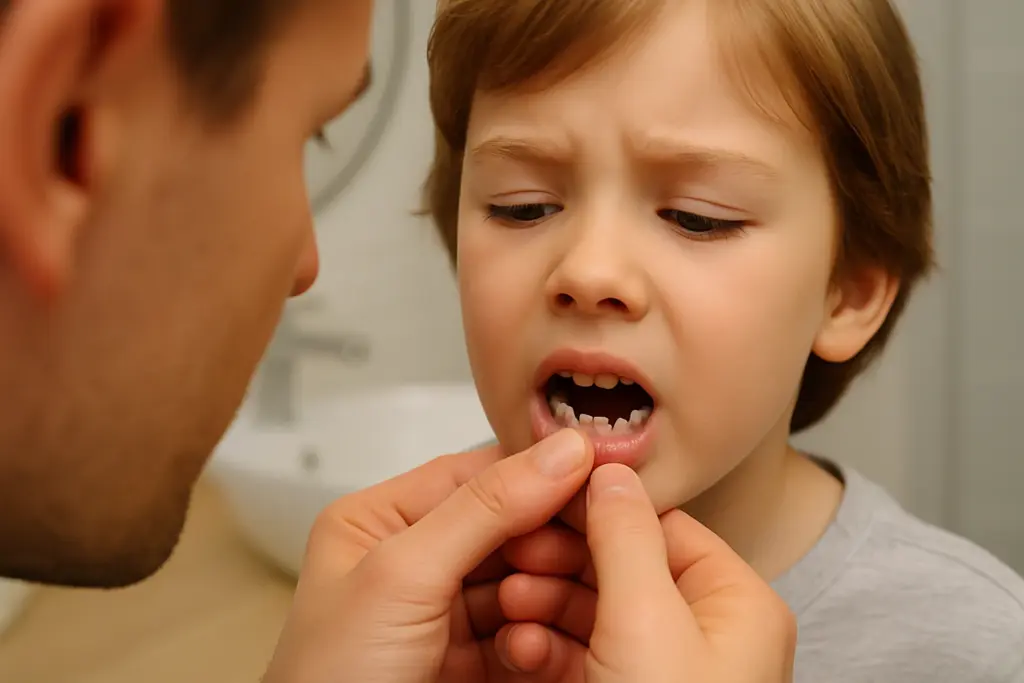
Normally, the process of losing teeth is quite circular: first, the wobbly teeth, then some pain, a little bleeding, and finally, an empty space that is slowly occupied by a bigger and more mature tooth. Very regular, and usually very motivating for children. The event will be even more special if the Tooth Fairy comes.
Nevertheless, there are some things that can alarm us. If baby teeth fall out too early (before the age of 4), it may suggest that the child has been exposed to trauma, decay, or other health issues. On the contrary, a dental visit might also be necessary if the eruption of the first teeth has not happened yet at 8- or 9-year-old children. Delayed or uneven tooth loss may be the first sign that the permanent teeth are not going to be properly positioned or that there may not be enough space for them.
Along these lines, should the adult teeth already be pushing off the baby ones (thus causing the so-called “shark teeth” effect), it still could be the case that this situation will disentangle itself to some degree without any professional help, or, on the contrary, it is a dentist who will solve this problem. Regardless of the situation, the clues of the timeline are important, and asking the doctor might give you tranquility.
How to Care for Growing Permanent Teeth at Home
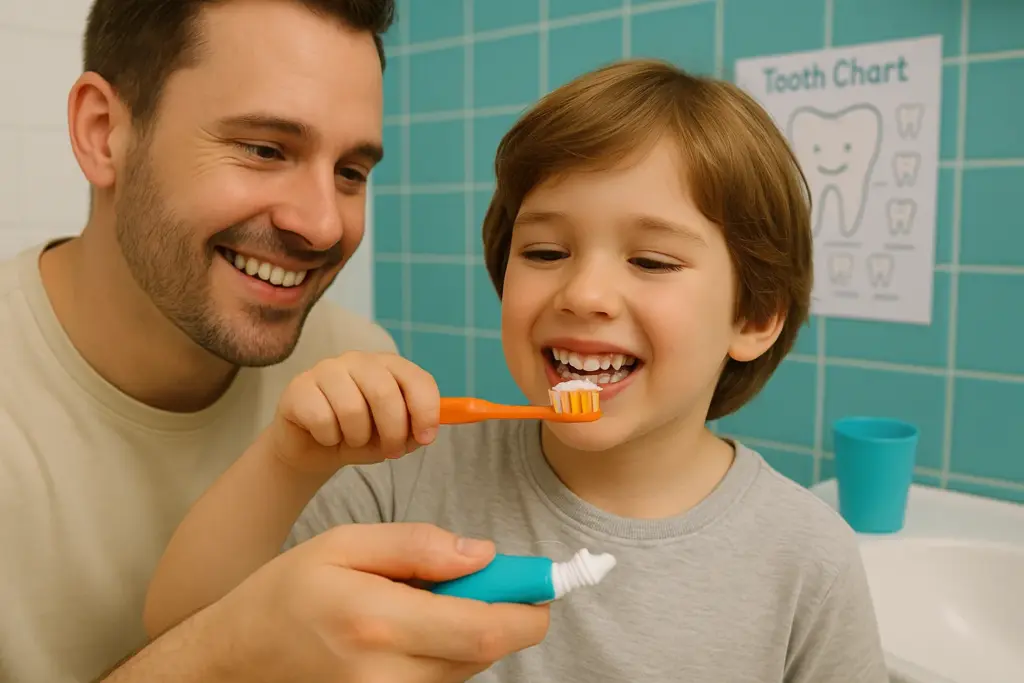
The name “adult teeth” given to permanent teeth is not without a reason—they are supposed to be with us forever! That’s the reason why a dental routine that is more thorough becomes necessary when milk teeth begin to loosen and fall out. A good oral care routine during this period will help keep away from caries, overcrowding, and periodontal diseases later on.
Parent, please ask your child to do it (brush) at least two times, every day, and to use fluoridated toothpaste. The use of dental floss once every day (particularly between the back teeth) is recommended as well. Food is also important – sugary treats and fizzy drinks should be limited as they are the main culprits for enamel wear. A dental checkup twice a year will keep everything under control and will make it easy to spot health issues at an early stage.
Children sometimes need corrective dental devices like braces, retainers, or spacers when their permanent teeth start to come out to help them be aligned in a proper way. Besides that, a space maintainer may be utilized in order to keep a certain spot free for the new tooth if a baby tooth has been lost prematurely. Please rest assured that Lema Dental Clinic provides comprehensive pediatric dental care and is there to support you through every change of your child’s smile.
FAQ: Tooth Loss in Kids
Most kids lose their first baby tooth around age 6, but anywhere from 4 to 8 can be considered normal.
The bottom front teeth (lower central incisors) usually fall out first, followed by the top front teeth.
Permanent teeth are typically larger, more yellowish in color, and have more pronounced ridges compared to baby teeth.
Early tooth loss (before age 4) isn’t typical and may require a dental evaluation, especially if due to injury or decay.
Daily brushing with fluoride toothpaste, flossing, regular dental checkups, and a healthy diet are key to long-lasting smiles.