


New dentures may need adhesive at first, but proper fit and adjustments matter most.
Receiving your first dentures can be quite an emotional experience. You take a look at yourself in the mirror—a complete set of healthy teeth smiling right back at you. But almost right away, a wave of anxiety comes over you. Will these teeth keep falling? Should I buy sticking powder for dentures?
The answer, in short, is no. Brand-new and perfectly designed dentures generally do not require the use of adhesive to remain in place.
Consider a tailor-made suit. And when the measurements are exactly right, you don’t have to wear a belt to hold your pants up. Your new set of teeth operates precisely in the same manner.
Below is one of the typical scenarios we witness in our clinic. Many patients consider denture adhesive to be a normal, unavoidable part of wearing false teeth. Actually, we make your dentures to hold naturally without using any glue.
The Anatomy of a Perfect Fit
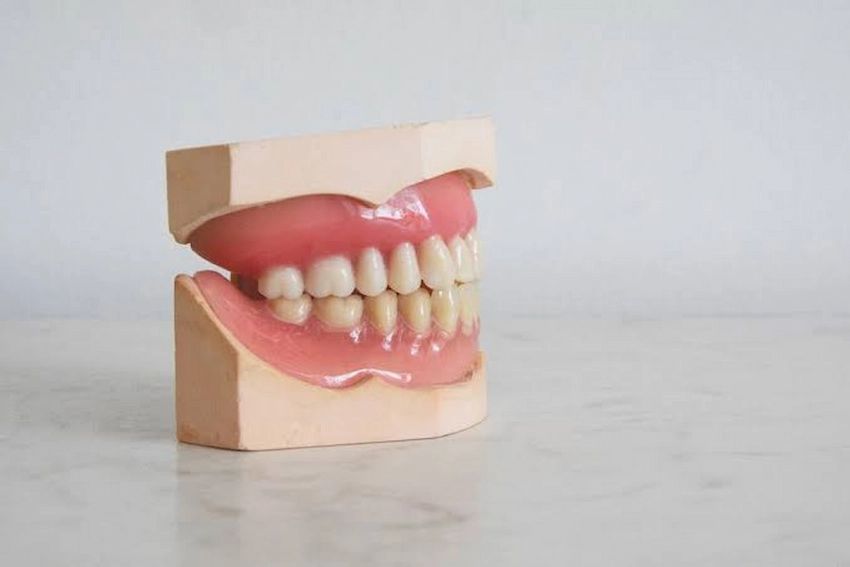
In order to remind you why there is no need for glue with your new teeth, let’s dive into what makes a mouth physically hold something.
The upper denture basically operates on the principle of a natural, physical seal. If you have ever copied a wet suction cup to a glass window, then you already understand the concept. The acrylic base of the denture is shaped exactly like your palate. Your saliva is the liquid seal. When manufactured accurately, this produces a very strong suction.
The lower denture is much trickier to fit. Besides the fact that it shares the same space as your tongue—which is a powerful, constantly working muscle—it also rests on a narrow bone ridge instead of a broad palate. Still,l your cheeks and tongue will learn to hold the lower plate by cradling it.
Dr. Polen Akkılıç and her staff dedicate a great deal of time to studying and mapping these sensitive areas. Their work results in the production of prosthetics that support a person’s smile, their anatomy, and their facial muscles rather than hindering them.
The First Few Weeks: The Healing Phase
Let us not forget to consider the first couple of days that you spend wearing your dentures at home. Gums are durable but can be easily irritated.
Please keep in mind that gum swelling only lasts for a short time. Denture adhesives are not a solution, but a way to help you gain confidence while you are getting used to your new teeth.
On the other hand, exaggerating the use of adhesives is a mistake, as it might do more harm than good. It is better to get your dentures adjusted rather than continuing to use pastes to compensate for poor fit.
When Glue Hides a Bigger Problem
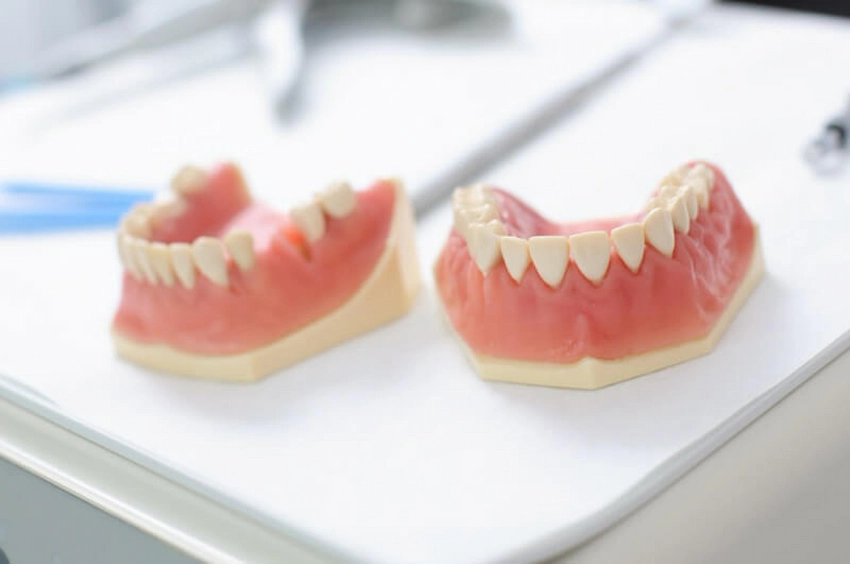
Professor Doctor Coşkun Yıldız continually emphasizes that the use of denture adhesives in the long term is merely a patch, not a true solution. It tends to cover up structural problems that have been present for some time.
Just like a house’s foundation, your jawbone provides support for your denture. However, when the natural roots of the teeth are gone, the bone ceases to receive nutrients. It subsequently shrinks and disintegrates. As a result, your once-stable denture will begin to rock back and forth and slip.
We have seen patients who use thick layers of paste to fill in the increasing gap, and it can be very harmful to their health. Changes the bite and causes sore spots that are really painful. Even worse, regular use of certain over-the-counter adhesives can result in exposure to heavy metals such as zinc.
Here at Lema Dental Clinic in Turkey, our primary goal is to provide you with a pain-free and fearless eating experience. There are cases when the jawbone of a patient is so flat that it is not able to hold a lower denture. In such situations, we mostly abandon dentures and move forward with the implant-supported denture option. These are then secured on titanium posts which are directly fixed into the jaw, eliminating the need for paste.
Comparing Denture Stability
| Your Current Situation | What is Causing It? | Do You Need Adhesive? | What You Should Do Next |
| Brand New Denture (Days 1-14) | Muscle learning, minor gum swelling, or healing gums. | Optional (just for early confidence). | Come for follow-up visits for minor fit adjustments, etc. |
| Well-Fitted Mature Denture | Healthy bone ridge and exact acrylic milling. | No. | Continue with your routine annual check-ups. |
| Denture is 5+ Years Old | Natural jawbone shrinkage changing your mouth’s shape. | Yes, but it is a red flag. | Get a clinical reline or a new prosthetic. |
| Severe Lower Bone Loss | Years of missing teeth leading to a flat lower jaw ridge. | Yes, mostly rely on it. | Explore implant-supported dentures (All-on-4). |
Frequently Asked Questions
Is it normal for my new dentures to feel loose when I eat?
Doctor’s Answer: Actually, it is very normal. Your mouth and muscles are learning to balance the plate during eating. Start with soft food that requires less chewing and eat on both sides of your mouth. It may not happen at all that the denture lifts. But if it does, you can always come and consult the doctor for modifying and fitting the denture.
Can I use adhesive on the very first day?
Doctor’s Answer: I would prefer you not to use adhesive. It is really helpful for you to feel the bare fit of the prosthetic. If the glue covers the thing, you might not be able to locate the pressure or sore points of the plate properly.
Why does my bottom denture float more than the top one?
Doctor’s Answer: The top jaw has a wide palate, which serves as a huge suction cup. The bottom jaw, on the other hand, is a narrow ridge, and the tongue keeps fighting against it. Hence, it takes time and effort to work on muscle memory for holding the lower plate.
How much adhesive should I actually use?
Doctor’s Answer: Use far less than you can imagine. Place only three small spots—the size of a pea—on the ridge. If you are putting a whole line, and if it comes out from the sides when you push your teeth, then you are using too much.
Will I eventually need implants if I hate using paste?
Doctor’s Answer: If your bone keeps shrinking, then traditional dentures will not be able to hold on. Many of our patients in Turkey decide to go for implant-supported dentures to get rid of messy pastes completely and regain full natural biting force.
Academic References
- Carlsson, G. E. (2014). Responses of jawbone to pressure. Gerodontology, 31(2), 79-85.
- Felton, D. A. (2009). Edentulism and comorbid factors. Journal of Prosthodontics, 18(2), 88-96.
- Grasso, J. E. (2004). Denture adhesives: changing attitudes. Journal of the American Dental Association, 135(1), 81-86.
- Polat, N. T., & Boke, F. (2018). The effect of denture adhesives on the retention of maxillary complete dentures. Journal of Advanced Prosthodontics, 10(4), 273-278.
- Zarb, G. A., Hobkirk, J. A., Eckert, S. E., & Jacob, R. F. (2013). Prosthodontic Treatment for Edentulous Patients: Complete Dentures and Implant-Supported Prostheses (13th ed.). Elsevier Mosby.

