


Denture adhesive does not directly cause insomnia, but discomfort or irritation may affect sleep.
Sleep is like your body’s reset mode, and you literally pay the price for losing it. The culprit could be something you’ve never thought about, even while stress, coffee, or a bad bed would readily explain the restlessness and sleep loss; the denture paste is the real reason for your sleep troubl, whiche you are not able to blame on your environment.
We at Lema Dental Clinic have many such patients who have been sleepless due to pain for years. This has been the case for our patients with dentures. In fact, one might argue that denture paste has such a negative effect on a person’s sleep that many people are too afraid to speak about it.
Below are ways the very paste that holds your fake teeth together has led to sleeplessness and how dental specialists in our clinic can fix the matter.
The Case of Zinc: A Metabolic Mix-up
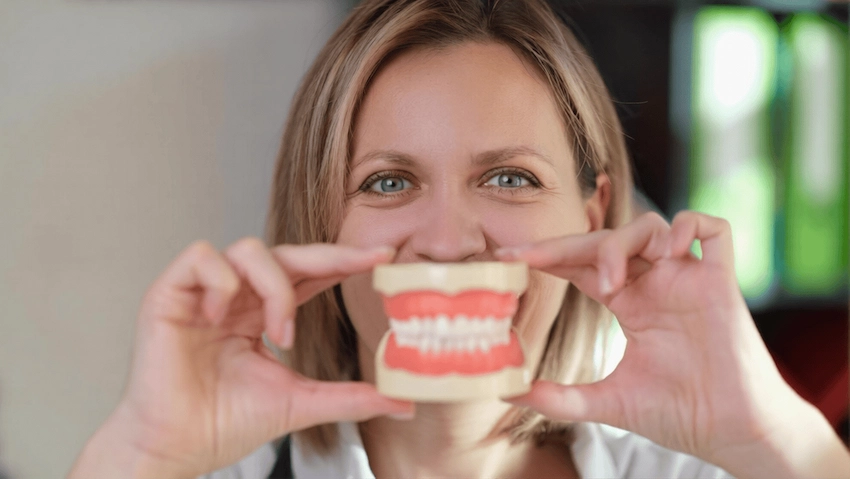
Dental professionals and researchers have identified that dental adhesives such as the commonly used denture glues, which have been available in the market over the last few decade,s often contain zinc. In addition to being strong and waterproof, the substance creates a very strong bond between denture and gum tissues. This, according to dentists like us, has an unexpected effect.
Zinc is an essential miner,al and our bodies can utilize it for different processes such as cell division and healing. A problem starts occurring when one uses the paste excessively for long periods.
The relationship of the human body’s zinc and copper is best described using a seesaw as a metaphor. If, over time, the person ends up swallowing a large enough quantity of paste to add the daily dose of supplementary zinc, their body’s zinc level will keep rising while the copper gets depleted very low, resulting in severe copper shortage, which can bring nerve complications with damage to the nervous system.
The most common neurological damage is peripheral neuropathy.
- It feels like: You’re experiencinga sharp, burning sensation or “pins and needles” in your fingers and toes along with tingling.
- How it affects your sleep: Imagine being so tired, but still unable to get a wink of sleep as your legs get tinged by a current throughout the night. You are going to be exhausted and irritable, not to mention that the quality of the sleep will be affected negatively.
The Mental Stress of Fake Teeth
Besides chemical composition, dentures can be a source of mental distress. Prof. Doctor Coşkun Yıldız frequently reminds dental students of the fact that the best physicians also understand the minds of their patients.
“The patients, who regularly use adhesives, live in quiet fears,” the doctor reveals. “My teeth could not stay in for dinner, they could not get back after sleeping, and could block my throat.”
In fact, the very worry keeps your mind active 24 hours and 7 days a week in order to safeguard yourself from being suffocated by your loose teeth. It becomes a matter of time before you start sleeping less due to a restless mind.
Permanent Solution: A Better Way to Get Your Life Back in Turkey
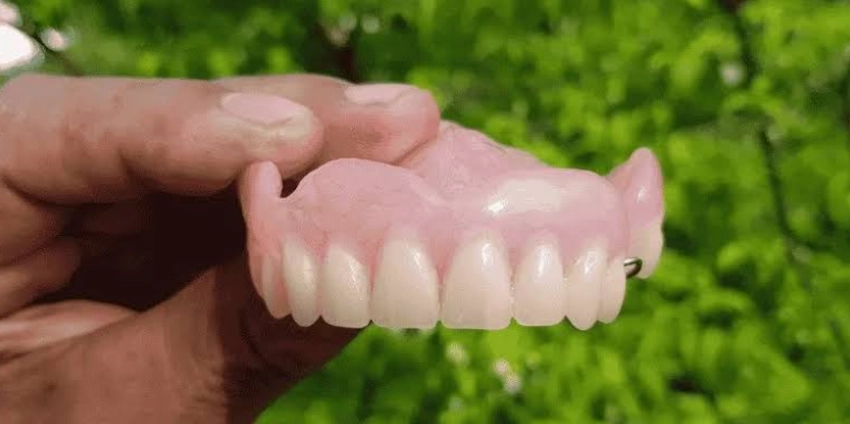
Here in our clinic, we believe no person should be forced to spend their daily morning time trying to get their teeth stuck onto their face with glue. It has been a regular story of our patients that those who were dependent on the glue to keep their artificial teeth in place were sleeping very badly, but soon after they decided to go the fixed way with oral implants, their sleep patterns returned to a more rested feeling in a matter of days. They even felt more energetic.
Dentist Polen Akkılıç has a team of specialists in the making of whole-jaw dental restorations. We are inserting implants that are made of medical-grade titanium in your jawbones. It is sort of like you are digging steel posts into the ground and holding a tall building. By doing this, not only do we eliminate the use of glue, but the patient’s own bone will continue growing by incorporating the foreign titanium into its structure. This is how implants also prevent the deterioration of the bones that causes loose denture fit.
Regular Dentures vs. Fixed Implants
Let’s compare the two methods:
| Feature | Dentures on Glue | Fixed Dental Implants |
| Daily Routine | It’s quite complicated and not nice. | Bathroom habits that involve daily brushing and flossing, just like natural teeth. |
| Sleep Quality | Choking and a fear of slipping; the risks can be very damaging to one’s health. | You sleep safely, you’re calm, there are no hazardous chemicals. |
| Bone Health | Gradually, your jawbone will shrink, as it loses its stimulation due to dentures. | In fact, dental titanium helps keep your bones healthy and strong so that your jaw is well supported through the years. |
| Food | A soft diet is preferred. | Hard food is possible again, thanks to a very strong and resistant bite. |
| Fees | The cost of pastes and other things will never go down to zero. | Once and forever, an implant is the choice. |
Frequently Asked Questions
Does all denture glue contain zinc?
Zinc is the main component in most powerful varieties of adhesives. Some brands even made denture adhesives with more zinc than others, after which some courts ruled that the use of such glues must be limited to only when medically necessary and not sold in retail outlets. The brands that were left after the lawsuits have been manufacturingzinc-freee alternatives, but this doesn’t always mean that there won’t be a health issue because the paste could still cause stomach upset. Also and most importantly, denture glues, evenzinc-freee kind,s don’t help to prevent jaw bone shrinka,ge which makes dentures slip or cause other problems.
How do I know if I have zinc poisoning?
Your body is a system that will tell you if something is wrong. Are your toes going numb? Are your legs hurting in the evening hours? Has your sleep changed suddenly? If these questions are in line with your physicalconditions, then go through a blood test, and immediately, if not by any mean,s get started with the test. You should discontinue the use of zinc-containing paste immediately until you find out what the cause is with the help of a doctor and tests.
Can I just switch to zinc-free glue for better sleep?
Although the zinc-free glue may prevent the metal poisoning, it doesn’t take away the fear of waking up with loosened plastic and being choked to death by them at night. Only if your dental professionals can fix those teeth securely in a way that will give you confidence about your teeth at the most critical moments, for instance during sleep.
Why should I travel to Turkey for implants?
For your medical needs, the quality of care given in Turkey is the same as the best clinics in the U.S and, Europe. And, to top it off, the cost would be significantly lower here. The care at our clinic is provided by top experts like Professor Doctor Coşkun Yıldız. In addition, you will get an extremely detailed 3D scan and a luxury treatment experienceono a medical tripton our clinic,whicht makes it even a pleasure for you to be a patient.
Do implants hurt more than dentures?
Contrary to what people say, it is very unlikely for implants to cause more pain than dentures. Since your gums are extremely sensitive, dentures may be the worst cause of painful sores for you. Whereas the human jawbone is a structure with a minimum level of nerve fibers running through it. As a matter of fact, almost all our patients who undergo surgery report being pain-free after the procedure. They rarely have to take pain relief pills more than once or twice.
Academic References
- Nations, S. P., Boyer, P. J., Love, L. A., Burritt, M. F., Morgan, J. A., & Glass, J. A. (2008). Denture cream: an unusual source of excess zinc, leading to hypocupremia and neurologic disease. Neurology, 71(9), 639-643.
- Hedera, P., Peltier, A., Fink, J. K., Wilcock, S., & Brewer, G. J. (2009). Myelopolyneuropathy and pancytopenia due to copper deficiency and high zinc levels of unknown origin II. The denture cream is a primary source of excessive zinc. Neurotoxicology, 30(6), 996-999.
- Willis, M. S., Monaghan, S. A., Miller, M. L., McKenna, R. W., Perkins, W. D., Levinson, B. S., … & Kroft, S. H. (2005). Zinc-induced copper deficiency: a report of three cases initially recognized on bone marrow examination. American Journal of Clinical Pathology, 123(1), 125-131.
- Igic, M., Krunic, N., Aleksov, L., Kostic, M., & Igic, A. (2014). The influence of denture adhesives on the retention of maxillary complete dentures. Vojnosanitetski pregled, 71(8), 715-720.
- Zarb, G. A., Hobkirk, J. A., Eckert, S. E., & Jacob, R. F. (2013). Prosthodontic Treatment for Edentulous Patients: Complete Dentures and Implant-Supported Prostheses (13th ed.). Elsevier Mosby.

