


Cheap dental crowns cause hidden infections and costly damage.
It is like a daily reality in a way at our clinic in Istanbul, Turkey. Someone suffering from tiredness and pain enters our doors. They believed it was a great idea to have a new smile at a low price a few months ago. But that “deal” has now turned into something that destroys their dental health for them.
In our clinical practice at Lema Dental Clinic, we have come to realize budget dentistry is the cause of a silent disaster. We are witnessing more dental crowns that are failing than ever before. When you only value the low price, your body will be willing to bear the consequences later.
The Anatomy of a Failure
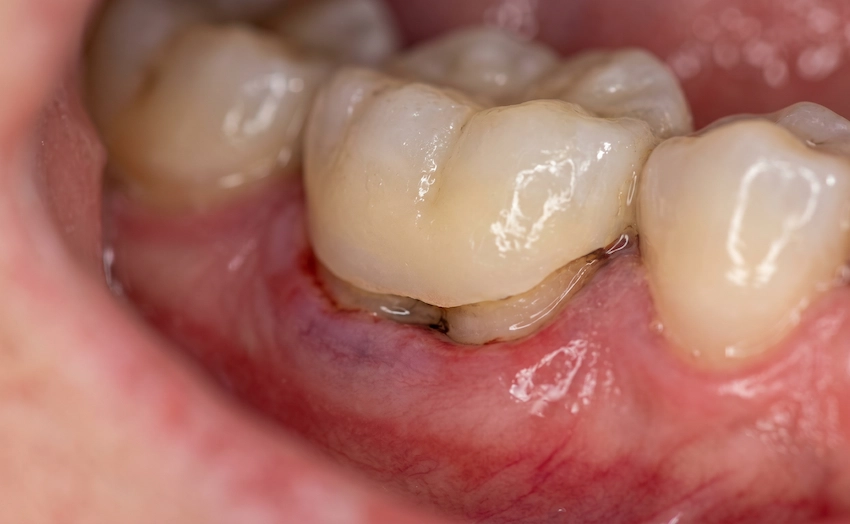
For a cheap crown to be hazardous, a crown works. A dental crown can be thought of as a custom roof for a fragile house. If the roof does not seal completely, then rain will get in. So, the “rain” in your mouth is the bacteria and food particles that are almost always there.
This is what we witness in our clinic. Budget centers often hurriedly perform the molding. They use low-quality dental labs so as to save require. This leads to a crown that does not match your natural tooth. The line where the fake crown meets your real tooth is called the “margin.”
Professor Doctor Coşkun Yıldız is of the opinion that this margin is where the real fight for your health takes place. A large and/or open crown allows for a bacteria friendly environment that one cannot clean. Bacteria quickly multiply in this dark and inaccessible space to you. They can lead to the destruction of the tooth under the crown and the jawbone.
Toxic Materials and Gingivitis
Now, let us analyze what exactly are the constituents of these cheap crowns.
High-quality dental work mostly utilizes biocompatible and robust materials like the pure form of zirconia. On the other hand, inexpensive crowns often contain metal alloys that are of poor quality and porcelain at the most basic level. Metal alloys of low standard usually have nickel as one of the components.
These low-cost metals often cause chronic allergic reactions for quite a few patients. Your body as a whole and the gum area in particular, may respond to the shortcoming of your material. This is followed by signs of bleeding, swelling, and a permanent dark grey line around your teeth.
Repairing the Harm
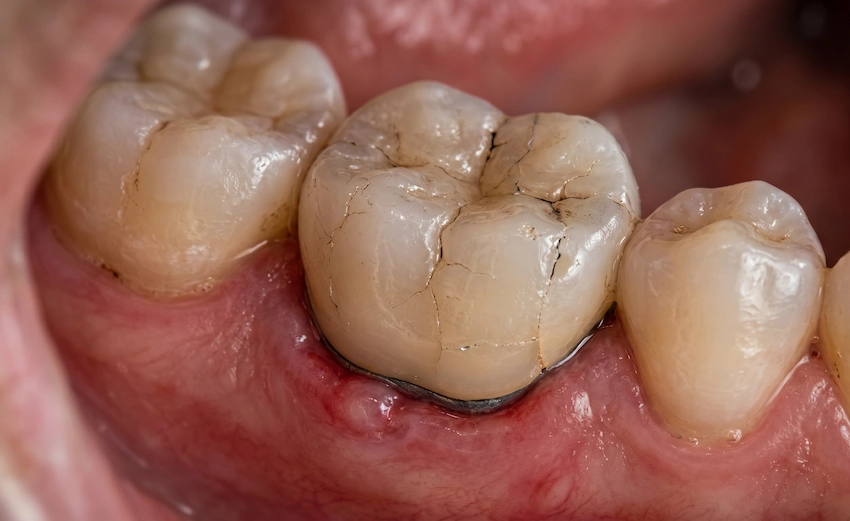
But what if these cheap crowns break down or no longer serve their purpose?
The harm is usually concealed beneath the artificial tooth. It is possible that you do not experience any pain at all until the infection reaches the nerve. Since the bad crown covers the tooth, even after taking x-rays, detecting the hidden decay is not always feasible. When the pain sets in, the situation could be such that tooth extraction and dental implant are the only viable options.
Along with her staff, Dentist Polen Akkılıç corrects these incidents that are very difficult in many ways. First, we gently detach the faulty crowns. Next, we thoroughly sanitize the infected gums and preserve the tooth structure that is still present. After that, we discard the harmful metals and replace them with pure, body-safe zirconia.
Quality Comparison: Lema Standard vs. Budget Clinics
The decision of where to get dental work done can be very difficult at times. You should have an idea about the physical differences of the materials used.
| Feature | Inexpensive “Bargain” Crowns | Lema Dental Clinic Standard |
| Material | Metal of a low grade, porcelain of low standard | Exclusive Zirconia, E-max |
| Safety for Gums | Low (Many metal allergies) | High (Safe for human tissue) |
| Crown Fit | Not good (Gaps left open for bacteria) | Micro-precise (Digital 3D Design) |
| Condition of Gums | Increased volume, bleeding, grey lines | Healthy, tight, and pink |
| True Cost | High (After root canals and fixing) | Low (Lasts for many years) |
Frequently Asked Questions
One of the reasons is that your crown is ill-fitting or you are allergic to the metal. In case the crown is very thick, then it will force the gums to the point of discomfort. It can be described as your body recognizing the presence of the crown in its tissue as the presence of a splinter. To fight the bacteria trapped under, the crown area is hyperemic.
Definitely. When the crown cannot be perfectly sealed, there can be leakage, and thus bacteria will be able to get in. Since it is not possible for you to brush under the glued-on crown, bacteria will devour your tooth until the nerve becomes so irritated that you cannot stand the pain.
Crowns that are very cheap frequently make use of base metals such as nickel. It can be said that these are not totally safe for everyone. On the contrary, they cause allergic reactions locally. Your gum volume is increased, and it may be stained permanently, especially if the color is very dark black or gray.
In case you brush properly and also visit the dentist, a crown of top quality made of zirconia can last 10 to 15 years. In most cases, they will last even longer. To the touch, a good crown should be exactly like your real tooth.
Yes. Correcting bad dental work is one of the main things we do here in Turkey. We will safely remove the old crowns. After that, we will heal your gums. Finally, using digital 3D scanners, we will create new crowns that will fit your mouth perfectly.
- Abduo, J., & Lyons, K. M. (2012). Rationale for the use of CAD/CAM technology in implant prosthodontics. International Journal of Dentistry, 2012, 768121.
- Contrepois, M., Soenen, A., Bartala, M., & Laviole, O. (2013). Marginal adaptation of ceramic crowns: a systematic review. The Journal of Prosthetic Dentistry, 110(6), 447-454.
- Goodacre, C. J., Bernal, G., Rungcharassaeng, K., & Kan, J. Y. (2003). Clinical complications in fixed prosthodontics. The Journal of Prosthetic Dentistry, 90(1), 31-41.
- Pjetursson, B. E., Sailer, I., Makarov, N. A., Zwahlen, M., & Thoma, D. S. (2015). All-ceramic or metal-ceramic tooth-supported fixed dental prostheses (FDPs)? A systematic review of the survival and complication rates. Dental Materials, 31(6), 603-623.
- Sailer, I., Makarov, N. A., Thoma, D. S., Zwahlen, M., & Pjetursson, B. E. (2015). All-ceramic or metal-ceramic tooth-supported fixed dental prostheses (FDPs)? A systematic review of the survival and complication rates. Clinical Oral Implants Research, 26(11), 176-186.

