


Safe eating with temporary crowns.
You have just had a dental treatment at Lema Dental Clinic in Istanbul. First thing you do is look at your reflection in the mirror, and what you see is a brand-new smile. That’s exciting, but here’s the catch: those teeth will not be permanent ones.
In our clinical experience, the “temporary phase” is the most delicate part of the patient journey. Think of a temporary crown as a placeholder—a set of wooden scaffolding used while the master ceramists at our lab in Turkey craft your permanent, high-strength Zirconia building. It looks the part, but it isn’t designed to handle the heavy lifting of a permanent tooth.
The reality is that these crowns are held in place by “weak” cement on purpose. We want to be able to remove them easily when your final teeth are ready. But let’s look closer at how you can navigate dinner time without a mid-meal emergency.
The “Sticky and Stiff” Rule
Not pain, but a crown that popped off during lunch is the most common reason patients call Dentist Polen Akkılıç and her team while they are in Istanbul.
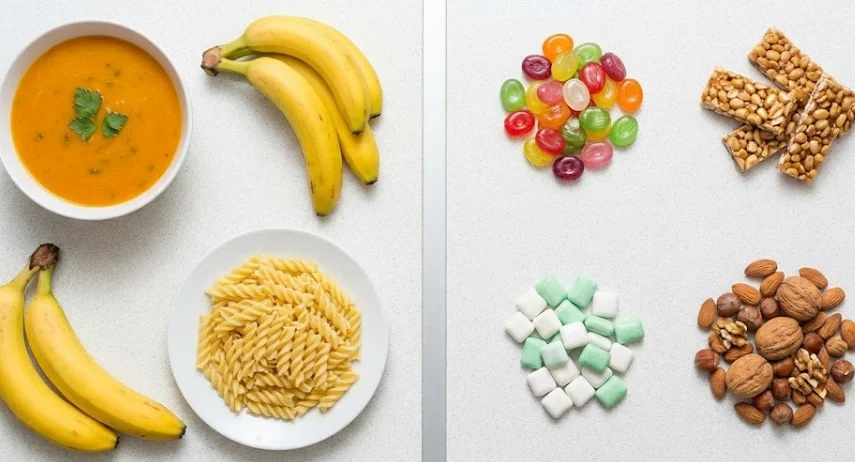
Professor Doctor Coşkun Yıldız often makes his point understandable by using a simple analogy: temporary cement is a bit like double-sided tape, while permanent cement is akin to high-grade construction glue. When you consume sticky things like caramel or gummy candy, they will work like suction cups, and the “tape” will be pulled off the tooth. On the other hand, if you crunch something extremely hard, e.g. a raw carrot or a crusty baguette, the temporary crown’s acrylic may simply crack under the pressure.
Navigating the Menu: What to Choose
Here is what we see in the clinic: patients who stick to a “soft-food” diet for the 5 to 7 days of their transition phase have a 99% success rate with their temporaries.
But what does that actually look like on your plate?
The Survival Guide Table
| Food Category | Safe to Eat (The Green List) | Proceed with Caution | Avoid Entirely (The Red List) |
| Proteins | Scrambled eggs, flaky fish, tofu | Tender chicken (cut small) | Tough steak, jerky, wings |
| Carbs | Pasta, mashed potatoes, soft bread | Toast (soften with butter) | Hard crusts, pretzels, pizza crust |
| Fruits/Veg | Bananas, cooked carrots, avocado | Thinly sliced apples | Raw carrots, corn on the cob |
| Snacks | Yogurt, hummus, soft cake | Soft cookies | Nuts, popcorn, sticky taffy |
The Flossing Secret
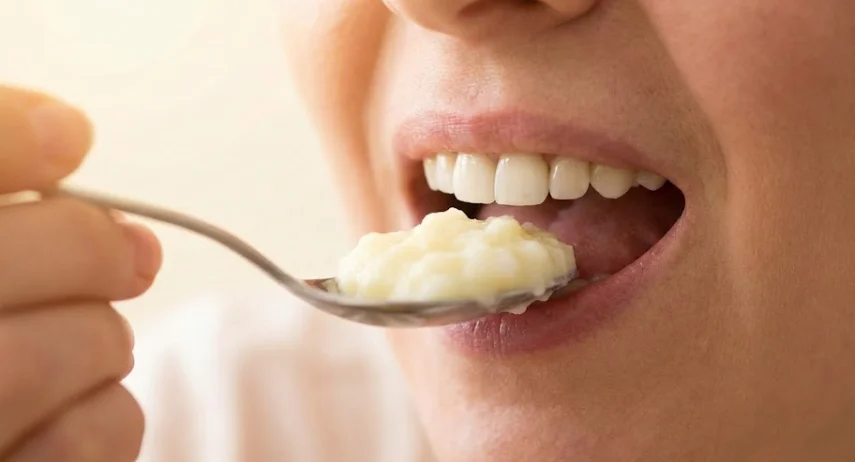
The question remains: how do you keep the area clean without dislodging the crown? Most people make the mistake of flossing “up and down.” When you pull the floss back up between the teeth, it can catch the edge of the temporary crown and pop it off like a bottle cap.
Dentist Polen Akkılıç and her team always stress this one crucial piece of advice getting through the floss, do not pull it out. Use the floss to get into the tight area, clean it thoroughly, and then let go of one end of the floss and pull it out sideways through the gap. By doing this, you will not put any upward tension on the temporary cement.
What to Do If a Crown Breaks or Falls Out
Keep calm. If you are still in Turkey, just get in touch with Lema Dental Clinic right away. On the other hand, if the crown drops off and you won’t be able to come to us for several hours, the fact is that the tooth under the crown may get sensitive to cold or heat.
- Save the crown: If it is intact, most of the time we can just quickly re-cement it.
- Don’t fix it yourself: Never apply household super glue as it can harm the tooth and the gum tissue.
- Use the other side for chewing: Until you get treatment, try to shift all the “work” to the opposite side of your mouth.
FAQ: Advice from the Specialists
Yes, but be careful with the temperature. Temporary acrylic is a poor insulator compared to Zirconia, so your tooth might feel a ‘zing’ from extreme heat. Also, temporary material stains easier than the final porcelain, so rinse with water afterward.
It is, but keep the pressure light. Think of it like dusting a fragile glass ornament rather than scrubbing a floor. You want to keep the gumline clean to prevent inflammation before the final fitting.
It happens more often than you’d think! They are small and smooth, so they usually pass through the system safely. Just let Dentist Polen Akkılıç and her team know right away so we can prepare a replacement for you.
Absolutely not. Chewing gum is the number one enemy of temporary cement. It’s like using a winch to pull the crown off the tooth. Save the gum for after your permanent teeth are fitted.
At Lema Dental Clinic, we value precision. Usually, you’ll wear them for 5 to 7 days while our lab masterfully crafts your final smile. It’s a short wait for a lifetime of confidence.
- Burns, D. R., Beck, D. A., & Nelson, S. K. (2003). A review of fabricated provisional restorations. Journal of Prosthodontics.
- Gratton, D. G., & Aquilino, S. A. (2004). Interim restorations. Dental Clinics of North America.
- Lodding, D. W. (1997). Long-term aesthetics: The role of provisional restorations. Current Opinion in Cosmetic Dentistry.
- Vahidi, F. (1987). The provisional restoration. The Journal of Prosthetic Dentistry.
- Zortuk, M., et al. (2010). Effects of different temporary cements on the retention of provisional crowns. Journal of Oral Science.

