


Results last up to three years with strict clinical maintenance.
The success of a professional dental whitening treatment and its long-term effects depend on several factors and is not down to luck. Enamel histology, the chemical strength of the oxidative agent, and patients’ dietary restrictions immediately after the treatment are some of the main factors contributing to the duration of dental whitening.
If patients want to know about the length of their white, fresh smile after a treatment in Turkey, they need to know how enamel stains and how chemical dental bleaching really works. First of all, they need chemical knowledge about dental bleaching.
The Chemical Mechanism of Dental Bleaching
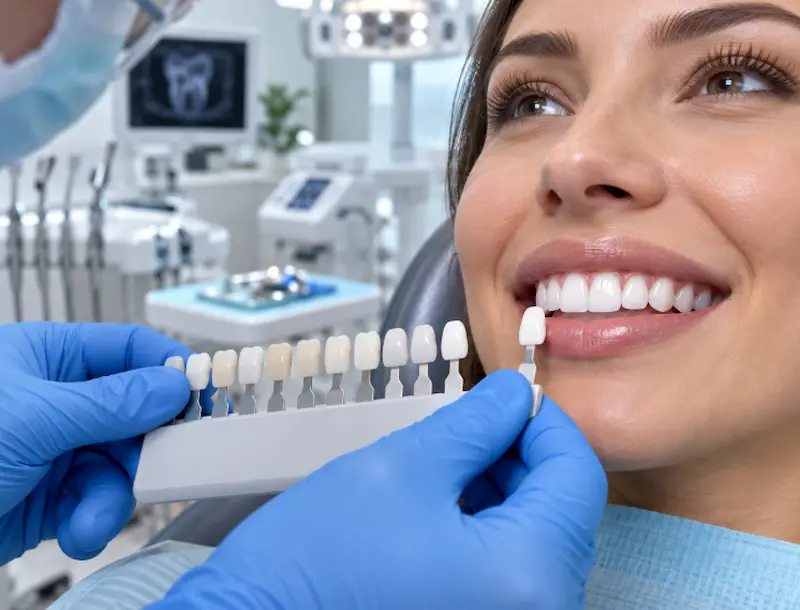
One of the major causes of tooth discoloration is the entrance of chromogenic organic compounds chromophores into the enamel’s microscopic pores and the subsequent deposition of the chromophores into the underlying dentinal tubules. Chromophores are mainly large molecules with very high pigment content that come from tannins, polyphenols, and tobacco compounds.
Professional dental bleaching is based on an oxidative degradation process of very high technology. Dental professionals apply a high-concentration hydrogen peroxide or carbamide peroxide gels onto the front tooth surfaces (labial surfaces). After the penetration of the active ingredient into the tooth enamel structure a series of chemical breakdown take place in which free radicals of highly reactive-oxygen are released from the break-ups. These radicals are going to break down double carbon bonds of trapped pigmented macromolecules that are separated into small-colored molecules with more diffusibility so that they are automatically expelled with tooth structure.
Factors Affecting the Duration of Whitening and Stain Relapse
An in-office professional Whitening is able to modify the internal coloring of the tooth structurally, but it is the patient that seals off the enamel pores against the chromogen invasion. Three major clinical factors influence the time for biological staining (relapse) process:
- Enamel Porosity and Density: People whose teeth have densely, highly mineralized structure will have less staining because the prism spaces are very compact resulting in a restriction of the new chromogen’s molecules coming into contact of the teeth.
- Formation of Acquired Pellicle: There is a protein-containing thin film, called the acquired pellicle, forming on the enamel immediately following bleaching and although it safeguards against tooth wear; it becomes an adhesive surface where extrinsic stains (i.e., coffee, tea, red wine) stick.
- Remineralization after treatment: In the first hours following the whitening the teeth are severely dehydrated and more stain-prone. It is 48 to 72 hours during which the tooth becomes totally remagnetized due to calcium and phosphate from the saliva which creates an important timeframe where strict avoidance of colorful diet is required.
Practical Application at Lema Dental Clinic
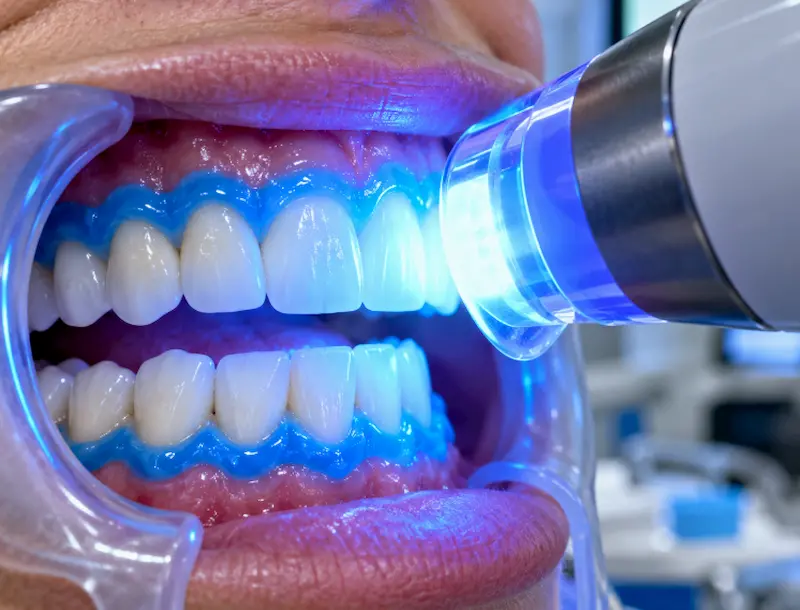
Durable results through dental bleaching at Lema Dental Clinic involve precise modulation of the chemical elements and Dentist Polen Akkılıç is responsible for determining the shade and dentin hypersensitivity of the patient before choosing the level of peroxide concentration.
Professor Doctor Coşkun Yıldız ensures maximum oxidation output and speed up the chemical reaction without the risk of damaging the pulp. For that matter, Professor Doctor Coşkun Yıldız employs a technique known as photo-thermal activation using the assistance of lasers or highly powerful LED units.
This gentle method of photodynamic therapy is capable of stimulating the motion of peroxide molecules, which ultimately lead to deeper dentinal penetration of the bleaching compounds and guarantee that travelers from abroad coming to Turkey get a whiteness level that does not easily return to the original hue of their teeth through stain relapse.
Efficacy Comparison: Clinical vs. OTC Systems
| Clinical Metric | Professional In-Office Bleaching | Over-The-Counter (OTC) Strips/Gels |
| Active Agent Concentration | High (25% – 40% Hydrogen Peroxide). | Low (3% – 10% Hydrogen Peroxide). |
| Mechanism of Action | Deep intrinsic oxidation via dentinal penetration. | Superficial extrinsic stain removal only. |
| Gingival Protection | Total isolation via liquid dam barrier to prevent tissue burns. | None; high risk of chemical irritation to the periodontium. |
| Duration of Results | 1 to 3 years (with proper maintenance). | 1 to 3 months (rapid relapse). |
Frequently Asked Questions
1. Does professional teeth whitening permanently alter the enamel structure?
No. Chemical bleaching strictly targets the organic pigmented molecules trapped within the tooth. The inorganic mineral matrix of the enamel (hydroxyapatite crystals) remains structurally intact and physically unaltered by controlled peroxide oxidation.
2. Why are my teeth highly sensitive immediately after the procedure?
During the oxidation process, the peroxide molecules temporarily alter the osmotic pressure within the dentinal tubules, stimulating the odontoblastic processes linked to the dental pulp. This transient hypersensitivity typically subsides within 24 to 48 hours as the tooth rehydrates.
3. How can I chemically maintain my results after returning home?
Sustaining the results requires strict adherence to a “white diet” for the first 72 hours. Long-term maintenance involves utilizing custom-fabricated at-home bleaching trays with a low-concentration carbamide peroxide gel (10%-15%) for one or two nights every six months to oxidize any newly accumulated chromophores.
4. Will dental bleaching whiten my existing crowns or veneers?
No. Hydrogen and carbamide peroxide only oxidize organic compounds found in natural dentin and enamel. Inorganic restorative biomaterials, such as composite resin, porcelain, or Zirconia, are completely inert to oxidative bleaching agents and will not change shade.
Academic References
- Joiner, A. (2006). The bleaching of teeth: a review of the literature. Journal of Dentistry, 34(7), 412-419.
- Minoux, M., & Serfaty, R. (2008). Vital tooth bleaching: biologic adverse effects-a review. Quintessence International, 39(8), 645-659.
- Carey, C. M. (2014). Tooth whitening: what we now know. The Journal of Evidence-Based Dental Practice, 14, 70-76.
- Kihn, P. W. (2007). Vital tooth whitening. Dental Clinics of North America, 51(2), 319-331.

