


Orthodontic treatment is an important part of a child’s oral health care. It mainly works to restructure the metal the teeth that have been subjected to misalignment, to treat biting disorders, and a misaligned jaw that may influence the correct functioning and even visual appearance of the body. The timing of the orthodontic treatment is very important to achieve the best results. We will discuss what age to start orthodontic treatment, the benefits of treatment and the different types of treatment available in this article.
Understanding Orthodontic Treatment
Orthodontics is the segment of dentistry which deals with the use of corrective devices like braces or aligners to the straighten teeth, the biting correction, and, in most cases, the oral health improvement of the patient. Which of the following may be corrected with orthodontics: crooked teeth, overbites, underbites, crossbites, and jaw misalignments? First of all, the main aim of an orthodontic treatment is certainly the return to natural growth and development of teeth, the jaw, and facial bones, which, later on, will work better and have a higher aesthetic value. Generally, orthodontics are considered as a matter for children and teenagers; nonetheless, a decision to start the treatment at a younger age in a certain condition may result in more effective and faster outcomes.
When Should Orthodontic Treatment Begin?
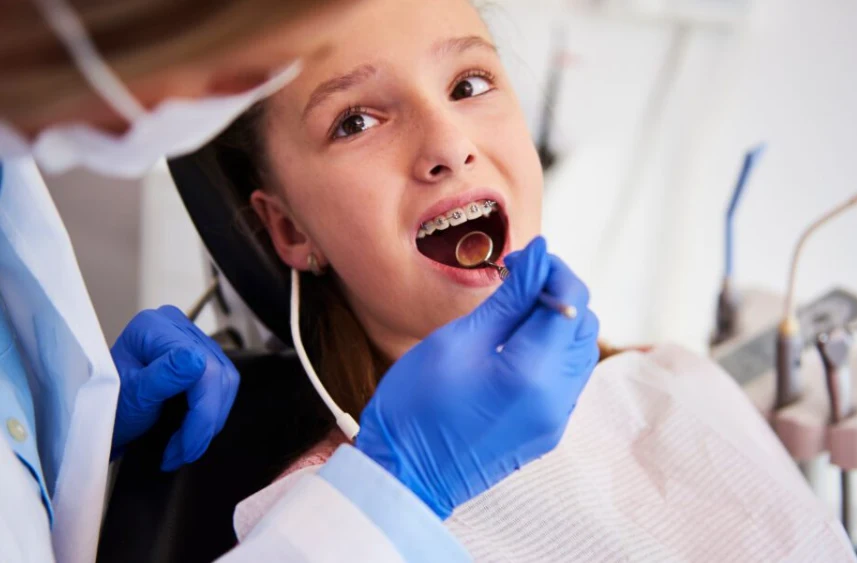
The American Association of Orthodontists (AAO) advises that parents take their children to the orthodontist by the time they are seven years old at the latest. Generally, children at that age have a combination of both primary and permanent teeth, which means that the dentist can quickly see any newly problems. The first visit to an orthodontist allows him to observe not only the dental but also the skeletal growth of the patient and, thus, the option of a timely treatment if necessary.
Seeing an orthodontist early doesn’t mean that the therapy will be initiated immediately. The orthodontist will be able to monitor the child’s growth and examine for dental, bite, or jaw issues. A treatment, if required, is generally less complex and more effective when carried out at a young age.
Benefits of Early Treatment
There are a lot of advantages of starting the orthodontic treatment at an early stage. For one, early intervention helps the doctor to lead the growth of the teeth and jaw, therefore, the possibility of complicated issues arising in the future is mitigated. Besides that, correction of the bite or jaw misalignment at the early stage will not only help the child to eat, speak and breathe better but will also make the chances of needing a more invasive treatment latter low.
In some situations, an early orthodontic treatment can be a way to do away with tooth extraction if enough space for the permanent teeth is created. Furthermore, there is a possibility of shorter treatment duration and less painful procedures in the teenage years if one starts the therapy earlier.
Signs That Orthodontic Treatment May Be Needed
Please, keep an eye on your child and look for the following signs that could mean that your kid will need to have an orthodontic treatment:
- Impacted or crooked teeth: These are teeth that either overlap each other or are spaced irregularly.
- Bite problems: Not being able to bite or chew the food properly.
- Jaw misalignment: The lower jaw is not following the upper one properly.
- Mouth breathing most of the time: This may indicate that there are issues with the jaws or teeth that require attention.
- Thumb-sucking: Continuous sucking of the thumb may change the structure of the jaw and may cause the teeth to be misaligned.
Types of Orthodontic Treatments for Children
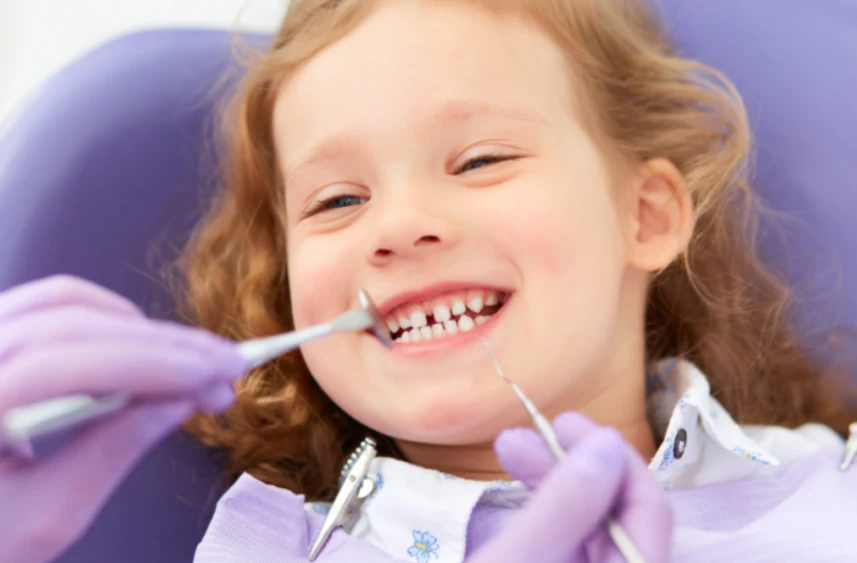
Orthodontic treatments for children usually comprise two different stages. Phase 1, which normally starts somewhere between 6 and 10 years old, concentrates on solving problems such as incorrect bite, development of the jaw, and other major issues. To achieve this, the doctor might resort to the use of various appliances such as palate expanders, space maintainers, or functional appliances to help the teeth and jaw get the proper development.
Generally, the second-phase treatment starts when the child is around 11 to 14 years old, and most of the permanent teeth have erupted. The second phase is a full set of metal or clear aligners used to correct the teeth and to further improve the bite. The treatment time in this second phase is typically longer than that of the first one, and the emphasis is on finishing the child’s smile and bite.
What to Expect During Treatment
The length of orthodontic treatment is primarily dependent on the severity of the dental problem and the type of treatment chosen. Usually, it can be from 1.5 to 3 years. The duration of the treatment is influenced by the problem’s nature, device usage, and whether the child is obeying the doctor’s instructions or not.
Moreover, the doctor will observe the child’s growth and, thus, make any necessary changes to ensure that the treatment is going on.
Furthermore, the patient must visit the orthodontist regularly every couple of weeks as the appliance needs to be adjusted on these visits.
Why Choose Lema Dental Clinic for Your Child’s Orthodontic Treatment?
Lema Dental Clinic is fully aware of the point that orthodontic care for kids has to be come early and therefore we are ready to give you the greatest expertise and most individualized child treatment. The existing team of specialists in orthodontics at our clinic is up-grading your child’s dental development with the newest gadgets and methods. We have the means to solve a great variety of problems, to get the good effects of treatment from early intervention to complete care, based on the particularity of each patient. The environment comfortable, safe and with excellent results is worth Lema Dental Clinic for securing your child’s smile; a smile that is not only healthy and pretty but also properly aligned for the next years. So, don’t hesitate to let us be the ones who will lead your child step by step through the orthodontic journey while being sure that he/she is in the safest hands.
Common Myths About Orthodontic Treatment
There are a lot of false beliefs surrounding the use of orthodontic treatment in children. One of the widespread myths is that only teenagers need braces. In fact, early intervention not only supports the solving of issues in their infancy stage but also is likely to make the process itself simpler and less invasive in the future. Another myth is that orthodontic treatment is just for improving the looks but in reality, it helps oral functioning to become better, lowers the risk of tooth decay and gum disease, and promotes general oral health.
Moreover, some parents might be of the opinion that an orthodontic procedure is extremely painful. Even though after the appointments, there might be some pain, generally, orthodontic treatments are not painful. Any pain can be relieved by using over-the-counter analgesics.
| Appliance Type | Age Range | Purpose | Treatment Duration |
|---|---|---|---|
| Palate Expander | 6-10 years | Expands the upper jaw to make room for teeth | 6 months to 1 year |
| Space Maintainers | 5-10 years | Prevents tooth shifting after premature tooth loss | 6 months to 1 year |
| Braces (Metal or Ceramic) | 11-14 years | Straightens teeth and corrects bite issues | 18 months to 3 years |
| Clear Aligners | 12+ years | Gradually shifts teeth into position | 12 months to 2 years |
| Retainers | Post-braces | Maintains tooth position after braces | 1 year or longer |
How to Prepare for Your Child’s First Orthodontic Visit
In order for your kid to have a great first visit to the orthodontist, it is necessary to book the consultation by the age of seven. Besides evaluating the child’s development, the doctor will also have the opportunity to present the potential treatment options. Being in good oral health before and during the treatment is equally important as it can prevent such problems as cavities and periodontal disease. Last but not least, you should be ready to talk about the money side of the treatment, including the insurance coverage, payment plans, and other possibilities available.
The Role of Parents in the Orthodontic Journey
Without your help as a parent, the team comprising your doctor and your child would not achieve the desired successful result of the orthodontic treatment. One element that is very important for the success of the treatment is encouragement and positive support, which, among other things, is a source of strength for children when they wear braces or aligners, although they are a bit embarrassed. Moreover, it is very important to check and supervise the hygiene of your child during treatment. While performing the procedures of brushing and flossing, which should be done more thoroughly than before, the braces will get less food stuck in them and the wires will also be cleaner from particles.
Additionally, it is very important to follow the directions given by your orthodontist in order to get great results. Help your kid to do what is recommended by the doctor and to wear his appliances when it is needed and he should stay away from foods that could destroy the braces or the aligners.
Conclusion
Braces is a positive contribution to your kid’s oral hygiene. Generally, first checking and stepping in efficiently can directly solve less complicated problems and thus later the treatment will be quicker and less traumatic. Thus, following your kid’s dental growth and visiting the orthodontist promptly will definitely be a great help to make certain that dental and maxillary growth is normal and thus later the teeth will be both beautiful and functional.
References
- Graber, T. M., Vanarsdall, R. L., & Vig, K. W. L. (2012). Orthodontics: Current principles and techniques (5th ed.). Elsevier Health Sciences.
- Proffit, W. R., Fields, H. W., & Sarver, D. M. (2019). Contemporary orthodontics (6th ed.). Elsevier.
- American Dental Association. (2019). Oral health topics: Orthodontics. American Dental Association. Retrieved November 12, 2025, from https://www.ada.org/en/member-center/oral-health-topics/orthodontics
- Panchal, M., & Manna, S. (2020). Early orthodontic intervention: A critical review of treatment timing and its benefits. Journal of Clinical Orthodontics, 54(6), 326-335. https://doi.org/10.11607/jco.000000234
Frequently Asked Questions About Orthodontic Treatment for Children
It’s recommended that children have an orthodontic evaluation by age 7 to detect any potential issues early. The orthodontist can then decide when treatment should begin based on the child’s dental development.
Yes, in some cases, orthodontic treatment can begin earlier. If a child exhibits issues such as severe bite problems, early intervention might be recommended to guide jaw growth or prevent more complex issues in the future.
Orthodontic treatment usually lasts between 18 months to 3 years, depending on the severity of the issue being treated and the type of appliances used. Regular visits and adherence to instructions can help ensure treatment progresses smoothly.
Not necessarily. At age 7, the orthodontist will evaluate your child’s dental development to see if early intervention is needed.
Signs that your child may need orthodontic treatment include crowded or crooked teeth, difficulty chewing or biting, jaw misalignment (overbite or underbite), mouth breathing, or thumb-sucking beyond the age of 4.
Orthodontic treatments are generally not painful, though there may be some discomfort after adjustments. This is normal and can usually be managed with over-the-counter pain relievers. The discomfort tends to decrease after a few days.

