


Restorative dental work normally necessitates the choice of inlays, onlays, and fillings to a certain extent. Understanding the differences of these options is the most important thing when deciding on the right treatment to meet your dental needs. We will cover the advantages, disadvantages, and the proper use of these dental products in the article to help you make the right decision that fits your oral health objectives.
Know More About Dental Inlays, Onlays, and Fillings
What is a Dental Filling?
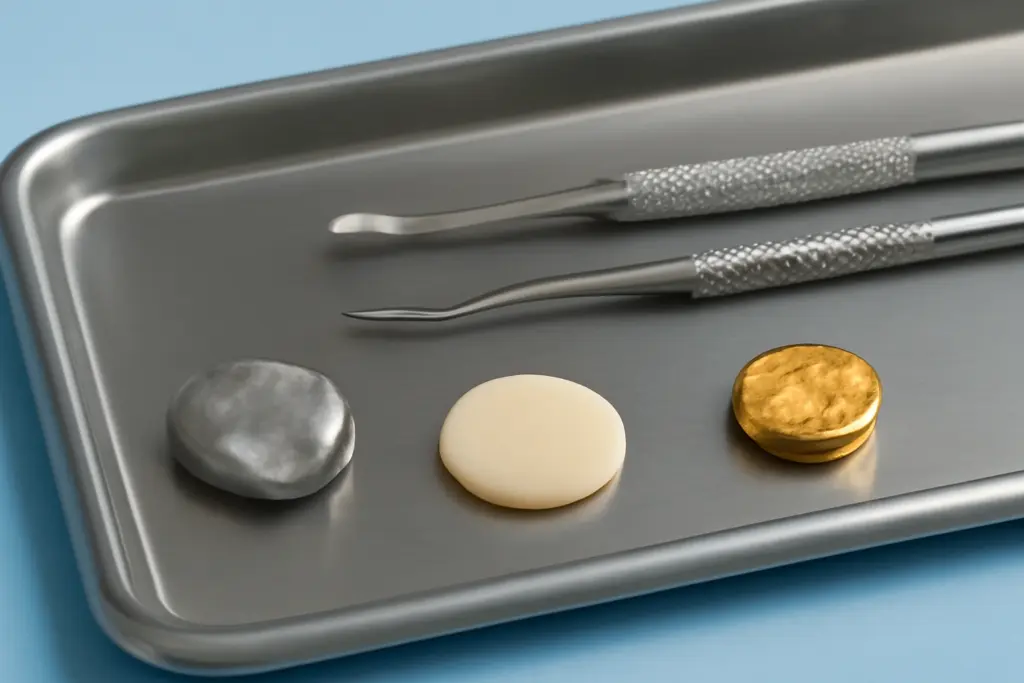
A dental cavity filling is one of the restorative processes that involves physically filling the cavities in the teeth. Typically, the fillings are made from substances such as amalgam, composite resin, or gold, which not only repair the tooth but also return its function and the original shape, which was altered by the decay. The treatment stage includes taking out the rotted portion of the tooth and putting the chosen material in the remaining space.
Benefits of Fillings:
- A quick and money-saving method that is suitable for small cavities.
- It is possible to make them of different materials in order to be the same color as the tooth (composite resin fillings).
- Minimal tooth preparation is necessary.
What is a Dental Inlay?
An inlay is a specially made filling that precisely fits the cavity of a tooth. In contrast to traditional fillings, which are done directly in the cavity, an inlay is a product made in the laboratory after the impression of your tooth has been taken. Usually, the inlay is made of a strong material such as porcelain or composite resin and is not only a better-looking solution but also a more long-lasting one for a middle-depth cavity.
Benefits of Inlays:
Significantly more durable than traditional fillings, particularly for large cavities.
It may be fabricated from porcelain or resin that can be of the same color as natural teeth.
Very little chance of material shrinking or expanding over time, thus giving a stable solution for a long time.
What is a Dental Onlay?
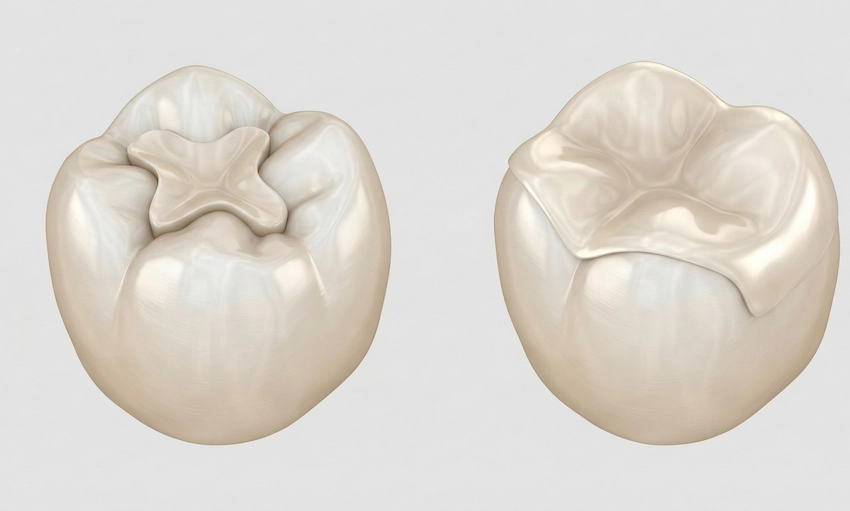
An onlay is quite similar to an inlay but extends to cover a larger area of the tooth. When the caries are so large that a mere filling cannot be used and the need for a crown is not yet there, onlays are the answer. Just like inlays, onlays are the products of a custom fit that adheres to a tooth’s surface and at the same time covers the cusp of the tooth.
Benefits of Onlays:
Enables the tooth to be shielded against the attack of decay to a great extent.
Both the functionality and look of a broken tooth can be restored.
They have a prolonged life span and are less likely to experience wear compared with regular filling materials.
Drawbacks:
Two dental visits are necessary for this procedure.
Costlier than fillings.
Porcelain Inlay or Filling: Which One?
One of the most notable advantages of porcelain inlays over regular fillings is the finishing of the aesthetic aspect. To obtain a perfect fit, a defective tooth is custom-made in a lab in no time to find the cavity and to have an extremely natural look and be durable. Strength-wise is also really great plus the fact that the natural tooth color can be easily mimicked makes porcelain one of the best choices in the front teeth area.
Advantages of Porcelain Inlays Over Fillings:
Better lasting power: Porcelain is much tougher and, over time, less wear is expected to be made by it than composite or amalgam fillings.
Classy look: Porcelain inlays are almost invisible to the naked eye when compared to natural teeth, thus delivering a highly aesthetic solution, especially in the front areas of the mouth.
Durable for long-term: Porcelain inlays have a life span of 10 to 15 years with good maintenance as compared to the fillings, which still will be substituted frequently.
Disadvantages:
More expensive: Porcelain inlays are normally accompanied by a more expensive price than regular fillings.
Cannot be done in a single visit: at least two visits will be required to complete the process—one for taking impressions and the other for placing the inlay.
Inlay vs Filling vs Onlay: Understanding the Differences
An inlay or filling, or onlay decision depends heavily on how much tooth decay you have and where the cavity is. Fillings are the right solution when a cavity is just a tiny one. On the other hand, inlays and onlays represent the closest best choices for a sizeable hollow or a tooth that requires additional reinforcement.
Fillings work well in cases where the decay is limited to a small area of the teeth.
Inlays help with moderate dental caries that structurally affect the tooth slightly.
When the damage is so severe that a filling cannot be used, yet it is not enough for a crown, then Onlays are the solution.
Dental Inlays vs Fillings: Which Option Yields Better Results?
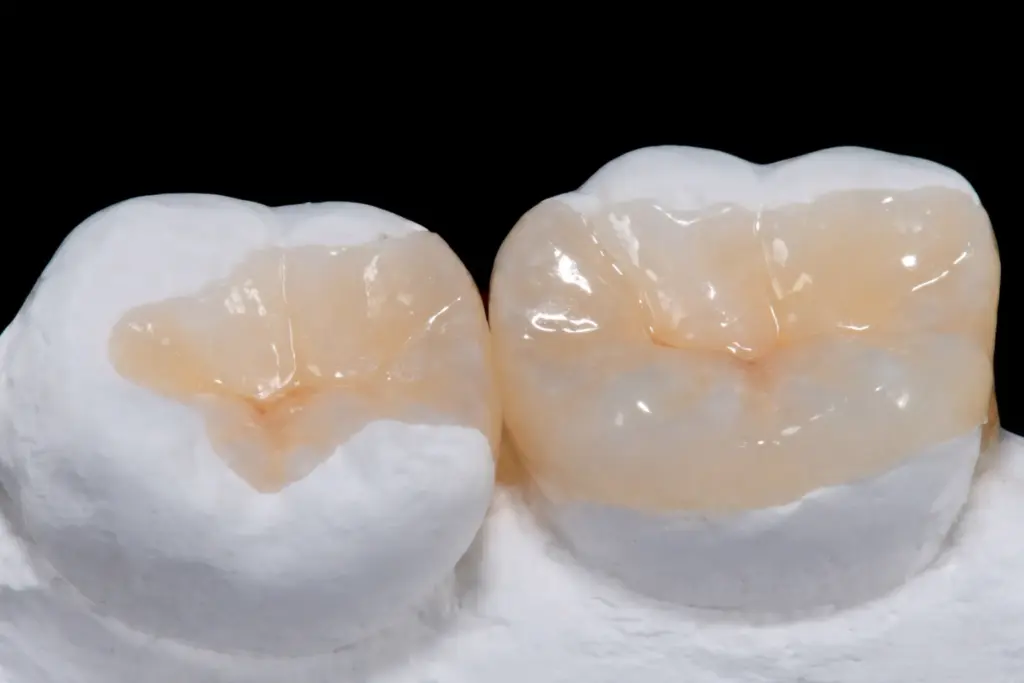
Usually, dental inlays will bring about a better outcome as compared to traditional fillings, especially when the main concerns are the longevity, the beauty, and the performance of the inlay in the long run. The best use of inlays is to serve those patients who want a high-quality, durable solution for dental caries of moderate to severe degree. On the contrary, fillings can be a bit more wallet-friendly; however, they will most probably be replaced in a short period of time and do not provide the same level of durability
Frequently Asked Questions (FAQ)
An inlay is a custom-made dental restoration that fits precisely inside a cavity, often made of porcelain or composite resin. A filling, on the other hand, is a material applied directly into the cavity and is typically made of composite resin, amalgam, or gold. Inlays provide a more durable and aesthetically pleasing solution compared to fillings, especially for larger cavities.
Yes, inlays are generally more durable than fillings. Inlays are made from stronger materials like porcelain and offer better resistance to wear and tear, making them a great choice for large cavities or teeth that endure heavy chewing pressure. Fillings, while effective, tend to wear down faster and may need to be replaced more often.
Dental inlays can last between 10 to 15 years with proper care. Their longevity depends on factors like oral hygiene, diet, and the location of the inlay. Regular dental checkups are essential to ensure the inlay remains intact and functional.
The procedure for placing an inlay is typically not painful. Your dentist will numb the area with a local anesthetic to ensure you are comfortable during the process. The procedure usually requires two visits: one to take impressions and prepare the tooth, and another to place the custom-made inlay.
For visible teeth, inlays and onlays are usually better options than traditional fillings, as they offer more natural-looking results. Porcelain inlays and onlays can be color-matched to your natural teeth, making them ideal for areas where aesthetics are important. Fillings, especially amalgam fillings, are more noticeable and may not blend as seamlessly with your teeth.

